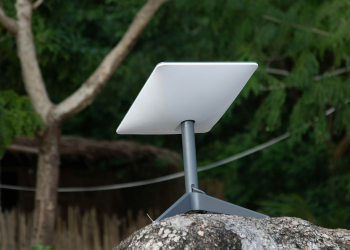
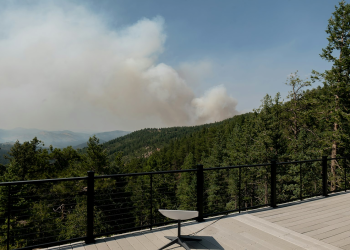
Venezuela has authorised Starlink, the low Earth orbit satellite internet network run by Elon Musk’s SpaceX, to provide service across the whole country. The agreement was announced on 9 October 2026, according to Obaland Magazine, and interim President Delcy Rodríguez signed off on the nationwide permission, Sada Elbalad English reports.
Key facts
- Venezuela’s telecommunications regulator, the National Telecommunications Commission (Conatel), issued two separate instruments: a general telecommunications licence and seven concessions in the Ku frequency band.
- Both went to the local entity SpaceX VZ, S.C.A., placing the service under Venezuelan regulatory supervision.
- Conatel’s account traces the approval to technical cooperation with the company after earthquakes on 24 June 2026 damaged telephone and internet infrastructure in La Guaira state.
- Emergency permits issued at that time allowed trials of Direct-to-Device satellite texting and of Ku-band operations.
- No subscription price, hardware price or retail launch date has been published.
Why it matters
The grant converts temporary, emergency-era permissions into a standing legal framework: the company now has a basis to sell service commercially while remaining answerable to domestic telecommunications rules. Reliable internet access remains a pressing issue in Venezuela for households, businesses and public institutions alike.
For comparison, Starlink still has no licence in South Africa, where use of the service keeps growing without one.
From earthquake response to a licence
Two quakes struck La Guaira on 24 June 2026, severely affecting terrestrial telephone and internet infrastructure. Conatel first granted temporary authorisations so authorities and relief organisations could test satellite communications and assess their role in restoring connectivity; those permits also covered Direct-to-Device trials, which enabled text messaging through satellite networks. Those trials, Obaland Magazine reports, fed into the regulatory process that preceded Starlink’s formal application to operate in Venezuela.
Price and availability: what the licence does not settle
The authorisation is nationwide in scope rather than phased, and neither account sets out a sequence of priority states, a retail sign-up date or a commercial launch timetable. The only dated milestones so far are the June trials and the 9 October grant.
Pricing is equally open. Neither outlet publishes a tariff, and the licence documents cover the right to operate and the spectrum to do it with, not what subscribers will pay. Obaland Magazine is explicit that the extent of the benefits will depend on subscription costs, equipment prices, service availability and how reliable connectivity proves in different parts of the country, concluding that the approval “therefore represents an important regulatory milestone, but its broader significance will ultimately be measured by whether it translates into more reliable, accessible and affordable internet access for people across Venezuela.” Any effect on competition, the outlet adds, will likewise depend on how the market develops from here.
Musk has made the same case in another market, arguing that pricing is the test of whether Starlink can compete.
A note on sourcing
This report rests on two secondary outlets, both relaying Conatel’s own statement; neither links to a gazette notice or publishes the text of the licence and concessions, so the regulator’s primary document remains unseen. The two accounts also differ in detail. Obaland Magazine dates the announcement to 9 October 2026 and names no signing official; Sada Elbalad English says the government announced the agreement on Friday and credits Rodríguez. Obaland Magazine counts two June earthquakes, while Sada Elbalad English refers to the 24 June earthquakes without a figure.
Background: why satellite, and why here
Starlink delivers connectivity through satellites in low Earth orbit rather than through fibre optic cables and mobile towers, which makes it useful in remote or underserved places and where infrastructure is vulnerable to natural disasters — the La Guaira case in miniature. Sada Elbalad English frames the licence as a further step in the company’s push across Latin America, arriving as governments worldwide weigh satellite internet as part of digital inclusion and communications resilience plans.
Frequently Asked Questions
Which mobile networks took part in Venezuela’s satellite texting trials?
All three of Venezuela’s mobile network operators carried the trials, which let users send text messages via satellite using Direct-to-Device technology. Neither Sada Elbalad English nor Obaland Magazine names the three carriers.
How many Starlink kits reached Venezuela after the June earthquakes?
More than 1,600 communication kits, distributed to rescue teams, medical personnel and humanitarian organisations. Sada Elbalad English credits that figure to the US Embassy in Caracas; Obaland Magazine attributes it only to unspecified reports.
Can Venezuelans already buy Starlink hardware locally?
Yes, through at least one retailer: MultiMax announced an agreement in March 2026 to distribute Starlink equipment to households and businesses, giving the company a commercial presence months before the nationwide authorisation. No equipment prices have been published.
What is the Ku band, and why does Starlink need concessions for it?
The Ku band is a satellite-communications frequency range, and a national regulator must assign rights to use it before a network can transmit — hence the seven concessions Conatel issued alongside the licence. The same band carried the temporary technical trials Conatel permitted during the June emergency. Neither outlet lists the specific frequency allocations granted.
Follow Starlink News on Google. Make us a preferred source to see more of our reporting in Google search results.





![Using Your Own Router with Starlink: Bypass Mode [2026]](https://starlink-news.com/wp-content/uploads/2026/09/using-your-own-router-with-starlink-bypass-mode-20-f6c09f95-120x86.png)