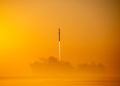
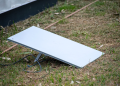
The European Union’s space commissioner has warned SpaceX that the Starlink service supplied to Ukraine is a paid contract, not charity. “Starlink must understand that these are contracted services. They are not a gift to Ukraine. EU member states pay for these services,” Andrius Kubilius said, according to Delfi on 12 November 2026. If those services fall short for any reason, he added, confidence in the company’s ability to fulfil its contracts would decline.
Kubilius, European Commissioner for Defence and Space, used the same remarks to repeat the bloc’s own timetable: the IRIS² network will give Europe “its own capabilities comparable to Starlink,” and “this will happen in 2029.” That date is not new — Euronews reported the same 2029 target in January 2026. Delfi does not say where or in what setting the commissioner was speaking.
Key facts, and how current each one is
- New, 12 November 2026 (Delfi): the warning to SpaceX over Ukraine, and Kubilius’s restatement of 2029 for IRIS².
- New, 12 November 2026 (Delfi, citing the Lithuanian news agency ELTA): Starlink is the world’s largest satellite network, with more than 11,000 satellites in low Earth orbit serving more than 160 countries.
- Dated — January 2026 (Euronews): IRIS² stands for Infrastructure for Resilience, Interconnectivity and Security by Satellite and is a multi-orbital constellation of 290 satellites, whose operational date had then just moved forward to 2029 from 2030.
- Dated — January 2026 (Euronews): a separate system, GOVSATCOM, had begun operations, with expanded coverage and bandwidth due in 2027.
- Dated — January 2026 (Euronews): the Commission has proposed raising space and defence funding to €131 billion in the 2028–2034 multi-annual financial framework. No updated satellite count or funding figure appears in this week’s reporting.
The warning over Ukraine
The backdrop, per Delfi’s citation of ELTA, is that SpaceX introduced speed restrictions on Starlink terminals in Ukraine in October 2026, and that service was later restored after calls by Ukrainian President Volodymyr Zelensky. Kubilius’s framing turns that episode into a contractual question rather than a diplomatic one: member states are buyers, and buyers judge suppliers on delivery.
It also sets the clock. Europe still has no sovereign substitute for Starlink in Ukraine, and on the commissioner’s own schedule the comparable capability is three years away — so the contract, not the constellation, is Europe’s leverage until 2029.
Consumer satellite internet: no price, no coverage map
Delfi cited the European Union Agency for the Space Programme (EUSPA), the body that runs the bloc’s space programmes, as saying IRIS² would serve border surveillance, crisis management, and the connectivity and protection of critical infrastructure. EUSPA also said the system “will facilitate the deployment of various mass-market applications, including satellite-enabled mobile and fixed broadband access, satellite backhaul for business-to-business (B2B) services and satellite access for transport networks.”
That is the full extent of the public picture for anyone shopping for satellite internet. Starlink sells directly to consumers with published country-level hardware and subscription prices; for IRIS², neither source names a retailer, a tariff, a launch market or any availability outside the EU. The European Commission’s IRIS² programme page is the primary reference for the design, and it likewise carries no pricing.
What Europe has running today
Speaking at the European Space Conference in January 2026, Kubilius said GOVSATCOM had gone live the previous week, giving every member state access to sovereign satellite communication for military and government use: “Secure and encrypted. Built in Europe, operated in Europe, under European control.” He called it the “first step in satellite connectivity.”
Euronews reported then that the system pools bandwidth from eight satellites belonging to five member states and is open to all of them, and quoted Kubilius saying the launch showed Europe was “starting to be less dependent” on US space services. Those figures have not been refreshed in this week’s reporting.
Money, launchers and command
Also from the January 2026 Euronews account: Germany has announced €35 billion of spending on military space capabilities by 2030, with other member states following. Strategic enablers, which include space assets, are one of nine priority capability areas in the Commission’s 2030 defence readiness roadmap, and the Commission confirmed that member states subscribed to its SAFE defence loan scheme had requested money covering all nine.
Kubilius conceded at the same event that Europe lags on sovereign launch, particularly reusable rockets — “we are behind Elon Musk” — while pledging effective transportation systems funded from the next budget. He also urged governments to prioritise interoperability and pitched a “virtual European Space Command,” saying there is no process for mobilising European assets for joint defence and that it is not clear who does what.
The 2029 timeline
Euronews noted that Starlink became fully operational in 2021. Asked about the lag, Kubilius argued that arriving late can mean arriving with better technology, citing satellite navigation: Europe built Galileo as an improvement on GPS, he said, “three times more precise” and used by five billion consumers, and “competition is competition.”
Europe is not the only bidder naming that year. A Japanese joint venture has set another 2029 target for a Starlink rival, which means the measure of IRIS² in 2029 will be the Starlink of 2029 — not the network Kubilius is describing today.
Frequently Asked Questions
How much will IRIS² satellite internet cost, and where will it be available?
Unknown. Neither Delfi’s 12 November 2026 report nor the January 2026 Euronews report gives a price, a retail channel, a launch market or any indication of whether service will be sold outside the EU. EUSPA describes only categories of use, such as fixed and mobile broadband access and backhaul, so there is no published IRIS² equivalent of Starlink’s country-level pricing.
Will IRIS² work with existing Starlink dishes, or will it need new hardware?
Neither source addresses user terminals. No dish, antenna or compatibility details for IRIS² appear in the Delfi or Euronews reporting cited here, so any claim that existing Starlink hardware will or will not work is unsupported at this stage.
Is IRIS² the same thing as GOVSATCOM?
No. GOVSATCOM pools bandwidth on satellites that member states already own and is restricted to government and military users. IRIS² is a new constellation still to be built, and EUSPA says it is also intended to carry commercial and mass-market services.
Can Ukraine use the EU’s GOVSATCOM system?
Not yet. Euronews reported that the European Commission was analysing a Ukrainian request for access; the system is open to EU member states, and no decision on Ukraine has been reported in the sources cited here.