Ukrainian President Volodymyr Zelensky said on 12 November that speed restrictions on Starshield have returned, limiting the system to 161 kilometres per hour (100mph) across the entire front line and in Russian-occupied parts of Ukraine. Within hours the European Commission and a bipartisan group in the US Congress called for full access to be restored. SpaceX, which operates the service, had not commented.
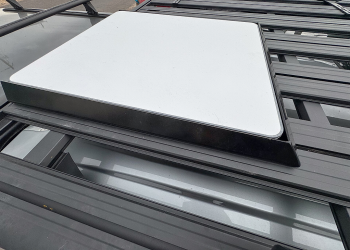
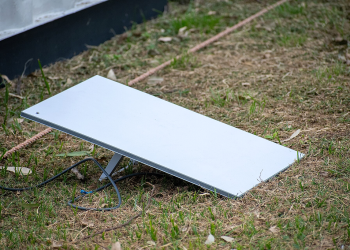
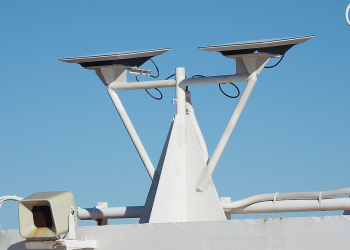
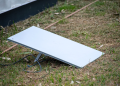
Starshield is the militarised variant of SpaceX’s Starlink satellite internet service: its terminals are supplied under US Department of Defense contracts and, by Elon Musk’s own account, are controlled by the US government rather than by SpaceX. Commercial Starlink is the consumer product sold to civilians, and carries a separate, much lower speed limit of its own.
The core fact: as of 12 November, Starshield terminals in Ukraine lose their connection above 161km/h (100mph) along the whole front line and in occupied territory. Zelensky says Ukrainian units logged the faults for several days and the military concluded they were systematic restrictions, not errors. Responsibility is disputed between SpaceX and the Pentagon.
Key facts
- Zelensky spoke after briefings from Defence Minister Yevhenii Khmara and Armed Forces Commander-in-Chief Mykhailo Drapatyi.
- Drones flown through Starshield drop their link the moment they exceed 161km/h, Overt Defense reports.
- A corps-level Ukrainian commander in Donetsk Oblast and a senior member of a unit in the Unmanned Systems Forces confirmed the cap to the Kyiv Independent, speaking anonymously.
- Zelensky said Ukraine is trying to establish the circumstances with the United States.
Why it matters
Zelensky’s central claim is operational: the cap makes it significantly harder to intercept Russian jet-powered drones, and strikes have already got through because Ukrainian interception systems could not reach sufficient speed in time. “This is helping the Russians kill more Ukrainians and carry out more accurate strikes against Ukraine,” he wrote on X, in a post reported by The Telegraph.
Satellite internet is the primary control link for both sides of that fight — the interceptors sent up after Russian drones and the mid-range strike drones Ukraine sends the other way. The commander who spoke to the Kyiv Independent said the limit also makes those strike drones easier for Russia to intercept or evade, blunting the campaign that has been used this year to disrupt Russian logistics. With no quick fix in sight, Ukrainian drone units have begun testing HiSKY as a substitute.
Which systems Kyiv says are affected
Presidential adviser Serhii “Flash” Beskrestnov said on 12 November that Starlink speeds had been restricted and that problems had emerged in communications with the helicopters tracking Shahed-type drones and with the jet interceptors used against jet-powered drones, the Kyiv Independent reported. He expects the American side to point to the terms of Ukraine’s military tariff plan, but argued those terms had not been an issue for years and could be amended rather than leaving the country without air defence.
The response in Brussels and Washington
Tom Renier, the European Commission’s spokesperson for defence and space affairs, called the reports concerning and, if confirmed, unacceptable, telling the Guardian that SpaceX must take a consistent approach to sharing its services with Ukraine and that Starshield must be restored urgently. The intervention lands at a point when Europe still has no equivalent system of its own.
The Congressional Ukraine Caucus, a bipartisan support group, demanded a full explanation from the Trump administration and SpaceX and called for the immediate restoration of full Starshield access, saying Congress has been clear that Ukraine’s ability to defend itself is a vital US national interest.
Democrats intend to use their House and Senate majorities in the incoming Congress to investigate the earlier October episode, according to Overt Defense. Delaware Senator Chris Coons said Musk, Defense Secretary Pete Hegseth “and anyone else who played a role” must answer for it.
Who imposed the cap is still disputed
Musk has said Kyiv used commercial Starlink terminals for offensive drone strikes and that the loophole was closed, but rejects responsibility for the Starshield limits on the grounds that those terminals are government-controlled; Overt Defense reports he attributed the October disruption to an order from the Department of Defense. Both the White House and SpaceX denied responsibility for that episode, and Ukrainian officials rejected Musk’s claim that Kyiv had breached Starlink’s terms of service.
The Telegraph has since reported that Musk approached Trump with the idea of slowing Starlink in Ukraine, citing four sources familiar with the discussions, one of whom said Trump agreed, clearing the way for the Pentagon to carry out the Starshield slowdown.
Background: the October episode, by date
This is the second large-scale disruption in about a month. The two outlets covering it most closely differ only on the exact edges of the window — the Kyiv Independent dates the start to mid-October, Overt Defense puts the episode at 15–24 October — and agree it ran for roughly 10 days:
- Mid-October (15 Oct): SpaceX imposes a speed cap on Starshield without warning.
- 17–23 Oct: the period Zelensky says the limits persisted; Ukrainian officials dispute Trump’s claim that access had been restored.
- 23 Oct: the Wall Street Journal reports Trump asked Musk to lift the restrictions. Publicly, Trump said he had not spoken to Musk but might if the problems continued.
- 24 Oct: Musk says the front line would collapse immediately if Starlink were switched off. Overt Defense puts the end of the cap here.
- End of Oct: Zelensky confirms Starlink and Starshield are back to normal speeds; the Defence Ministry reports stable connectivity above 400km/h.
The Telegraph links that slowdown to a dispute between Trump and Zelensky over a US deal to buy Russian diesel while Washington pressed Kyiv to stop striking Russian oil refineries. Our full account of how the October slowdown hit Ukraine’s drones and air defences sets out the same pattern now repeating.
Timing against the peace talks
The disclosure came a day after US-mediated talks between Russia and Ukraine in Abu Dhabi ended without progress beyond an agreement on a future prisoner exchange, Overt Defense reports; US mediators said differences remained on major issues including territory. On the same Thursday, according to The Telegraph, Trump’s negotiators Steve Witkoff and Jared Kushner landed in Moscow for talks with Vladimir Putin, met at the airport by Putin’s envoy Kirill Dmitriev.
What happens next
The immediate ask is unchanged on both sides of the Atlantic: lift the 161km/h cap and restore full Starshield access. Three things will show whether that is happening — whether SpaceX or the Pentagon says who ordered the restriction, whether Kyiv gets the answer Zelensky says it is seeking from Washington, and whether Ukrainian units report interceptor and strike drones flying above the limit again. If the cap holds, the Congressional Ukraine Caucus’s demand for an explanation becomes the Democrats’ promised investigation when the new Congress is seated.
Frequently Asked Questions
Is there a speed limit on ordinary commercial Starlink terminals too?
Yes. Ukrainian presidential adviser Serhii “Flash” Beskrestnov told the Kyiv Independent that commercial Starlink carries a speed restriction of 70 to 90 kilometres per hour and does not function over Russian territory. That is a lower and separate limit from the 161km/h cap he and Zelensky describe on the military Starshield service.
What has Musk said about Ukraine’s dependence on Starlink?
On 24 October, Musk said that if Starlink were switched off the Ukrainian front line would collapse immediately, calling it a statement of fact rather than a threat, the Kyiv Independent reported. He has also said the militarised Starshield terminals are controlled by the US government, not by him.