Russia is deploying a growing number of satellite electronic warfare (EW) systems built to interfere with Starlink, SpaceX’s low-Earth-orbit broadband network, according to Serhii “Flash” Beskrestnov, a special adviser to Ukraine’s President and a radio technology specialist. He set out the assessment in a Facebook post that Ukraine’s Ministry of Defence press service circulated and that Ukrinform, Ukraine’s state news agency, reported on 2 November 2026.
Beskrestnov said the systems already blanket nearly all key targets in Crimea and are being placed along the front line in rising numbers. Each complex works on an area-coverage principle over roughly 25 square kilometres, he said.
Key facts
- Who says so: Serhii “Flash” Beskrestnov, special adviser to Ukraine’s President, in a Facebook post relayed by the Ministry of Defence press service and reported by Ukrinform on 2 November 2026.
- The claim: Russia “continues to increase the number of satellite electronic warfare (EW) systems that interfere with Starlink’s operations,” in his words as published by Ukrinform.
- Footprint: about 25 square kilometres per system, on an area-coverage principle.
- Where: nearly all key targets in Crimea, and increasingly along the front line.
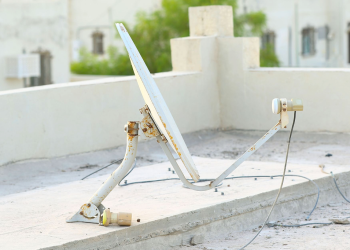
- Hardware: direct-focus satellite antennas roughly one metre across, which must have an unobstructed line of sight at the zenith.
- Separate development: Ukraine’s Defence Ministry, Finnish satellite imaging firm ICEYE and Finnish telecoms equipment maker Nokia signed a Memorandum of Understanding on sovereign satellite communications.
Why it matters
The adviser’s account, as published by Ukrinform, describes two changes rather than one: more systems, and better concealment. He said the days when the complex looked like six trailers parked side by side on a single site are long gone, and that the enemy is now trying to hide it.
For readers who follow Starlink’s role in the war, the limits of the report matter as much as the claim. Ukrinform does not give a number of systems deployed, does not name a manufacturer or operator, and does not describe any measured effect on Starlink speeds or uptime. The adviser’s statement is an assessment of Russian deployments, not a service report from SpaceX.
What the systems reportedly look like
According to Ukrinform, the core of the complex is a set of direct-focus satellite dishes about one metre in diameter. Because those antennas have to see straight up, Beskrestnov said camouflage has built-in limits, however the equipment is dressed up.
He added that a camouflage net would itself attract attention, so its use is unlikely; instead, he said, the system will operate from under a polycarbonate canopy or plastic sheeting. That, in his telling, makes opaque greenhouses worth a second look. Ukrinform published his advice on spotting the equipment alongside the deployment claim.
Ukraine’s push for links it controls
In the same report, Ukrinform noted that Ukraine’s Ministry of Defence, ICEYE — described by the agency as a global leader in satellite surveillance — and Nokia have signed a Memorandum of Understanding. The document provides for developing and implementing sovereign, high-performance and secure satellite communication systems under Ukraine’s direct control, according to the agency.
Neither source connects that memorandum to the jamming claim. Ukrinform reports the two as separate items. The theme of national control over satellite links has run through other recent stories, including Space CISOs Fault Starlink Cutoff, Urge Sovereign Control and reports that Ukraine’s Starlink rival begins orbit tests, while commercial terms have surfaced in coverage of how Starlink urged Ukraine to buy an upgraded plan.
Background: the same adviser tracked Russia’s trench jammers
Beskrestnov has been the named source for earlier Russian EW disclosures, though those concerned drones rather than satellite links. Ukrainska Pravda, republished by Yahoo on 12 July 2026, reported that Russian forces had begun fitting Peroyed-M anti-UAV systems — previously trench-based equipment — to navy vessels.
That report cited Defence Blog, which drew on images from Russian military-linked Telegram channels. The systems were spotted on four vessels: the Project 1164 missile cruiser Varyag, the Project 20380 corvette Steregushchiy, the Project 1155 large anti-submarine warfare ship Udaloy and the Project 11540 patrol ship Neustrashimy. Defence Blog said the fittings were an attempt to counter Ukrainian drone attacks, and noted that Russian patrol boats in annexed Crimea had earlier received anti-drone metal structures.
Ukrainska Pravda said the Peroyed-M combines drone detection with jamming and is built primarily against small unmanned aircraft — the cheap, mass-produced FPV drones and reconnaissance quadcopters Ukraine has used against Russian ground forces and, increasingly, against ships far from any front line. Before the naval sightings, the outlet said, the system had been seen only with Russian infantry units.
The two reports describe different equipment aimed at different targets: one at Starlink terminals over areas measured in square kilometres, the other at drones at ranges Beskrestnov put in tens of metres. What links them is the source. Starlink News has not seen comment from SpaceX or Russia’s Defence Ministry on either account.
Frequently Asked Questions
What does Flash tell people to look for when hunting these systems?
Beskrestnov told Ukrinform to watch truck parking lots, saying out of every ten trucks, three to six may have the system installed. He also pointed to small trailers towed by passenger cars, where he said the enemy has worked out how to mount a single antenna instead of two and spread the trailers out across an area. Because a camouflage net would draw attention, he said the system will work under a polycarbonate canopy or plastic sheeting, so opaque greenhouses are worth checking.
Is the Peroyed-M the system that jams Starlink?
No. Ukrainska Pravda, republished by Yahoo, describes Peroyed-M as a combined drone-detection and jamming system built mainly to counter small unmanned aircraft such as FPV drones and reconnaissance quadcopters. Beskrestnov said it works between 900 MHz and 5.8 GHz with an estimated range of about 15 to 50 metres, and that its antenna layout creates more of a “shield” than a “dome”.
Has Ukraine ever obtained one of these Russian electronic warfare sets?
Yes, in the case of the Peroyed-M. Ukrainska Pravda reported that Ukrainian forces captured the system as a trophy in September 2024, after Beskrestnov first reported in August 2023 that Russian units had received it. He said then that it cost around US$3,500 and ran on a 12-volt, 22 amp-hour battery with a stated life of 40 minutes.
Do the reports say anything about Starlink users outside Ukraine?
No. The Ukrinform report is limited to Crimea and the front line in Ukraine, and neither source discusses Starlink service, availability or pricing for subscribers elsewhere, including in Africa. Neither report gives a figure for how many of the satellite jamming systems are now deployed.