Starlink Mobile went live across the whole of Brazil through the Brazilian carrier Vivo on Monday, 26 October, Starlink said, opening satellite messaging and apps in cellular dead zones to Vivo’s 50 million customers. According to Tesla North, 7 million phones were already connected at launch, and the company is calling it the first nationwide Starlink Mobile service to cover an entire country.
Key facts
- Service: Starlink Mobile, the direct-to-cell side of Starlink, live with Vivo across Brazil.
- Reach: 50 million Vivo customers eligible; 7 million phones connected, per Starlink.
- Capability now: texting, messaging apps and basic data when a phone drops out of range of a cell tower.
- Regulatory step: Brazil’s telecom regulator ANATEL approved Starlink Mobile’s full 2 GHz access a little over two weeks before launch.
- Next step: Starlink Mobile V2, pitched as high-speed mobile internet, with no date given for Brazil.
- Not disclosed: pricing, supported phone models, V2 timing.
Why it matters
This is the first time Starlink’s phone service has been switched on for an entire country at once, according to Tesla North, rather than for a slice of a carrier’s footprint. For readers watching satellite internet availability, it shifts the question from whether direct-to-phone coverage works to what a carrier charges for it and which handsets qualify — neither of which Starlink or Vivo has answered.
It also lands in a market Starlink already leans on. Tesla North reports that most Brazilian demand for Starlink comes from places where cell coverage runs out, the same gap the Vivo service is meant to fill in the Amazon, farmland and rural highways.
What the service does today
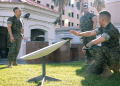
As the direct-to-cell part of Starlink, satellites communicate straight with ordinary phones, with no dish or special hardware required, Tesla North reports. The current tier is a fallback rather than a broadband connection: texting, messaging apps and basic data for a phone that has left tower coverage.
Spectrum approval came first
The launch followed ANATEL’s approval of Starlink Mobile’s full 2 GHz access in Brazil by a little over two weeks, according to Tesla North, and that mid-band spectrum is what Starlink says will carry its next-generation service. Regulatory clearance remains the gate elsewhere too: in South Africa the business group Sakeliga is suing the regulator ICASA over ownership rules that block Starlink, while in the United Kingdom BT has said the service is technically ready but unlaunched.
Starlink Mobile V2 is the pitch
Starlink is presenting the next step, Starlink Mobile V2, as the real prize, saying it will make sure all Brazilians can get high-speed mobile internet — “from small fishing villages deep in the rainforests to remote stretches of highways,” in the company’s words as reported by Tesla North. No launch window for V2 broadband in Brazil has been given.
How the Vivo deal compares
The Vivo agreement dwarfs Starlink Mobile’s earlier carrier rollouts, Tesla North reports: a week before the Brazil launch, Starlink said the phone service had reached 11 million people in Ukraine, Kazakhstan and Bangladesh through the networks of VEON, a multinational telecom operator. One Brazilian carrier brings a customer base more than four times that size.
The push is commercial as well as technical. Elon Musk has said Starlink Mobile could bring in hundreds of billions of dollars a year, according to Tesla North, and SpaceX is pursuing the 80,000 cell sites it is seeking in the United States to turn the service into something closer to a full carrier.
Conflicting usage figures
A wire headline circulating after the launch puts take-up at more than 10 million Vivo customers using the Starlink direct-to-device service in its first two weeks. The only detailed account available to this report, Tesla North’s, documents 7 million phones connected on launch day and does not cover the later figure; the two numbers describe different moments, and no source here confirms the higher one. Treat the 10 million figure as unverified until Starlink or Vivo publishes it.
What is still missing
Several basics remain unanswered, Tesla North notes: whether Vivo customers pay anything extra for satellite coverage, which phone models are supported beyond those already connected, and when Starlink Mobile V2 broadband will reach Brazil. Vivo’s own post on the morning of the launch teased the service as “about to arrive” without giving pricing or plan details.
Tesla North frames the open question as whether V2 can turn a text-and-apps lifeline into real mobile broadband across a country the size of Brazil. Until Starlink names prices and handsets, readers elsewhere watching for a carrier deal in their own market have a template but not a tariff.
Frequently Asked Questions
Do Vivo customers pay extra for Starlink Mobile?
Neither company has said. According to Tesla North, Starlink and Vivo have not disclosed whether Vivo customers pay anything extra for satellite coverage, and Vivo’s own post teased the service as “about to arrive” without pricing or plan details.
Does Starlink Mobile need a dish or a special phone?
No dish or special hardware is needed, Tesla North reports, because the satellites talk straight to ordinary phones as the direct-to-cell side of Starlink. Which phone models are supported beyond the 7 million already connected has not been disclosed.
How big is Starlink’s existing subscriber base in Brazil?
SpaceX said in January that Starlink had passed 1 million subscribers in Brazil, making it the company’s second-largest customer base at the time, according to Tesla North. Most of that demand comes from places where cell coverage runs out.
Where else has Starlink Mobile launched through a carrier?
Tesla North reports that Starlink said in the week before the Brazil launch that its phone service had reached 11 million people in Ukraine, Kazakhstan and Bangladesh through the networks of VEON, a multinational telecom operator. The single Vivo deal covers a customer base more than four times that size.