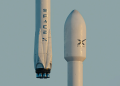
SpaceX launched a Falcon 9 carrying an undisclosed military payload for the US Space Force from Vandenberg Space Force Base in California at 8:36 p.m. local time on Wednesday, or 01:36 GMT on November 12, according to Türkiye Today — the only outlet whose account of this mission we could verify, a limitation set out in the sourcing note at the end of this report. The mission, designated USSF-627, flew from Space Launch Complex 4 East and was the company’s second classified flight in six days. It was also Falcon 9’s 120th launch of 2026 — and on the outlet’s count, 85 of those 120 flights have been Starlink missions, feeding a low Earth orbit constellation of more than 11,000 satellites.
Key facts
- Neither SpaceX nor the Space Force has said what the rocket carried or what the mission is meant to achieve, Türkiye Today says.
- USSF-627 followed USSF-432, a classified mission flown from the same base on November 6.
- It was Falcon 9’s 15th national security launch of the year, per the outlet.
What it means for Starlink and satellite internet users
What ties this launch to home satellite internet is the hardware, not the service. The same Falcon 9 line flies the consumer constellation and these classified payloads, and on the outlet’s numbers national security work accounts for 15 of this year’s 120 flights — so the large majority of SpaceX’s launch capacity still goes to Starlink.
For subscribers, there is nothing to act on: the report describes no change to Starlink pricing, plan availability, coverage or capacity in any market. Anyone who arrived here searching for a Starlink price change or new country availability should read this as a launch-cadence story rather than a service announcement. Türkiye Today instead frames the back-to-back missions as evidence of “SpaceX’s growing role in deploying national security payloads for the U.S. military.”
The 11,000-plus satellites already in orbit are the operating baseline against which expansion talk should be read — Elon Musk has talked about a far larger V4 constellation — and the launch split is worth holding alongside SpaceX’s latest quarterly figures.
What was on board, and the Starshield question
The payload remains classified. Türkiye Today reports speculation that USSF-627 and USSF-432 could carry batches of Starshield satellites, the line SpaceX builds for military and intelligence customers — but it names no analyst, agency or other outlet behind that claim, and it states plainly that neither mission has been publicly linked to Starshield by SpaceX or the Space Force. On the record available, that is unattributed conjecture rather than a confirmed payload, and it would take a Space Force or SpaceX statement, or an orbital track published by independent satellite watchers, to turn it into reporting.
The commercial broadband network and the military programme built on related hardware remain separate things; we have set out the difference between Starlink and Starshield and who controls access in wartime.
One booster, both sides of the business
The clearest detail in the report is the rocket itself. USSF-627 was the seventh flight of Falcon 9 booster 1103, which had previously flown one National Reconnaissance Office mission, two Space Development Agency missions and three Starlink launches. That single flight log is a miniature of the fleet’s workload: intelligence, military sensing and consumer broadband payloads carried on the same airframe, with the reuse history that makes the cadence possible.
What the outlet does not provide is a breakdown of this year’s 15 national security flights by customer — how many for the Space Force, how many for the NRO, how many for the SDA — so the trend inside that total cannot be tested from this source. What can be stated is the proportion: roughly one Falcon 9 flight in eight in 2026 has been national security work, against about seven in ten for Starlink.
Why both webcasts were cut short
Türkiye Today describes the same pattern on both flights: the ascent and the first-stage recovery are shown, then coverage stops before the upper stage reaches its destination orbit. Beyond the mission designation, no orbital parameters, satellite count or customer detail has been published by either SpaceX or the Space Force, per the report.
Sourcing note: every figure above comes from Türkiye Today’s report. No SpaceX newsroom item or Space Force statement on USSF-627 was available in the material reviewed, and a second wire listing under a near-identical headline, credited to KeepTrack, resolved to an unrelated page — so none of this is independently corroborated.
Frequently Asked Questions
What is Starshield, and what is it supposed to do?
Türkiye Today describes Starshield as a satellite line developed by SpaceX for military and intelligence operations, and reports that the satellites are believed to support the US Space Force’s Space-Based Sensing and Targeting portfolio, which helps the military track potential targets around the world.
Where did the first stage land after the launch?
Türkiye Today reports that the reusable booster landed on SpaceX’s droneship Of Course I Still Love You in the Pacific Ocean about 8.5 minutes after liftoff.
Is SpaceX launching more or less often than last year?
Less often, on the figures Türkiye Today cites. Falcon 9 completed 165 missions in 2025, including 122 Starlink launches, against 120 flights and 85 Starlink launches so far in 2026.