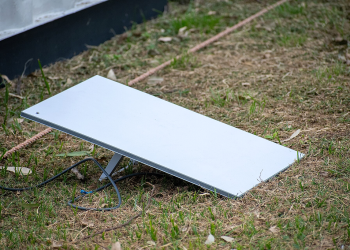
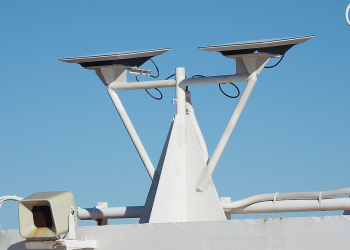
Ukrainian President Volodymyr Zelensky said on Thursday, 12 November, that SpaceX’s Starshield system — the military variant of the company’s Starlink satellite internet service — had been disrupted over Ukrainian territory for several days, limiting his forces’ ability to shoot down Russian drones. The statement, published on his Telegram channel, landed on the same day that US envoys Jared Kushner and Steve Witkoff met Russian President Vladimir Putin at the Kremlin, The Guardian reported.
Key facts
- Defence Minister Yevhenii Khmara and Armed Forces Commander-in-Chief Mykhailo Drapaty reported to Zelensky that Starshield had been disrupted “several days now”, per AzerNews.
- The restriction is a speed limit of 161 kilometres per hour (100mph), applied along the front line and in Russian-occupied territory (The Guardian).
- Ukrainian troops checked the circumstances and found “not random errors, but a system speed limit”, Zelensky said in remarks carried by AzerNews; on Telegram he went further, saying the restrictions were “helping the Russians kill more Ukrainians and carry out more accurate strikes against Ukraine” — wording reported by The Guardian, with LondonLovesBusiness carrying a slightly different translation.
- Kyiv has contacted Washington seeking an explanation, and Zelensky called the disruption deliberate rather than a technical fault (The Guardian).
- Semafor reports that Kyiv suggested the fresh disruption could be a pressure tactic by Washington amid negotiations to end the war.
A note on the numbers: The Guardian gives the cap as 161km/h, while LondonLovesBusiness describes the threshold as “roughly 160kph”. Both figures are the same 100mph limit rounded differently — 100mph converts to 160.9km/h — but neither outlet reconciles them, and this site has not independently measured the cap.
None of the four reports used here quotes a response from SpaceX, Elon Musk or the US government to the latest complaint, and none states that either was approached and declined to comment. This account rests entirely on those published reports.
Why it matters
A speed cap is not an outage, and that is what separates this episode from a cut cable or a jammed signal. Terminals stay online and the service fails only for the narrow set of users that move faster than 161km/h. Consumer dishes and static command posts never approach that ceiling; interceptor drones chasing Russian jet-powered aircraft live above it. A threshold set in software, on one side of a border, therefore subtracts a single Ukrainian capability while leaving the rest of the network looking healthy — which helps explain why it took front-line reports from two commanders, rather than any alarm, to surface the problem after several days.
Zelensky’s complaint is specific on that point: the cap stops Ukrainian interceptor drones reaching the speeds needed to destroy Russian jet-powered unmanned aircraft, LondonLovesBusiness reports, and interceptions have already failed as a result — “there are already hits” because the means of shooting down do not develop sufficient speed, he said in remarks quoted by AzerNews.
The second problem is accountability. No named decision-maker appears anywhere in these reports, so Kyiv has no counterparty to appeal to and no way to distinguish a policy change from a configuration error — the same ambiguity that closed out last month’s episode without an explanation.
For civilian subscribers, the dispute is about availability rather than price: none of the reports used here describes any change to Starlink’s consumer plans, tariffs or coverage in Ukraine or Europe. The commercial exposure they do describe is to future availability of a service European governments already pay for.
The diplomatic backdrop
Putin’s terms in Moscow
Meeting Kushner and Witkoff at the Kremlin, Putin warned that Russia would target any foreign troops deployed to Ukraine, refused to soften his demand for full control of four Ukrainian regions Moscow claims to have annexed, and ruled out foreign peacekeepers as a “continuation of war”, according to The Guardian. Those remarks appeared to dampen hopes of a deal after Zelensky spoke of a “window of opportunity” before the end of 2026, the same report says.
From Abu Dhabi to Dublin
The Moscow meeting followed trilateral negotiations in Abu Dhabi earlier in the week, which yielded no breakthroughs, Semafor reports; LondonLovesBusiness describes that round as two days of US-brokered talks, the first such meeting since February. European representatives will join the next round, Witkoff told reporters: “They’re our partners, and it’s important for them to be involved.” The envoys were due to travel on to Dublin to brief Zelensky. EU foreign policy chief Kaja Kallas said discussing a European security architecture was a “distraction” without a ceasefire. Those three details come from The Guardian.
Europe’s warning to SpaceX
Andrius Kubilius, the European commissioner for defence and space, cast the row as a contractual matter, warning that Starlink’s privileged position in Europe depended on the company honouring its commitments, LondonLovesBusiness reports. His framing was not whether SpaceX wanted to support Ukraine, but whether the satellite internet service European governments are paying for is actually delivered — and he warned that failure could threaten its availability to European governments and citizens.
That exposes a wider vulnerability, the same outlet argues: Europe’s growing military ambitions rest on critical infrastructure controlled by private companies, many based outside the continent’s jurisdiction, and there is still no comparable European network in service.
Background: last month’s restrictions
What happened in October
Zelensky last month accused Musk and US President Donald Trump of a “planned operation” to restrict access, LondonLovesBusiness reports, and on 14 October Starshield terminals developed problems while moving above the speed threshold, disrupting interceptor drones built to destroy Russian Shahed attack drones — the same pattern seen in the earlier round of throttling.
How it ended — and where sources differ
LondonLovesBusiness says access to Starlink was restored on 24 October; The Guardian says the service was “partly restored”. AzerNews notes that Musk had restricted the Starlink network in Ukraine before, claiming it could not be used for attacks, then removed the limitations. The reappearance of the reported 161km/h cap suggests those operational restrictions remain a live concern for Kyiv.
Frequently Asked Questions
Who pays for Starshield?
The Pentagon. The Guardian identifies the US defence department as the funder of Starshield, whose terminals carry traffic across a battlefield where conventional communications networks have been repeatedly damaged or destroyed (LondonLovesBusiness).
Did the speed restrictions apply outside Ukraine?
No — the cap appears to stop at Ukraine’s borders. Ukraine tested the same terminals in European Union territory after last month’s dispute and drone units there kept working at up to 180kph, per LondonLovesBusiness, while inside Ukraine the identical equipment cut out above the threshold, Zelensky said in remarks that outlet carried.
Who ordered the restrictions?
Nobody has said, publicly or privately to Kyiv. A Ukrainian official quoted by LondonLovesBusiness said it was unclear who had authorised the latest limit, and The Guardian notes that last month’s episode ended with Musk and the Trump administration blaming each other.
Were the Starlink disruptions discussed at the Abu Dhabi peace talks?
No. A Ukrainian official told LondonLovesBusiness the satellite disruptions were not raised during the Abu Dhabi negotiations.