Ukraine’s military says a sudden speed restriction on SpaceX’s Starlink satellite internet network disrupted battlefield missions this week, after limits were applied overnight on Tuesday. The BBC reported that drones and terminals connected to the network were capped at 100mph (160km/h), and that Serhiy Beskrestnov, an adviser to President Volodymyr Zelensky, said officials were not told about the limit in advance.
Key facts
- The BBC reported the 100mph (160km/h) cap was set overnight on Tuesday by Elon Musk’s SpaceX, and that a top Ukrainian official said some battlefield missions were disrupted.
- George Barros of the Institute for the Study of War (ISW), a US think tank tracking the war, told the BBC Starlink is used across Ukraine’s naval, land and air forces.
- Mint, citing Axios, reported Zelenskyy raised concerns over the disruption to Starlink connectivity.
- Mykhailo Fedorov said on X that connectivity at speeds of up to 160 km/h was being restored, but that removing Starshield’s speed limit entirely was critical for Ukraine’s defence, according to Mint.
- Musk said on X that limits on Starshield are decided by the US military; CNN, citing two US officials, reported the decision was not a high-level US policy decision, per Mint.
Why it matters
Barros, the ISW’s Director of Innovation and Open Source Tradecraft, described Starlink to the BBC as the backbone of military communications in Ukraine. He told the broadcaster the network lets drones, artillery and command posts function as a single real-time network in which the time between sensor and shooter is minimised, and said restrictions on it could have major implications.
The BBC also reported there is no ready replacement for the network. That is the core of why the reported speed cap on Ukraine’s drone missions escalated into a political row within hours.
What Starlink does for Ukraine’s drones
According to the BBC, Ukrainian drones using Starlink can hold stronger connections with their operators over longer distances than conventional radio networks allow, and are less vulnerable to jamming.
Tom Whittington, an electronic warfare expert and associate fellow at the Royal United Services Institute (RUSI), a British defence think tank, told BBC Radio 4’s PM programme that the satellite system lets Ukraine move large volumes of data — video, text and voice calls — in a similar way to smartphones, but without the ground infrastructure phones need. He said the restrictions “effectively preclude” anything connected to the network going above 100mph, making drone navigation difficult inside Ukraine and in Russian-occupied territory there.
The interceptor problem
Barros told the BBC that Starlink-enabled interceptors are among Ukraine’s most effective answers to jet-powered Russian Shahed drones. The BBC reported that Shaheds fly at speeds in excess of 198mph, so a 100mph ceiling makes efforts to chase them down all but impossible. The ISW’s assessment, as reported by the BBC, is that throttling drones at that relatively low speed renders those intercept attempts all but useless.
Who set the limits is disputed
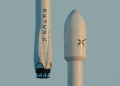
The complaint has pulled attention onto Starshield, the military tier of the network — described by both outlets as a military-grade version developed for the Pentagon by SpaceX. Musk says the two systems are separate but in many cases share the same underlying satellite technology.
In a post on X, Musk pointed to Washington rather than his own company: “Any limits on speed or usage are decided by the US military and ultimately POTUS,” he wrote, adding that Starshield systems are owned and controlled by the US government. He also said Starlink is a commercial service owned and controlled by SpaceX, with usage limited to civilian or defensive activities and not available for offensive military action.
The accounts do not line up. The BBC attributed the overnight limits to Musk’s SpaceX. Mint reported, citing AFP, that Ukrainian defence officials have suggested Washington is behind the slower speeds on terminals used to strike Russian-occupied territory and run interceptor drones, while CNN’s US sources said the move was not a high-level policy decision. Mint also reported Zelenskyy, in an interview with Piers Morgan cited by the New York Post, accused SpaceX of restricting Ukrainian access and said he hoped it was a mistake or a technical problem. Mint referred to Fedorov as both Ukraine’s defence minister and its former defence minister in the same report.
Background
Mint reported, citing Axios, that the restrictions landed amid deteriorating relations between US President Donald Trump and Zelenskyy following a diesel supply deal involving Russia. The BBC reported that Trump has criticised Ukraine’s long-range strikes on Russian oil refineries and called for a new leader, criticisms echoed by Musk, and that Beskrestnov believes the restrictions are not a coincidence and are tied to the strains between Kyiv and Washington.
Mint reported that a 160 km/h ceiling was said to remain in place even as service was restored, which is where Musk’s account of who controls Starshield now sits against Kyiv’s demand that the cap be lifted altogether.
Frequently Asked Questions
Does Starlink work inside Russia?
No. The BBC reports that Starlink does not work inside Russia, but that Ukrainian drones can still use the satellites to communicate back to their operators during strikes.
Has SpaceX ever restricted Russian use of Starlink?
Yes. Both the BBC and Mint report that earlier this year Elon Musk cut the use of Starlink terminals for Russian forces, a move they say blunted Moscow’s advance in Ukraine and caused confusion among Russian commanders.
Has Ukraine made other complaints about US support this week?
According to Mint, Ukraine has also accused the United States of helping Russia by failing to warn it of incoming missile strikes. Mint says Kyiv was hit by ballistic missiles on two consecutive nights before air raid sirens could sound to warn people to take cover.
How much Ukrainian territory does Russia currently control?
Both the BBC and Mint report that Moscow currently controls about 20% of Ukrainian territory. President Vladimir Putin launched the full-scale invasion in 2022, and the outlets describe the conflict as a four-year war.
Follow Starlink News on Google. Make us a preferred source to see more of our reporting in Google search results.