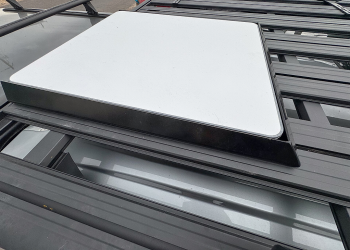
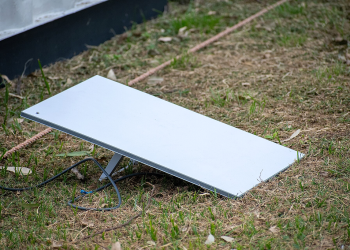
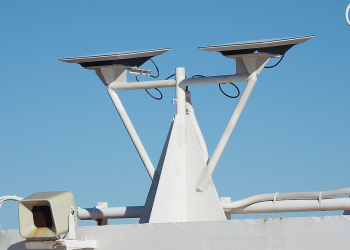
Ukraine’s military is again recording speed restrictions on Starshield, the militarised version of SpaceX’s Starlink satellite internet service, President Volodymyr Zelensky said on 12 November after briefings from Defence Minister Yevhenii Khmara and Armed Forces Commander-in-Chief Mykhailo Drapatyi. The restrictions have been in place for several days across the entire front line and in Russian-occupied parts of Ukraine, and Kyiv says neither SpaceX nor the US government has told it who imposed them.
Key facts
- Zelensky says Starshield’s usable speed is capped again at 161km/h (100mph), according to The Moscow Times.
- He said the Ukrainian military examined the circumstances and concluded the problem is systemic rather than accidental technical error, per Gwara Media.
- Zelensky said Ukrainian interceptors cannot reach the speed needed to catch Russian jet-powered drones, and that some Russian strikes have already landed as a result.
- The Pentagon and the White House did not immediately respond to Reuters, and SpaceX declined to comment, The Moscow Times reported.
- Ukraine’s contract with the US government for Starshield access expires next year, Ukrainian embassy official Deny Sienik told Reuters.
- The disruption surfaced a day after two days of US-brokered Russia-Ukraine talks in Abu Dhabi ended.
Why it matters
The effect does not stop at air defence. Gwara Media reports the same restriction degraded mid-range strike operations and drone logistics, where the limit binds the connectivity carried on the airframe rather than the airframe itself. The Kyiv Independent reports that Ukraine’s mid-range strike campaign this year has squeezed Russian logistics.
Nothing in the reporting describes a failure: no satellite was lost and no hardware broke. A service parameter changed, twice inside a month, and for the second time no party on the supply side will say who changed it. Beskrestnov’s proposed remedy — amend the contract terms rather than leave the country without air defence — is contractual rather than technical.
The cap applies to Starshield, which The Moscow Times notes SpaceX provides to the US government rather than selling commercially, so commercial satellite internet subscribers’ pricing, plans and service availability are not touched by it. No outlet reviewed here publishes how many Starshield terminals Ukraine operates or the value of the contract behind them: the speed ceiling and the disputed duration of the first round are the only quantified figures in circulation.
No one has owned the decision
Sienik, deputy chief of mission and chargé d’affaires at Ukraine’s embassy in Washington, told Reuters there had been no clarification from SpaceX or the Pentagon, and said the limits apply across the contact line and occupied territory, which he described as the first point of interception for Russian drones.
A Ukrainian official told The Moscow Times the disruptions were not raised at the Abu Dhabi talks and that it was unclear who took the decision. Zelensky said Kyiv is trying to establish the circumstances with the United States.
Independent confirmation from the front
The Kyiv Independent reported that a corps-level commander fighting in Donetsk Oblast, speaking anonymously, said the limit was still in force and was making middle-strike drones easier for Russia to intercept or evade. A senior member of a unit in Ukraine’s Unmanned Systems Forces confirmed the same, the outlet said. Presidential adviser Serhii “Flash” Beskrestnov also confirmed on 12 November that speeds had been restricted.
One figure worth settling: the cap appears in reporting as both 160 and 161km/h. That is rounding, not a second number — 100mph converts to 160.9km/h, which the Kyiv Independent’s sources round down and The Moscow Times rounds up.
What happened in October
This is the second round, and the length of the first is not settled. The published accounts:
- The Kyiv Independent puts the restrictions at 17-23 October — seven days — with normal speeds confirmed at the end of the month.
- The Moscow Times dates the restoration to 24 October.
- AOL describes a chaotic 10-day period.
- Gwara Media says the restrictions appeared in October and were lifted after two weeks.
By our reading of those conflicting accounts, the counts can be partly squared: a tally that begins before the 17 October public confirmation, or that runs to Zelensky’s end-of-month statement rather than the 24 October restoration, stretches seven days towards ten or fourteen. No outlet publishes a start date that reconciles all three, so on the published record the first round ran somewhere between one and two weeks.
Accounts of responsibility diverge too, and each version has a single identifiable origin. Musk said on 24 October that Starshield is controlled by the US government and that any speed or usage limits are decided by the US military and ultimately the president, while accusing Ukraine’s military of breaching Starlink’s terms of service and saying SpaceX had closed a “loophole” after Ukrainian drone strikes, per AOL. AOL also reports the Wall Street Journal saying Musk himself ordered the slowdown. The Kyiv Independent, separately, cites a 23 October Wall Street Journal report that President Donald Trump had asked Musk to lift the restrictions. On 19 October Trump told reporters he did not know who ordered it but wanted to find out, AOL reported. Zelensky called the slowdown a big mistake in a 14 October interview with Piers Morgan, AOL said, and Gwara Media notes that US officials and SpaceX avoided responsibility at the time.
Pressure from Brussels and Washington
Tom Renier, the European Commission’s spokesperson for defence and space affairs, called the reports concerning and, if confirmed, unacceptable, and said SpaceX must take a consistent approach to sharing its services with Ukraine, the Kyiv Independent reported, citing the Guardian. The Congressional Ukraine Caucus, a bipartisan group in the US Congress, is demanding that service be restored to Kyiv in full and wants a complete explanation from the Trump administration and SpaceX.
The backdrop
The Moscow Times notes that the mid-October cap came amid tensions with the Trump administration over Ukrainian attacks on Russian oil refineries, and that Ukraine has continued striking Russian refineries and energy sites while Russia keeps hitting Ukrainian electricity infrastructure and cities.
Zelensky’s own summary of the consequences was blunt. “This helps Russians kill more Ukrainians and carry out more accurate strikes on Ukraine,” he said in the post reported by The Moscow Times, which says it was published on Telegram; the Kyiv Independent says he wrote on X.
Frequently Asked Questions
What is the difference between Starlink and Starshield?
Starshield is the militarised version of SpaceX’s Starlink satellite communications service, according to The Moscow Times. The Kyiv Independent reports that Ukraine uses both commercial Starlink terminals and Starshield.
How fast does Starshield normally run for Ukraine?
At the end of October, Zelensky confirmed that Starlink and Starshield had returned to normal operating speeds, and Ukraine’s Defence Ministry reported stable connectivity at speeds above 400 kilometres per hour, according to The Kyiv Independent.
Does commercial Starlink have a speed limit too?
Presidential adviser Serhii "Flash" Beskrestnov said commercial Starlink carries a speed restriction of 70 to 90 kilometres per hour and does not work on Russian territory, according to The Kyiv Independent. He made the point while rejecting Elon Musk’s claim that Kyiv had breached Starlink’s terms of service.
Did the cap affect anything other than drones?
Beskrestnov said problems also arose with communications for the helicopters that track Shahed-type drones, according to The Kyiv Independent.