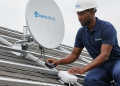
Starlink, the satellite internet constellation operated by SpaceX, has emerged as a transformative force in global connectivity. For years, reliable high-speed internet remained an elusive dream for those in remote, rural, or underserved areas. Starlink is rapidly changing that narrative, delivering broadband access from low Earth orbit (LEO) satellites. As of late 2024, its operational footprint continues to expand, offering not just unprecedented speed but also increasingly flexible service options tailored to a diverse user base, from static residential homes to nomadic travelers and temporary deployments. This article delves into the nuances of Starlink’s evolving offerings, examining its flexible plans, groundbreaking hardware like the Starlink Mini, and its profound implications for internet access worldwide.
Unpacking Starlink’s Core Technology and Vision
Starlink’s fundamental premise relies on a vast constellation of LEO satellites that orbit much closer to Earth than traditional geostationary satellites. This proximity dramatically reduces latency, making satellite internet viable for activities like online gaming, video conferencing, and other real-time applications that were previously impractical. Each satellite acts as a node in a global mesh network, communicating with ground stations and user terminals (dishes) to deliver robust internet service. SpaceX’s relentless launch schedule, with missions frequently deploying new batches of Starlink satellites—such as the planned Falcon 9 missions in August 2026 from both California and Florida sites, according to SpaceX’s own launch manifest—underscores the continuous effort to enhance coverage, capacity, and resilience of the network. The vision extends beyond mere internet provision; it’s about bridging the digital divide, empowering communities, and supporting operations in areas previously considered beyond the reach of high-speed broadband.
The Engineering Marvel in Low Earth Orbit
The Starlink system is a testament to innovative aerospace engineering. Each satellite is equipped with advanced phased-array antennas, solar panels, and ion thrusters, allowing for precise orbital maneuvering and deorbiting capabilities to minimize space debris. The sheer number of satellites, currently numbering in the thousands and growing, creates a robust network that can reroute traffic, ensuring consistent service even during localized congestion or satellite unavailability. This distributed architecture is a significant departure from single-point-of-failure systems, offering enhanced reliability and a pathway for continuous upgrades and technological improvements without necessitating a complete overhaul of the existing infrastructure.
The Evolution of Starlink’s Service Plans: Embracing Flexibility
Initially, Starlink primarily catered to residential users with a standard monthly subscription model. However, acknowledging the diverse needs of its expanding customer base, Starlink has progressively introduced more dynamic and flexible service plans. This evolution is particularly crucial for users who do not require continuous, month-to-month service, or those who frequently travel. The shift towards greater flexibility, observed significantly in recent years, reflects a direct response to user feedback and market demands. For a deeper dive into how these plans have evolved, readers can explore our article on Starlink’s Evolving Flexibility: Short-Term Plans & Global Reach.
Addressing the Need for Non-Standard Subscriptions
The traditional internet subscription model often locks users into long-term contracts or full monthly payments regardless of actual usage. For RV enthusiasts, seasonal campers, or individuals requiring temporary connectivity for events or short projects, this model proved inconvenient and costly. Queries on platforms like Reddit, such as the discussion on June 8, 2023, asking about weekly payments, highlighted a significant demand for more granular billing options. Similarly, a Facebook discussion from November 16, 2024, confirmed that Starlink has begun to offer prorated service for certain plans, specifically mentioning a 50GB plan, which allows for weekly or short-term usage, albeit within specific billing cycle rules. This demonstrates Starlink’s responsiveness to market signals, recognizing that one size does not fit all in the modern connectivity landscape.
Starlink’s Flexible Payment and Usage Options
One of the most significant developments in Starlink’s service model has been the introduction of flexible usage and payment options, moving beyond the standard residential monthly commitment. These innovations are opening up new possibilities for various user groups.
Short-Term and Prorated Service
The ability to access Starlink for less than a full month is a game-changer for many. As noted by industry experts like Derek Berry in November 2024, Starlink now provides prorated service, particularly for plans like the 50GB option, enabling users to pay for shorter durations, such as a week or a few days. While the exact mechanics of these “specific billing cycle rules” require close attention, the mere existence of such options signifies a profound shift. This means that users no longer need to commit to a full month of service if their connectivity needs are only temporary. For example, an individual planning a week-long remote work retreat or a short expedition can activate and deactivate service more efficiently, paying only for the actual period of use. This flexibility directly addresses earlier user concerns, where some, like a Reddit user in November 2021, paid for initial hardware and assumed the first month of service was included, only to find separate billing for activation and service commitment.
Hardware Rental: A Low-Commitment Entry Point
Beyond flexible service activation, Starlink has also introduced hardware rental options in select countries, further lowering the barrier to entry. For a monthly fee of just $10, in addition to the monthly service charge, users can rent the Starlink hardware. This is particularly attractive for those hesitant to invest the significant upfront cost of purchasing the dish, or for those whose usage is intermittent and doesn’t justify a permanent hardware acquisition. Renting offers a flexible pathway to experience Starlink’s capabilities without the full financial commitment, making it accessible to a broader demographic. This option is especially beneficial for those exploring seasonal use or for businesses needing temporary connectivity at project sites.
Starlink Roam: High-Speed Internet on the Go
For users whose connectivity needs are inherently mobile, Starlink Roam (formerly known as Starlink RV) provides a dedicated solution for portable internet access. This service plan is designed for individuals who travel frequently and require reliable, high-speed internet wherever their journey takes them.
Features and Benefits of Roam
The Roam plan offers substantial benefits for nomads. With speeds advertised at up to 300+ Mbps, and a typical usage allowance of 100GB, which often translates to approximately one week of standard use, it provides robust connectivity for everything from streaming and video calls to remote work. The ability to pause and unpause service as needed makes it an economical choice for those who are not continuously on the road. This flexibility resonates deeply with the RV community, as evidenced by discussions on forums regarding the desire for more agile payment structures, moving away from rigid monthly payments. The Roam service means users can take their internet with them, whether they are parked at a remote campsite, navigating a marine environment, or setting up a temporary base of operations. This level of portable, high-bandwidth internet was almost unimaginable just a few years ago.
Introducing the Starlink Mini: Ultra-Portable Connectivity
Further advancing the concept of portable connectivity, Starlink has launched the Starlink Mini, a significantly smaller and lighter version of its standard user terminal. This innovation is poised to redefine on-the-go internet access.
Compact Design, Powerful Performance
The Starlink Mini is designed for ultimate portability, making it ideal for hikers, backpackers, and emergency responders who need a compact, easy-to-deploy internet solution. While specific details on its full capabilities are still emerging, early indications suggest it maintains much of Starlink’s core performance in a remarkably small form factor. Its lightweight design means it can be carried with ease, and its simpler setup reduces the time and effort required to establish a connection. This is a crucial development for those who prioritize minimal gear and maximum utility in their adventures or operations.
Rental Options for the Mini
Recognizing the diverse use cases for such a portable device, rental options for the Starlink Mini are already emerging through third-party providers like SatPhoneStore. Users can rent the Mini with a starting data allowance of 50GB+, and specific overage charges apply ($1.99/GB for US local overages, $3.99/GB for global overages). Rental durations are flexible, ranging from one week to several months (1 week, 2 weeks, 3 weeks, 1 month, 2 months, 3 months), catering precisely to short-term needs such as vacations, expeditions, or specific work projects. This rental model perfectly complements the Mini’s portable nature, offering users access to cutting-edge connectivity without the upfront purchase of hardware they might only use intermittently. This move further aligns with the general trend towards more accessible and flexible Starlink services, which we’ve explored in depth in our analysis, Starlink: Unpacking Next-Gen Satellite Internet & Flexible Access.
Geographical Reach and Expanding Horizons
Starlink’s operational footprint is global and continuously expanding. With thousands of satellites in orbit and more planned for deployment by SpaceX in the coming years, coverage is becoming increasingly ubiquitous. This global reach is not just about availability; it’s about providing consistent, high-speed service across continents and oceans.
Impact on Underserved Regions
In many parts of the world, traditional terrestrial internet infrastructure is either non-existent, prohibitively expensive, or unreliable. Starlink fills this critical void, offering a lifeline to communities that have historically been left behind in the digital revolution. From remote villages in developing nations to isolated homesteads in developed countries, Starlink is delivering access to education, healthcare, economic opportunities, and vital information. This transformative impact is one of Starlink’s most compelling contributions.
Addressing Digital Equity
The concept of digital equity, ensuring everyone has access to affordable, reliable internet, is central to Starlink’s mission. By providing an alternative to traditional fixed-line or cellular broadband, particularly in difficult-to-serve terrains, Starlink helps level the playing field, fostering greater inclusion in the global digital economy.
Comparing Starlink with Traditional Internet Providers
While Starlink offers unparalleled advantages in certain scenarios, it’s essential to understand how it stacks up against conventional internet service providers (ISPs).
Speed, Latency, and Reliability
Starlink delivers high-speed internet, with residential plans offering speeds of 100 Mbps and 200 Mbps, and potentially higher for specialized tiers. Crucially, its LEO satellite architecture results in significantly lower latency compared to older geostationary satellite internet, making it competitive with some terrestrial broadband options. However, like any technology, it can be affected by weather conditions (heavy rain or snow) that might temporarily impact signal strength. Terrestrial fiber optic connections typically offer the lowest latency and highest speeds, but their availability is limited.
Cost Structure and Value Proposition
The cost of Starlink involves an upfront hardware purchase (unless renting) and a monthly service fee. While this can be higher than entry-level terrestrial plans, the value proposition lies in its availability in areas where other options are nonexistent or severely limited. For users in these areas, Starlink isn’t just an alternative; it’s often the only viable option for high-speed internet. The flexible payment and rental options further enhance its value, allowing users to tailor their investment to their actual usage needs.
Challenges and Future Prospects for Starlink
Despite its rapid growth and technological prowess, Starlink faces several challenges and is poised for continued evolution.
Managing Space Debris and Orbital Congestion
The sheer number of Starlink satellites raises concerns about space debris and potential orbital congestion. SpaceX is actively developing and implementing strategies to mitigate these risks, including designing satellites for controlled deorbiting at the end of their operational life and incorporating collision avoidance systems. International regulatory bodies are also working to establish guidelines for sustainable space operations, an area Starlink must continue to navigate.
Competition and Technological Advancements
The satellite internet market is becoming increasingly competitive, with other players like Amazon’s Project Kuiper and OneWeb also deploying LEO constellations. This competition is likely to drive further innovation, potentially leading to lower costs, higher speeds, and more diverse service offerings across the industry. Starlink’s ongoing commitment to R&D and launching next-generation satellites will be crucial for maintaining its leadership position. Furthermore, the development of new hardware, such as the Starlink Mini, suggests a continuous push towards specialized solutions, echoing the transformative power outlined in our piece, Starlink: Redefining Global Connectivity & Flexible Access.
Enhancing Capacity and Coverage
As user numbers grow, Starlink will need to continually enhance its network capacity to maintain high speeds and low latency, especially in densely populated areas or regions with high demand. This will involve launching more advanced satellites, improving ground station infrastructure, and optimizing network management algorithms.
Conclusion: The Future of Global Connectivity
Starlink represents more than just a new internet service; it embodies a paradigm shift in how we conceive of and access global connectivity. From its groundbreaking LEO satellite architecture to its evolving suite of flexible service plans—including prorated weekly options, hardware rentals, the robust Roam service, and the ultra-portable Starlink Mini—it is consistently adapting to meet diverse user demands. As of late 2024, its impact on bridging the digital divide, empowering remote communities, and enabling unprecedented mobility for internet users is undeniable. Looking ahead to 2026 and beyond, with continuous launches and technological refinements, Starlink is poised to further cement its role as a pivotal force in redefining global internet access. Its journey underscores a commitment not just to technological innovation, but to making high-speed, reliable internet a reality for everyone, everywhere.