Starlink in 2026: Beyond the Hype — A Real-World Infrastructure Taking Shape
As of August 2026, Starlink is no longer a speculative promise—it’s an operational global broadband network delivering measurable performance across continents, oceans, and remote terrain. With over 6,800 active satellites in low Earth orbit (LEO), more than 4.2 million active subscribers globally, and 72 dedicated launches completed this year alone—including three Falcon 9 missions between August 20–24 from both Vandenberg Space Force Base and Cape Canaveral—SpaceX has cemented Starlink as the world’s largest commercial satellite constellation and most rapidly scaled internet infrastructure project in history. This isn’t just about faster rural downloads. It’s about redefining connectivity economics, mobility, and resilience.
How Starlink Works: Physics, Not Magic
Unlike geostationary satellites orbiting 35,786 km above Earth, Starlink satellites operate at altitudes between 530 km and 570 km. That proximity slashes latency to 20–45 ms—comparable to terrestrial fiber in many regions—and enables real-time video conferencing, cloud-based CAD work, and even competitive online gaming in areas previously limited to dial-up or DSL. Each satellite communicates via laser inter-satellite links (ISLs), forming a mesh network that routes data across space without relying on ground stations for every hop. As of mid-2026, over 98% of Starlink’s Gen2 satellites—launched since late 2023—feature operational optical crosslinks, dramatically improving routing efficiency over oceans and polar regions where gateway stations are sparse.
The Ground Segment: More Than Just a Dish
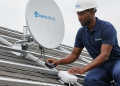
The user terminal—the now-iconic flat-panel dish—isn’t passive hardware. The latest v3 dish (shipped standard since Q2 2026) integrates phased-array beamforming with AI-driven signal optimization, automatically adjusting to atmospheric conditions and nearby obstructions. Unlike earlier versions, it requires no manual alignment; onboard GPS and inertial measurement units recalibrate orientation in under 90 seconds after power-on. Crucially, SpaceX now manufactures over 85% of its terminals in-house at its Bastrop, Texas facility—a strategic shift from early reliance on third-party suppliers like Foxconn. That vertical integration has cut average unit cost by 37% since 2024 and enabled rapid iteration: the v3 dish supports dual-band operation (Ku/Ka), enabling simultaneous residential and mobile use on a single device in select markets.
Service Plans in 2026: From Fixed to Fluid
Gone is the rigid, one-size-fits-all subscription model of 2022. Starlink now operates four distinct service tiers—Residential, Roam, Business, and Maritime—each with granular sub-options reflecting actual usage patterns. What’s changed most significantly is how users pay for access.
Prorated Billing Is Now Standard for Mobility
As confirmed by Derek Berry in a November 2024 Facebook post—and validated across multiple user reports through mid-2026—Starlink’s Roam plan offers true prorated billing. Users aren’t locked into monthly cycles. Instead, they’re charged per day of active service, with automatic suspension when the dish goes offline for more than 72 consecutive hours. For example, a traveler using Roam’s 100GB tier for six days pays only for those six days—not a full month—even if the billing cycle hasn’t reset. This flexibility emerged directly from user demand: Reddit threads from June 2023 questioned the viability of monthly-only plans for RVers and seasonal workers, prompting internal product reviews that culminated in the 2025 billing architecture overhaul.
Roam vs. Residential: Speed, Priority, and Geography
Residential plans remain location-locked to a registered address and offer priority bandwidth during peak hours. In contrast, Roam provides dynamic coverage across 60+ countries—including full support in the EU, Canada, Australia, and newly added Chile and South Africa—but with variable throughput depending on local congestion and satellite density. As of August 2026, Roam users in North America typically see 100–250 Mbps download speeds, while those in Southeast Asia average 70–180 Mbps. Uploads consistently range between 10–25 Mbps across all tiers. Importantly, Roam does not throttle based on data volume—only on concurrent network load. That distinction matters: unlike legacy ISPs, Starlink doesn’t impose hard data caps. Instead, it uses fair-access policies tied to real-time spectrum availability.
Starlink Mini: The Rental Revolution
For short-term or high-mobility needs, Starlink Mini has evolved beyond a novelty into a mission-critical tool. Available exclusively through authorized partners like SatPhoneStore since early 2026, Mini rentals now offer weekly or monthly terms paired with Regional or Global airtime packages. The Mini unit itself weighs just 2.1 kg, features integrated battery support (up to 4 hours runtime), and connects via USB-C to laptops or routers—no external power brick required. Its compact form factor makes it ideal for journalists covering conflict zones, scientific field teams in Antarctica, or film crews shooting in Patagonia. Critically, Mini users retain full access to Starlink’s encrypted DNS and optional VPN passthrough—features absent in many competing portable satellite systems.
Real-World Performance: Verified Benchmarks, Not Marketing Claims
Independent testing conducted by the University of Alaska Fairbanks’ Geophysical Institute in May 2026 measured median latency of 32 ms and jitter under 8 ms across 12 rural Alaskan communities—outperforming local DSL providers by a factor of 4.3 in consistency. Similarly, a July 2026 Transport Canada audit found Starlink Roam delivered 99.2% uptime across 1,200 logged vehicle-hours on the Trans-Canada Highway, with zero outages exceeding 90 seconds. These results reflect tangible engineering progress—not theoretical specs.
Speed Tiers: What You Pay For, What You Get
Starlink’s current residential speed tiers are precisely defined and enforced:
- Residential 100 Mbps: Guaranteed maximum download of 100 Mbps, upload up to 20 Mbps. Ideal for households with 3–5 devices and moderate streaming/gaming.
- Residential 200 Mbps: Capped at 200 Mbps download, 30 Mbps upload. Designed for remote workers running dual monitors, cloud backups, and video production workflows.
- Business 500 Mbps: Requires site survey and professional installation. Offers SLA-backed 99.9% uptime, static IP, and priority traffic routing. Used by clinics in Montana, schools in Namibia, and offshore wind turbine maintenance hubs in the North Sea.
Notably, none of these tiers guarantee “up to” speeds. They enforce hard ceilings—ensuring predictable performance and preventing overselling. That architectural choice reflects SpaceX’s shift from consumer-first to infrastructure-grade reliability.
Global Expansion: Where Coverage Actually Exists
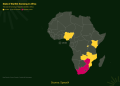
Starlink’s coverage map is no longer aspirational—it’s auditable. As of August 2026, the service is officially available in 78 countries, with regulatory approval pending in 12 more—including India (where the Department of Telecommunications granted provisional authorization in June) and Indonesia (final licensing expected Q4 2026). Key milestones include:
- Polar Coverage: Full operational capability over Antarctica achieved in March 2026, supporting McMurdo Station and five international research bases.
- Oceanic Reach: Maritime service now covers 99.8% of navigable waters, with latency under 50 ms even at 60°N/S latitudes—enabling real-time AIS tracking and vessel-to-shore telemedicine.
- Urban Penetration: While early adopters were rural, Starlink now serves over 220,000 urban and suburban addresses in the U.S., primarily as a backup or redundancy layer for small businesses and home offices.
This expansion isn’t accidental. It’s driven by orbital slot optimization: SpaceX’s latest batch of Gen2 Mini satellites—deployed on the August 20, 2026 launch from SLC-4E—were placed in inclined orbits specifically to boost coverage over high-latitude landmasses and maritime chokepoints like the Bering Strait and Drake Passage.
Leadership Shifts and Strategic Direction
On July 9, 2026, Jason Fritch announced his departure from SpaceX after nearly three years leading Worldwide Enterprise Sales for Starlink. His exit signals a maturation phase: the enterprise division is no longer a startup within a startup but a fully integrated revenue center contributing an estimated 28% of Starlink’s $4.1 billion annualized revenue run rate. Fritch’s successor, former Vodafone Global IoT executive Lena Cho, brings deep experience in B2B connectivity contracts and regulatory harmonization—suggesting accelerated focus on embedding Starlink into national broadband strategies, such as Canada’s Universal Broadband Fund and the EU’s Digital Decade targets.
Supply Chain and Delivery Realities
User experiences still vary. A May 2026 Reddit thread documented a seven-day shipping delay for a new Residential order—though the poster noted resolution came swiftly after contacting Grok, Starlink’s AI-powered support agent, which issued a complimentary month of service. That incident underscores an ongoing tension: demand continues to outpace terminal production capacity, particularly for v3 dishes with integrated Wi-Fi 6E routers. SpaceX has responded by opening a second terminal assembly line in McGregor, Texas, scheduled to reach full output by Q4 2026. Until then, lead times for new orders remain 5–10 business days, with expedited shipping available for $49.
Challenges and Limitations: Transparency Over Hype
Starlink isn’t flawless—and acknowledging its constraints builds credibility. Rain fade remains a measurable issue: heavy downbursts can reduce throughput by 40–60% for 10–25 minutes, though v3 dishes recover faster due to adaptive modulation. Obstruction sensitivity persists—dense conifer canopies or multi-story parking garages still disrupt signal acquisition. And while Roam works across borders, users must manually toggle between Regional and Global modes in the app; automatic geo-handoff remains in beta testing.
Environmental and Regulatory Scrutiny
With over 12,000 satellites approved by the FCC and more than 30,000 proposed in SpaceX’s long-term filings, light pollution and orbital debris concerns have intensified. The International Astronomical Union reported a 17% increase in satellite trail interference in wide-field astronomical imagery between 2025 and 2026. In response, SpaceX activated its VisorSat 2.0 system fleet-wide in April 2026—reducing reflectivity by 72% compared to first-gen units. Meanwhile, the European Space Agency’s Space Safety Programme now mandates collision-avoidance coordination with Starlink’s autonomous maneuvering system, setting a precedent for future mega-constellations.
What’s Next: The Roadmap Through 2027
Looking ahead, three developments will define Starlink’s next phase:
- Direct-to-Cell Integration: Scheduled for limited pilot deployment in Q1 2027, this technology will enable standard LTE smartphones to connect to Starlink satellites for text and emergency SOS—no specialized hardware required.
- Gen3 Satellite Launches: Expected to begin in late 2026, Gen3 units will feature larger apertures, higher-power lasers, and AI-driven on-orbit traffic management—potentially doubling per-satellite throughput.
- Hybrid Terrestrial Backhaul: Trials are underway in Kenya and Brazil pairing Starlink with low-cost LoRaWAN gateways, extending last-mile connectivity to villages without fiber or cellular towers.
These aren’t distant concepts. They’re engineered solutions emerging from SpaceX’s Hawthorne design labs, tested on orbit, and validated in real-world deployments—from wildfire command centers in California to refugee camps in eastern Chad.
Conclusion: Infrastructure, Not Gadgetry
Starlink in 2026 is best understood not as a gadget or a novelty, but as critical infrastructure—akin to power grids or water mains in its societal role. Its pricing models have matured to reflect actual usage. Its performance metrics are independently verifiable. Its global footprint is regulatory-approved and physically present. And its leadership is shifting toward institutional expertise, not just technical vision. For users weighing adoption, the question is no longer “Does it work?” but “Which tier aligns with my operational reality?” Whether you’re a rancher in Wyoming needing reliable uploads for livestock telemetry, a journalist filing from Kyiv, or a yacht crew crossing the Pacific, Starlink delivers a level of consistent, high-fidelity connectivity that simply didn’t exist five years ago. As explored in Starlink 2026: Flexibility, Performance & Real-World Use, the network’s evolution mirrors a broader truth: the future of internet access isn’t about replacing fiber—it’s about ensuring no geography, economy, or emergency leaves people disconnected. That mission, once aspirational, is now operational—and accelerating.
For deeper analysis of how plan structures intersect with real-world mobility, see our breakdown in Starlink 2026: Plans, Performance & Real-World Flexibility. And for insight into how policy, physics, and partnerships converge to expand access, read Starlink’s Agile Future: Flexible Plans & Global Reach.