In an era defined by rapid technological advancement, access to high-speed, reliable internet remains a fundamental need for individuals and industries worldwide. Yet, vast swathes of the globe still grapple with inadequate or non-existent connectivity. Enter Starlink, SpaceX’s ambitious satellite internet constellation, which is not merely offering an alternative but actively redefining the landscape of global access. With its ever-expanding network of low Earth orbit (LEO) satellites and increasingly flexible service plans, Starlink is proving to be a game-changer, promising to bridge the notorious digital divide and empower users with unparalleled connectivity, wherever they may be.
This deep dive explores Starlink’s operational nuances, its commitment to flexible service options—especially critical for nomadic users and short-term needs—and the continuous innovation driving its global expansion. From the intricacies of its payment structures to the strategic importance of its manufacturing facilities, we uncover how Starlink is not just delivering internet, but fostering a new paradigm of digital inclusion.
The Core Promise of Starlink: Bridging Digital Divides
Starlink’s fundamental mission is to provide high-speed, low-latency broadband internet to remote and rural locations where traditional terrestrial infrastructure is either prohibitively expensive or physically impossible to deploy. This audacious goal is achieved through a vast constellation of satellites orbiting just a few hundred kilometers above Earth, significantly reducing the signal travel time compared to traditional geostationary satellites.
How Satellite Internet Redefines Connectivity
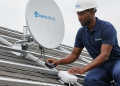
Unlike conventional internet service providers (ISPs) that rely on cables or fiber optics, Starlink transmits data via radio waves through space. A Starlink dish, often referred to as “Dishy,” communicates with passing satellites, which then relay the signal to ground stations connected to the broader internet. This architecture bypasses the need for extensive ground infrastructure in last-mile areas, democratizing access in ways previously unimaginable.
For millions residing in digitally underserved regions, Starlink represents not just faster downloads but a gateway to education, telemedicine, economic opportunities, and global communication. It’s a vital infrastructure upgrade for communities often left behind by the digital revolution, bringing them into the fold of the 21st-century economy.
Key Technologies Driving Starlink’s Performance
The impressive performance of Starlink, boasting speeds that can rival traditional broadband, is a testament to cutting-edge technology. Key to its success are the LEO satellites themselves, which are equipped with advanced phased array antennas capable of steering beams of data, ensuring efficient communication with dishes on the ground. These satellites constantly hand off connections to one another and to ground stations, ensuring a seamless experience. Furthermore, SpaceX’s mastery of reusable rocket technology, particularly the Falcon 9, enables the rapid and cost-effective deployment of hundreds of satellites, accelerating the constellation’s build-out and enhancing network capacity.
Navigating Starlink’s Service Plans: Flexibility for Every User
Starlink has demonstrated a keen understanding of diverse user needs, evolving its service offerings beyond a one-size-fits-all residential model. Today, a range of plans caters to different usage scenarios, emphasizing flexibility and global reach.
Residential Options: Tailored for Home Users
For most users, the Residential plan remains the go-to choice, providing fixed high-speed internet for a specific service address. Starlink continues to refine these offerings. For instance, according to recent information, users on Residential plans may see options such as “Residential 100 Mbps” and “Residential 200 Mbps,” where download speeds are capped at these respective limits. This tiered approach allows users to select a plan that best suits their household’s bandwidth demands and budget, offering a predictable level of service for consistent home use.
Understanding Speed Tiers and Data Prioritization
The introduction of specific speed tiers like 100 Mbps and 200 Mbps for Residential users indicates Starlink’s ongoing efforts to manage network resources and provide clearer expectations. While Starlink initially promised “up to” certain speeds, these specific tiers suggest a more defined service level. This also potentially paves the way for future prioritization schemes, where certain data usage might be prioritized based on plan type, though high readability and unique perspective remain key tenets of Starlink’s evolving service philosophy.
Roam: Connectivity on the Move
Perhaps one of Starlink’s most revolutionary offerings is its Roam service, designed explicitly for users who require internet connectivity while traveling. This includes RV enthusiasts, digital nomads, and those with temporary work sites. The Roam plan truly embodies flexibility, allowing users to pause and unpause service as needed, ensuring they only pay for the months they use it.
The Roam plan can provide high-speed internet on the go, often with data allowances suitable for varied use. For example, a “Roam – 100GB” option is noted to provide “up to 300+ Mbps for approximately 1 week of typical use,” highlighting its suitability for short-term, data-intensive needs away from a fixed location. This level of portability and adaptable billing is a significant differentiator in the satellite internet market. For more insights into how Starlink adapts to various needs, see our article, “Starlink: Flexible Internet Revolutionizing Global Access”.
Daily, Weekly, and Monthly Service Flexibility
The demand for even shorter-term flexibility, beyond monthly pausing, has been a recurring theme among users. While Starlink primarily operates on monthly billing cycles, there’s growing interest and, in some cases, specific service options that hint at greater granularity. For instance, discussions among users in June 2023 indicated a strong desire for weekly or even shorter payment cycles, especially for those using Starlink for brief vacations or intermittent travel. This feedback has been partially addressed by the system’s ability to offer prorated service.
Business and Maritime Solutions
Beyond individual consumers, Starlink has also expanded into dedicated solutions for businesses and the maritime sector. These plans offer higher priority data, enhanced performance, and robust hardware designed for demanding environments, from offshore oil rigs to remote construction sites. These specialized services underscore Starlink’s versatility and its ambition to serve a broad spectrum of connectivity needs.
Unpacking Starlink’s Payment Structures and Short-Term Use
The question of payment flexibility, particularly for non-residential users, has been a key area of discussion and development for Starlink. Understanding how billing cycles work, especially for short-term use, is crucial for maximizing value.
Addressing the Demand for Flexible Billing
Initially, Starlink’s payment structure primarily revolved around monthly subscriptions, often with users paying for the first month of service upon ordering hardware, irrespective of immediate activation. This led to scenarios, as observed in November 2021, where users paid for service before even activating their dish. However, Starlink has been responsive to user feedback, especially from the nomadic community, who sought more adaptable payment models to match their intermittent usage patterns.
The introduction and refinement of the Roam service, with its ability to pause and unpause, was a direct response to this need. While truly “weekly payments” in the traditional sense might not be fully implemented across all plans, the underlying system is evolving towards greater user control over service duration.
Prorated Service and Short-Term Options
A significant step towards more flexible payment options came with the announcement of prorated service for certain plans. As of November 2024, Starlink reportedly offers prorated service for specific plans, such as a 50GB plan, allowing for weekly or short-term use. This means that users might be charged only for the portion of the month they actively use the service, rather than a full monthly fee, even if their usage is brief. This is particularly beneficial for those with unpredictable travel schedules or who only need internet for a few days at a time.
Navigating Billing Cycles for Weekly or Ad-Hoc Use
While the concept of prorated billing offers significant flexibility, users still need to be aware of specific billing cycle rules. For example, understanding when a service period begins and ends, and how activating or deactivating mid-cycle impacts charges, is important. The goal is to avoid paying for unused time, and Starlink’s system improvements aim to make this process more transparent and user-friendly. For further exploration of these evolving options, refer to “Starlink’s Evolving Flexibility: Short-Term Plans & Global Reach”.
Data Caps and Overages for Flexible Plans (e.g., 50GB plan)
For plans like the 50GB option that support prorated weekly or short-term use, it’s also critical to understand any associated data caps and potential overage charges. While 50GB might suffice for a week of typical browsing and light streaming, heavy usage could quickly consume this allowance. Users should be mindful of per-GB charges for exceeding these limits, which can vary between local and global usage (e.g., US local overages at $1.99/GB vs. global overages at $3.99/GB, as seen with certain mini rental options). This ensures cost-effective short-term connectivity.
Starlink Mini: Portable Power for Remote Connectivity
Innovation at Starlink isn’t limited to its service plans; hardware is also undergoing significant evolution. The introduction of the Starlink Mini marks a pivotal step towards even greater portability and accessibility.
The Evolution of Portability
The original Starlink dish, while revolutionary, was relatively large and required a power source, limiting its use in truly off-grid or ultra-portable scenarios. The Starlink Mini addresses this directly, offering a much smaller, lighter, and more power-efficient alternative. This compact design makes it ideal for backpacking, small vehicles, or situations where space and power are at a premium. It represents Starlink’s commitment to making high-speed internet accessible in virtually any remote setting.
Rental Opportunities for Starlink Mini
The highly portable nature of the Starlink Mini has also spurred new business models, particularly in the rental market. Companies are now offering Starlink Mini rentals for durations ranging from one week to multiple months, often bundled with a 50GB+ data plan. This allows users to experience Starlink’s cutting-edge connectivity without the upfront commitment of purchasing the hardware, making it perfect for short-term projects, expeditions, or events. These rentals often come with transparent pricing for overages, enabling users to plan their data consumption effectively.
The Global Infrastructure: SpaceX’s Ambitious Launch Cadence
The continuous improvement and expansion of Starlink’s services are intrinsically linked to the relentless pace of satellite deployment and the advanced manufacturing capabilities of SpaceX.
Falcon 9 Missions and Satellite Deployment
SpaceX’s Falcon 9 rocket is the workhorse behind Starlink’s rapid constellation growth. The company maintains an incredibly aggressive launch schedule, sending dozens of Starlink satellites into orbit with each mission. Looking ahead, the launch manifest shows Starlink missions slated for critical dates like August 5, 2026, from SLC-4E in California, and another on August 8, 2026, from SLC-40 in Florida, both utilizing droneships for booster recovery. This consistent cadence is essential for increasing network capacity, enhancing coverage in existing service areas, and expanding into new geographies, ensuring reliable service as the global user base grows.
Manufacturing Prowess: The Bastrop Facility
The ability to produce thousands of advanced satellites and user terminals annually requires a sophisticated manufacturing operation. SpaceX’s Starlink manufacturing facility in Bastrop, Texas, plays a crucial role in this endeavor. Just recently, in July 2026, notable figures like Olivia Trusty toured the facility, observing firsthand the American innovation driving the production of Starlink hardware. This facility is a testament to the vertically integrated approach of SpaceX, allowing for rapid iteration, quality control, and scalable production necessary to meet global demand for Starlink services. For a deeper look into the technology, read “Starlink: Unpacking Next-Gen Satellite Internet & Flexible Access”.
User Experience and Practical Considerations
While the technology behind Starlink is complex, the user experience is designed to be as straightforward as possible, though some practical considerations are always important.
Setup and Activation: Getting Started with Starlink
Setting up a Starlink dish is remarkably simple. The process typically involves mounting the dish with a clear view of the sky, plugging it in, and using the Starlink app to complete activation. The dish automatically orientates itself to find the optimal satellite connection. However, users should be mindful of activation timing. As noted from earlier experiences, some users paid for their first month of service upon ordering in mid-October, even before physically activating their dish. While processes have evolved, understanding your exact billing start date relative to your intended activation can help manage costs effectively.
Performance Expectations: Speeds, Latency, and Reliability
Starlink generally delivers on its promise of high-speed, low-latency internet. Users can typically expect download speeds ranging from 50 to 200+ Mbps, with latency often below 50ms, making it suitable for activities like online gaming and video conferencing. Reliability, however, can be influenced by factors such as obstructions (trees, buildings), severe weather, and network congestion in densely populated areas. As the constellation grows and ground infrastructure expands, these issues are continuously being mitigated, leading to an increasingly robust and consistent service.
The Future Horizon: Starlink’s Evolving Role in Global Connectivity
Starlink’s journey is far from over. The ongoing deployment of satellites, coupled with hardware and software advancements, points to an even more capable and pervasive network in the years to come.
Expanding Coverage and Enhanced Capabilities
With hundreds more satellites planned for launch, Starlink’s global coverage will continue to expand, reaching even the most isolated communities. Future iterations of satellites are expected to introduce inter-satellite laser links, further reducing latency and eliminating reliance on ground stations for long-distance data transmission. This will unlock true global mobility, allowing users to maintain connectivity even in oceanic expanses or polar regions. Enhanced capabilities will likely include higher bandwidth capacities and more resilient service, even under adverse conditions.
Impact on Remote Work, Education, and Emergency Services
The implications of ubiquitous, high-speed internet are profound. For remote work, Starlink liberates individuals from geographical constraints, fostering a more distributed and flexible workforce. In education, it grants students in rural areas access to online learning resources previously unavailable. Crucially, in emergency situations, Starlink has proven invaluable, providing rapid communication infrastructure when traditional systems fail, as seen in various disaster relief efforts globally. Its evolving flexibility, particularly with short-term and portable plans, further solidifies its critical role in future humanitarian and logistical operations.
Conclusion
Starlink stands as a monumental achievement in satellite technology, fundamentally transforming the narrative of global internet access. From its origins as an audacious project to its current status as a rapidly expanding global network, Starlink has consistently pushed the boundaries of what’s possible. Its flexible service plans, including prorated options for short-term users and the highly portable Starlink Mini, demonstrate a clear commitment to meeting diverse user demands. Coupled with SpaceX’s relentless launch schedule and advanced manufacturing, Starlink is not just a provider; it’s an enabler of digital equity and a catalyst for innovation across every sector. As the constellation continues to grow and capabilities expand, Starlink is poised to solidify its position as an indispensable component of our increasingly interconnected world, ensuring that high-speed internet is not a luxury, but a universal utility.