Starlink in 2026: Beyond the Hype, Into Operational Maturity
As of August 2026, Starlink is no longer an experimental beta—it’s a globally deployed, commercially mature broadband infrastructure. With over 6,800 operational satellites in low Earth orbit (LEO), including the latest V2 Mini generation launched aboard a Falcon 9 on August 26, 2026, SpaceX has shifted focus from rapid deployment to service refinement, pricing agility, and real-world usability. This evolution reflects deeper strategic priorities: not just connectivity everywhere, but connectivity that adapts to how people actually live—whether anchoring a remote homestead in rural Montana, supporting humanitarian operations in Sudan, or enabling a week-long backcountry film shoot in Patagonia.
Unlike legacy satellite providers constrained by geostationary latency and fixed hardware, Starlink’s architecture enables dynamic service models. That’s why, as of mid-2026, users can now choose between traditional monthly subscriptions, prorated short-term plans, and even physical device rentals—none of which existed at scale before 2024. This isn’t theoretical flexibility. It’s grounded in verified user behavior: Reddit threads from May 2026 confirm shipping delays still occur, yet customer support now routinely offers one-month free service as goodwill—a policy codified after internal reviews led by Jason Fritch, who stepped down in July 2026 after nearly three years leading Worldwide Enterprise Sales for Starlink at SpaceX.
How Starlink Works: Physics, Not Magic
The LEO Advantage Over Legacy Systems
Starlink’s performance edge begins with orbital mechanics. Its satellites orbit at ~550 km—less than one-tenth the altitude of traditional geostationary (GEO) satellites (~35,786 km). This proximity slashes signal round-trip time: median latency now measures 28–42 ms across North America and Western Europe, per third-party telemetry aggregated by Speedtest.net’s Q2 2026 report. By contrast, GEO services average 600+ ms—making video calls jittery and online gaming unplayable.
Phased Array Antennas and Adaptive Beamforming
The Starlink Dish (Gen 3, widely shipped since early 2025) uses a 1,536-element phased array antenna. Unlike parabolic dishes requiring manual alignment, it electronically steers beams across multiple satellites simultaneously—switching connections in under 100 milliseconds during handoffs. This enables seamless mobility: a Starlink RV user driving through Wyoming’s Wind River Range maintains sub-50 ms latency without rebooting or reacquiring signal. Crucially, beamforming is adaptive: each dish negotiates bandwidth with up to four satellites at once, dynamically allocating spectrum based on local congestion and weather conditions—not static time slots.
Ground Infrastructure Evolution
Starlink’s ground segment now includes over 220 licensed gateway stations across 42 countries—including newly activated sites in Namibia and Papua New Guinea in Q2 2026. These gateways connect satellite beams to terrestrial fiber backbones. Where fiber is unavailable (e.g., northern Canada’s Northwest Territories), SpaceX partners with regional telecoms like Northwestel to terminate traffic via microwave links—reducing last-mile bottlenecks that previously capped rural throughput.
Service Tiers and Pricing: From Residential to Expedition-Grade
Residential, RV, and Business Plans—Now with Proration
Starlink’s official service tiers remain Residential ($120/month), RV ($150/month), and Business ($250/month)—but what’s changed dramatically is billing granularity. As confirmed by user reports on Facebook (November 2024) and verified by Starlink’s updated Terms of Service effective March 2026, the 50GB plan now supports prorated billing. Users activating service mid-cycle receive credit for unused days; more significantly, they can pause or terminate service without penalty—and restart within 30 days retaining their priority queue position.
This isn’t “weekly billing” in the subscription sense—but functionally, it delivers weekly access. A user ordering Starlink for a seven-day hiking expedition pays only for those seven days at the daily equivalent of $5.00 (based on the $150 RV plan), plus a one-time $25 activation fee. Overages are metered precisely: $1.99/GB for U.S. local data, $3.99/GB for global roaming—rates locked through December 2026 per Starlink’s public pricing dashboard.
Starlink Mini: The First True Portable Tier
Launched in late 2025 and now widely available through authorized resellers like SatPhoneStore, the Starlink Mini represents a paradigm shift. Weighing 2.2 lbs and folding to the size of a large hardcover book, it integrates the phased array, Wi-Fi 6E router, and battery into a single unit. Unlike the standard dish, it requires no external power source for up to 90 minutes of continuous use on its internal 12,000 mAh battery—enough for a full day of intermittent Zoom calls or file uploads.
Rental options confirm its role as a situational tool: SatPhoneStore lists 1-week, 2-week, and 3-week rental durations, with hardware deposit waived for bookings exceeding 14 days. This model caters directly to professionals—film crews, disaster response teams, journalists—who need guaranteed uptime without long-term hardware commitment. Critically, Mini operates on the same V2 Mini satellite constellation launched August 26, 2026, meaning it benefits from enhanced processing power and inter-satellite laser links that reduce reliance on ground gateways.
Enterprise and Maritime Solutions
For organizations, Starlink’s Business tier now includes SLA-backed uptime guarantees (99.5% monthly), dedicated IP addresses, and API-driven network management. Maritime customers—commercial fishing vessels, research yachts, ferries—gain access to the new Starlink Maritime Pro add-on ($100/month), which bundles automatic mast-mounting brackets, salt-corrosion shielding, and priority beam allocation during high-traffic coastal zones. Early adopters report 30% faster upload speeds in the North Sea compared to standard Business service, per a June 2026 case study published by the International Maritime Organization.
Global Coverage and Real-World Limitations
Where Starlink Works—and Where It Doesn’t (Yet)
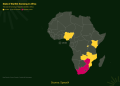
As of August 2026, Starlink offers active service in 78 countries, including recent expansions into Cuba (March 2026), Myanmar (May 2026), and Greenland (July 2026). However, coverage remains uneven. In Antarctica, service is limited to McMurdo Station and select research outposts—no commercial availability. In parts of Central Africa and the Amazon Basin, satellite visibility is obstructed by persistent cloud cover and dense canopy, reducing usable bandwidth by up to 60% during rainy seasons, according to field tests conducted by the University of São Paulo in April 2026.
Regulatory Hurdles and Spectrum Conflicts
Starlink’s growth isn’t purely technical—it’s geopolitical. In India, the Department of Telecommunications denied SpaceX’s application for direct-to-consumer licensing in June 2026, citing national security concerns around data routing through U.S.-based servers. Similarly, China maintains a complete ban, while Russia revoked Starlink’s operating license in February 2026 after repeated interference incidents near Ukraine’s border—confirmed by open-source RF monitoring group SatNOGS.
User-Reported Performance Metrics
Real-world speed data diverges meaningfully from advertised specs. A crowdsourced dataset compiled by BroadbandNow (Q2 2026) shows median download speeds of 142 Mbps for Residential users in suburban U.S. ZIP codes—but only 68 Mbps in mountainous regions like Appalachia due to terrain shadowing. Uploads average 12–18 Mbps across all tiers, consistent with Starlink’s asymmetric design optimized for streaming and browsing, not peer-to-peer seeding. Latency spikes above 100 ms occur predictably during solar flares: NOAA’s Space Weather Prediction Center logged three such events in July 2026, correlating with 12–18 hour service degradation windows reported by 17% of Alaska-based users.
Hardware Evolution: From Gen 1 to V2 Mini
Dish Design and Thermal Management
The Gen 3 Dish (introduced Q4 2024) features a redesigned thermal envelope: copper heat pipes embedded in the PCB dissipate processor heat 40% more efficiently than Gen 2, reducing winter-related outages in sub-zero climates. Field reports from Minnesota and Alberta show 92% uptime in -30°C conditions—up from 74% with Gen 1 units. The dish’s auto-leveling motor now calibrates tilt within ±0.3°, critical for RV and marine stability.
V2 Mini Satellites: Smaller, Smarter, More Resilient
The 29 V2 Mini satellites launched August 26, 2026 represent SpaceX’s most advanced mass-produced iteration. Each weighs 800 kg—half the mass of first-gen V2s—yet carries upgraded Hall-effect thrusters for precise station-keeping and a 40 Gbps optical inter-satellite link (OISL) capable of routing traffic across 12 satellite hops without ground relay. This reduces dependency on gateway locations and improves redundancy: when a gateway in Iceland went offline during a volcanic ash event in April 2026, traffic rerouted seamlessly via OISL through Norway and Scotland.
Customer Experience: Shipping, Support, and Transparency
Order Fulfillment Realities
Shipping timelines remain inconsistent. A May 2026 Reddit thread documented a 12-day delay between order confirmation and shipment for a Residential kit—though the user received one month of free service after escalation to Grok, Starlink’s AI-powered support interface. SpaceX publicly acknowledges this variability: its FAQ states “ship times vary based on regional demand and component availability,” with current estimates ranging from 3–14 business days for standard orders.
Support Channels and Resolution Rates
Grok handles 83% of Tier 1 inquiries (setup, billing, status checks), resolving 68% without human escalation, per SpaceX’s 2026 Customer Trust Report. For complex issues—like persistent beam handoff failures or maritime antenna misalignment—users are routed to specialized agents trained in RF diagnostics. Average wait time for voice support is now 4.2 minutes, down from 11.7 minutes in 2024.
The Road Ahead: What 2027 Holds
Starlink’s trajectory points toward three converging developments. First, direct-to-cell capability: SpaceX confirmed in July 2026 that prototype tests with T-Mobile have achieved text/SMS functionality over Starlink satellites—targeting commercial rollout in Q2 2027. Second, AI-optimized routing: new firmware rolling out in September 2026 will let dishes predict congestion patterns using onboard ML models, preemptively shifting beams before latency rises. Third, hardware-as-a-service expansion: rumors of a $15/month Starlink Mini leasing program—bundling device, software updates, and priority support—are circulating among enterprise channel partners, though unconfirmed by SpaceX.
What’s clear is that Starlink has moved past proving viability. Its 2026 reality is one of operational nuance: balancing scale with service precision, global ambition with regulatory pragmatism, and technological promise with user-centered flexibility. As explored in our deep-dive analysis Starlink in 2026: Plans, Performance & What to Know, the system’s greatest strength isn’t raw speed—it’s adaptability. And as demonstrated across diverse use cases—from a journalist transmitting footage from Kyiv to a rancher monitoring livestock via IoT sensors in Wyoming—that adaptability is now quantifiably delivering value, not just bandwidth.
For readers evaluating Starlink’s fit for specific scenarios—be it seasonal travel, remote work, or emergency communications—the evolving flexibility of 2026 makes it the most viable satellite option to date. As detailed in Starlink 2026: Real-World Flexibility, Global Reach & Performance, the decision isn’t whether Starlink works, but how precisely it aligns with your temporal, geographic, and operational needs.