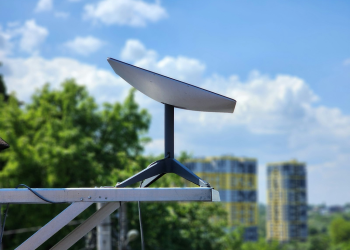
Gwynne Shotwell, president and chief operating officer of the rocket and satellite-internet company SpaceX, sold $52.5 million of the company’s stock on 22 September 2026, six days before Starship’s first attempt to reach a stable orbit. The sale was disclosed in a Form 4 filed with the US Securities and Exchange Commission on 24 September, according to The Cryptonomist, which cited the financial data site TipRanks in describing it as the first notable stock sale by a SpaceX executive since the company’s Nasdaq listing in June.
Two flight numbers are easy to confuse in this story, so take them in order: Starship Flight 13 flew in July 2026, after an attempt on 16 July was aborted at the last second; Monday’s launch is Flight 14, the 14th test of the vehicle and the one SpaceX says will be its first orbital mission. Shotwell’s sale falls between the two, in the same week that the first tranche of SpaceX’s post-IPO lock-up expired.
How we sourced this, and what we could not check
The Form 4 details below come from The Cryptonomist’s account of TipRanks data, not from our own inspection of the filing. That distinction matters here because the source mix is uneven. The Cryptonomist is a crypto- and markets-focused outlet, and kobaran, cited further down on the share-price move and Elon Musk’s merger comments, is a small site whose track record on SpaceX financial reporting we are not in a position to assess; both are treated in this report as single-source claims and both links are nofollowed. Mint, the Indian business daily, and Space.com are established outlets with longer records on market and launch coverage respectively. Insider transactions are published in the SEC’s EDGAR database within two business days of the trade, so readers who want primary confirmation of the numbers can look up SpaceX’s Form 4 filings there. Until that check is done, the figures in the list below should be read as reported, not verified.
Key facts
- Shotwell exercised options on 342,170 shares at prices from $8.40 to $19.40, a total cost of roughly $4.5 million, then sold all of them the same day through Morgan Stanley at about $151 to $155 a share, The Cryptonomist reported.
- The trades were executed under a Rule 10b5-1 plan she adopted on 23 June 2026, per the SEC filing cited by the outlet.
- She still holds 2.47 million Class A shares directly and 3.11 million through two family trusts, about 5.58 million in total, worth roughly $830 million at Friday’s close of $148.68.
- About 328 million shares were released from SpaceX’s IPO lock-up on 24 September 2026, with further expirations scheduled through June 2027.
- Starship Flight 14 is due to lift off from Starbase, Texas, on Monday 28 September.
Why it matters for Starlink users, not just shareholders
Starship is the vehicle SpaceX needs to put its next-generation Starlink V3 satellites into service, and Mint reports that reusing both stages is key to cutting the cost of reaching orbit. Mint also says the V3 satellites are larger and more capable than the ones flying today, that they cannot fly on the Falcon 9 fleet, and that they are meant to carry Starlink beyond fixed broadband into mobile wireless service.
That is the chain that reaches ordinary subscribers. Starlink is a capacity business: what a household experiences at peak hours, and how many new households a busy area can absorb, depends on how much usable capacity is parked overhead. So a working orbital Starship compresses the timetable for adding that headroom, while a failure on Monday pushes it out and leaves the current constellation — more than 11,000 satellites serving more than 12 million customers, on Mint’s figures — to carry the load for longer. For anyone refreshing a Starlink availability map or hoping for a lower Starlink price in a congested market, the honest reading is that Flight 14 is an upstream input to those decisions, not an announcement about them. None of the sources cited here reports a specific tariff change or a new country opening tied to this launch, and any claim that Monday’s outcome will move Starlink prices this week should be treated with scepticism.
How the sale worked
The Cryptonomist stresses that the mechanics matter as much as the headline figure: the $52.5 million reflects the spread between the old option prices Shotwell paid and the current market price she sold at, so the cash proceeds and the economic gain are not the same number. Because the Rule 10b5-1 plan was adopted in June, the outlet says the 22 September sale was locked in about three months before the current launch date, which it describes as pre-programmed rather than opportunistic. Plans of that kind exist precisely so insiders can sell on a schedule set in advance; the trade-off is that the schedule can land in an awkward week, as it did here.
The lock-up is the bigger supply event
The Cryptonomist argues a single $52.5 million executive sale is dwarfed by the lock-up expiration, which freed hundreds of millions of shares for trading at once. SpaceX stock fell more than 4% the day before that unlock took effect, the outlet said. Because more expirations run into mid-2027, it describes the unlocks as a recurring source of potential selling pressure rather than a one-off — a useful frame for anyone reading future insider filings, since one executive’s scheduled sale and a tranche of newly tradable stock are different orders of magnitude.
What makes Flight 14 different
Mint reports that if all goes to plan this will be the first time Starship goes into orbit around Earth, with previous tests suborbital, and that Starship will circle the planet several times on a multi-hour mission. Prior flights reached roughly 16,000 miles an hour more than 100 miles up; Monday’s should hit about 18,000 miles an hour, Mint says. The flight also carries working V3 Starlink satellites, unlike earlier test units. Our earlier report covered Starship’s 28 September orbital attempt in detail.
Timing and payload
Mint says the launch window opens at 8:15 a.m. Eastern time. The Cryptonomist, citing the tracking site SpaceLaunchLive, gives 7:15 a.m. Central time from Starbase and says the payload is 26 Starlink V3 satellites. Those two clock times are the same instant in different zones; the satellite count comes only from The Cryptonomist, as Mint does not give one. Both note the flight was originally targeted for 22 September.
Where the sources disagree
On the last flight: Mint calls Flight 13, in July, largely a success, while kobaran describes Flight 14 as the first attempt since a successful flight in August. Space.com reported on 16 July that the Flight 13 attempt aborted at the last second during booster ignition, that Musk said two Raptor engines would be swapped out, and later that SpaceX was retargeting 23 July. The abort and retarget explain why a July flight slipped within the month, but they do not account for kobaran’s August dating, and we could not resolve which month is correct from the material available. Where the two conflict, Mint and Space.com are the better-supported accounts.
On the market reaction to the 22 September date: The Cryptonomist says SpaceX stock jumped 6% when that date was first announced, while kobaran reported a roughly 5% gain on the Tuesday, attributing it to the launch date and Musk’s comments at the All-In Summit about his two biggest companies rather than to any financial news. We have covered that talk of a Tesla–SpaceX combination separately; Musk gave no timeline or structure, kobaran said, and Yahoo Finance got no immediate response from SpaceX.
Background: a volatile first few months of trading
SpaceX priced its 12 June IPO at $135 a share, raising about $75 billion at a valuation near $1.75 trillion, kobaran reported. The Cryptonomist, citing CNBC, says shares then soared past $225 before sliding as low as about $105 and rebounding roughly 41% from that August low, leaving them about 34% below the post-IPO high of $225.64. The 33 analysts tracked by TipRanks rate the stock a Moderate Buy with an average target of $232.07. Mint, writing before Monday’s session, put the stock just under $150, about 10% above the IPO price, and the valuation at about $2 trillion. SpaceX shares have recovered since July, as we reported.
What to watch next
Three things follow from Monday. First, the flight itself: whether Starship completes several orbits and whether the V3 satellites aboard — 26 of them, on The Cryptonomist’s count — actually deploy and enter service, which is the only part of this story that changes Starlink capacity. Second, the share register: The Cryptonomist says further lock-up tranches expire through June 2027, so the supply overhang recurs on a known calendar, and Shotwell’s 10b5-1 plan may generate more Form 4s on its own schedule regardless of where the stock or the rocket is at the time. Third, the longer arc: Mint says SpaceX could begin launching its Starmind orbital AI computing satellites as early as late 2027, scaling in 2028, a plan that rests on the same reusable Starship being proven now.
For Starlink customers, the signal to watch is not the Form 4 but the deployment rate that follows a successful orbital flight — and, after that, whether SpaceX begins opening sold-out cells or adjusting pricing in markets where capacity has been the binding constraint. We will report those changes when the company or regulators confirm them, rather than inferring them from a launch.
Frequently Asked Questions
Did Gwynne Shotwell sell SpaceX stock before the Starship launch?
According to The Cryptonomist, citing the financial data site TipRanks, Shotwell exercised options on 342,170 shares and sold them the same day, 22 September 2026, for about $52.5 million, and the trades were disclosed in a Form 4 filed with the SEC on 24 September. We have not independently inspected that filing; insider transaction reports are published in the SEC’s EDGAR database, which is where readers can confirm the figures for themselves.
Will Starship Flight 14 change Starlink prices or availability?
Not directly, and none of the sources cited in this report says it will. Mint reports that the larger V3 satellites are more capable and need Starship to reach orbit, and that they are meant to extend Starlink from fixed broadband into mobile wireless. Capacity added overhead is what eventually shapes how many subscribers a given area can take, so a faster V3 ramp is an upstream input to Starlink availability and pricing decisions rather than a consumer announcement. No source has reported a specific price change or new market opening tied to Monday’s flight.
How big is Starlink now, and what will the V3 satellites add?
Mint reports that Starlink currently has more than 11,000 satellites serving more than 12 million customers. It says the larger V3 satellites are more capable and need the bigger Starship to enter service, and that they will help SpaceX expand Starlink from broadband into mobile wireless communications.
What happened on Starship Flight 13, and how does it relate to Flight 14?
Flight 13 was the previous test; Flight 14 is Monday’s. Space.com reported that SpaceX aborted the Flight 13 launch attempt on 16 July 2026 just as the booster’s 33 Raptor engines were igniting, and that Elon Musk said two Raptors would be removed and replaced; the site later updated that SpaceX was targeting 23 July. Mint describes Flight 13, in July, as largely a success, with Starship deploying some V3 test satellites and SpaceX gaining heat shield data. The site kobaran instead refers to a successful flight in August. We could not reconcile the July-versus-August dating from the available reporting and flag it as unresolved.
What are the Starmind satellites Starship is meant to launch?
According to Mint, Starmind is SpaceX’s planned AI computing satellite constellation, part of a plan to build a massive, low-cost AI data center in orbit using solar power and the vacuum of space to get around power, cooling and political bottlenecks. Mint says the company could launch Starminds as early as late 2027, with the constellation scaling up in 2028.
How high do SpaceX’s outside investors think Starlink revenue can go?
Baron Capital founder Ron Baron, one of SpaceX’s largest outside investors, told CNBC that Starlink alone could generate roughly $1 trillion in annual revenue within a decade, kobaran reported. Baron said margins would support $700 billion to $800 billion in EBITDA, which he argued could justify a $14 trillion to $15 trillion valuation. That is an investor’s projection, not a company forecast.
Follow Starlink News on Google. Make us a preferred source to see more of our reporting in Google search results.