Elon Musk, who runs SpaceX and its Starlink satellite internet service, said Delta Air Lines will lose customers because it chose Amazon Leo rather than Starlink to supply its in-flight wifi. The comment was posted on X and reported on 29 September 2026 by Stocktwits, in an article carried by Yahoo Finance, which also covered a separate price-target cut on the airline by BMO Capital.
Both of the story’s hard facts trace back to that one report. The BMO price-target change and the United installation numbers Musk was reacting to are carried by Stocktwits alone; Starlink News has not located an independent Reuters, Bloomberg, trade-press or company-filing account of either, and both should be read as single-sourced.
Within that limit, the two items pull in opposite directions. One is a claim about product choice with no data behind it. The other is a cost call from an analyst who never mentions wifi at all.
Key facts
- Musk was replying to an X post about the spread of Starlink across United Airlines aircraft, and wrote that Delta “will lose a lot of customers,” according to Stocktwits.
- That X post put United’s Starlink installations at more than 600 aircraft, about 36% of its fleet, with the airline expecting the service fleet-wide by the end of 2027. The figures come from the post, not from United.
- Delta plans to introduce Amazon Leo-powered wifi starting in 2028 — roughly when United expects to finish.
- BMO Capital analyst Michael Goldie cut Delta’s price target to $100 from $105 on Monday while keeping an Outperform rating, citing jet fuel rather than connectivity.
- Delta shares edged 0.5% lower overnight ahead of Tuesday, but are up 21% in 2026.
- Sourcing: one secondary report — Stocktwits via Yahoo Finance — plus the X post it describes. No comment from Delta, United, SpaceX or Amazon appears in it.
Why it matters
Stocktwits framed the exchange as part of a wider debate over whether onboard connectivity can influence which airline travellers pick, saying the contrasting choices by Delta and United have put both carriers under greater scrutiny as airlines compete on passenger experience beyond fares and schedules.
On the timelines in the report, the gap is concrete rather than rhetorical. United expects to finish its Starlink rollout by the end of 2027; Delta’s Amazon Leo service is not due to start being introduced until 2028. Delta therefore begins roughly when United expects to be done — a sequencing difference of about a year, and the only quantified difference between the two carriers anywhere in the story.
It is also a question about who supplies the cabin, not only who flies it. United’s choice puts a SpaceX terminal on more than a third of its aircraft; Delta’s puts Amazon’s low-Earth-orbit network into a major US carrier at the exact moment Amazon is trying to establish Leo as a credible alternative to Starlink in aviation.
What Musk said
The quote is short. Musk’s post said Delta “will lose a lot of customers,” per Stocktwits, and was a reply rather than a standalone announcement. He offered no figure, no timeframe and no mechanism — nothing about surveys, bookings, loyalty behaviour or revenue.
The installation numbers he was reacting to are secondhand twice over: an X user’s post, summarised by Stocktwits, reported by Yahoo Finance. United is not quoted confirming either the 600-plus aircraft count or the 36% share.
Delta’s choice of Amazon Leo
Stocktwits said Delta has chosen a different technology provider and plans to introduce Amazon Leo-powered wifi beginning in 2028 instead of using Starlink. The report does not describe the equipment, the number of aircraft involved, any contract value, the retrofit schedule, or whether passengers will pay for the service. Nothing in it suggests Delta has reconsidered, and it carries no Delta response to Musk’s post.
What a cabin fit-out actually costs
Musk’s argument rests on an implicit premise — that Starlink is the better cabin product — which the source report does not test. The nearest hard numbers come from Starlink News’s own earlier reporting.
Cost to the airline
In South Korea, the cost of fitting Starlink to a single aircraft has been put at roughly $500,000, which is precisely why the country’s low-cost carriers have divided over whether to install it: Korea’s budget airlines splitting over the same decision. Starlink News analysis, and not a conclusion drawn by Stocktwits or by either US airline: at that unit price, a several-hundred-aircraft programme is a capital-expenditure decision rather than a marketing line item, which is one plausible reason a carrier would test a rival supplier instead of taking the incumbent.
Cost to the passenger
For flyers, the pattern so far has been free rather than paid. Alaska Airlines and Hawaiian Airlines provide Starlink wifi at no charge to passengers across the 150 aircraft they have equipped, as Starlink News reported in Alaska and Hawaiian reaching 150 Starlink-equipped aircraft. Availability is still partial almost everywhere: even on the figures Musk was amplifying, roughly two-thirds of United’s fleet did not have Starlink at the time of his post.
The network behind the aviation push
Aviation is one slice of a network under commercial pressure elsewhere. Starlink News has reported the service passing 12 million users while average revenue per user fell to about $66 — the detail is in Starlink’s subscriber growth and falling revenue per user. Signing fleets is one of the ways that arithmetic improves. What SpaceX charges an airline is published in none of the sources used here, so no like-for-like price comparison with Amazon Leo is possible.
Beyond the US: the same choice, different maths
The Delta-United split is not an isolated American argument, and for readers tracking where Starlink actually switches on, the more informative case is Asian. In South Korea the identical decision has openly divided one market: with installation quoted at about $500,000 an aircraft, budget carriers there have gone different ways on whether satellite wifi justifies the capital, as Starlink News reported this week. At the US low-cost end the choice has landed the other way, with Alaska and Hawaiian treating free Starlink access as a passenger-facing feature rather than a paid add-on across 150 aircraft.
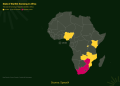
On the available reporting those are the two working templates for any carrier weighing the same purchase: absorb a high per-aircraft cost and give the service away to compete on experience, or hold off while a second supplier bids for the same cabins. Starlink News has not seen an African airline announce a Starlink or Amazon Leo cabin deal, and none appears in the current sourcing.
The analyst call: fuel, not wifi
Fuel cost pressure
BMO Capital’s Michael Goldie reduced his price target on Delta to $100 from $105 on Monday, Stocktwits reported, while keeping an Outperform rating. Goldie pointed to persistent conflict in the Middle East as a factor pushing jet fuel toward $4.30 to $4.50 per gallon — levels near the highs seen during the spring, according to the report. Neither Starlink, Amazon Leo nor in-flight internet spending features in his reasoning as reported.
What the target still implies
Even after the reduction, the $100 target implies about 19% upside to the stock’s last closing price, the outlet said. That is the shape of the call: a bullish rating with a thinner cushion, driven by an input cost outside the airline’s control.
Fares are still moving
BMO also said demand remains resilient across different passenger segments, allowing airlines to keep raising fares, though the pace of those increases has moderated compared with April and May, according to the report. Firm demand, dearer fuel and slower fare escalation are, on the bank’s telling, the actual pressure on Delta’s margin this quarter.
Background: a hard year for airline margins
Stocktwits said industry-wide turbulence has intensified this year because of higher fuel expenses, aircraft delivery delays and disruptions tied to the prolonged U.S.-Iran conflict, which the outlet said has shaken the Middle East oil economy. Those pressures have squeezed margins across the airline industry, it reported, particularly for carriers that rely on lower-priced ticket sales.
Where Delta sits with investors
Against that backdrop, the outlet said, Delta has outrun its peers on the market this year: the stock is up 21% in 2026 and was on track to reverse two straight months of losses with a September gain of more than 7%, after slipping 0.5% overnight ahead of Tuesday. Retail sentiment on Stocktwits improved to “bullish” from “neutral” the previous day, the report said, without attributing the shift to any single factor.
Those numbers sit awkwardly beside Musk’s prediction. They do not disprove it — the Amazon Leo service does not exist yet — but they are the only measured customer-facing signal in the story, and it is not pointing down.
Sourcing note
This story rests on a single secondary report, Stocktwits carried by Yahoo Finance, plus the X post it describes. Until an airline or the bank publishes them directly, both the BMO price-target change and United’s 600-plus aircraft figure should be treated as unconfirmed by any independent outlet or filing.
What that sourcing does not contain, gathered in one place: any survey, booking or passenger-satisfaction data linking connectivity to airline choice; any price for either service, to airlines or to passengers; any contract value or installation schedule for Delta; any technical specification for Amazon Leo against which Starlink could be judged; and any quote from Delta, United, SpaceX or Amazon. Musk’s claim is reported here as a claim. The figures on Starlink installation cost, free passenger access and subscriber economics come from Starlink News’s earlier reporting, linked above, not from the Stocktwits article.
Starlink News has been unable to verify any public statement from the four companies on the exchange, and Delta has not, on the available record, signalled any reconsideration of its Amazon Leo plan. This report will be updated if any of them comments.
The disclosure on the original article notes that the writer, Shivani Kumaresan, holds no position in any of the stocks mentioned, and that Stocktwits’ news content is for information only. Nothing here is investment advice.
Frequently Asked Questions
Which airline will have satellite wifi fleet-wide first, United or Delta?
On the timelines in the reporting, United is roughly a year ahead. United expects Starlink across its entire fleet by the end of 2027, while Delta’s Amazon Leo service is only due to begin being introduced in 2028 — meaning Delta starts installing around the time United expects to finish. Both dates come from a single Stocktwits report carried by Yahoo Finance and the X post Musk was answering, not from the airlines directly.
What does Starlink actually cost an airline, and what do passengers pay?
SpaceX does not publish aviation pricing in any source used for this story. The nearest figure in Starlink News reporting is Korea, where the equipment and installation cost of putting Starlink on a single aircraft was reported at about $500,000 — the reason low-cost carriers there have split over the decision. For passengers the pattern so far has been free access rather than a paid add-on: Alaska Airlines and Hawaiian Airlines offer Starlink wifi free to flyers across the 150 aircraft they have equipped. Neither Delta nor Amazon has said what Leo-powered wifi will cost passengers from 2028.
Is there any evidence that in-flight wifi changes which airline people book?
Not in this reporting. Musk’s assertion that Delta "will lose a lot of customers" carries no survey data, booking figures, passenger-satisfaction scores or revenue analysis behind it. The strongest available counter-signal is financial: Delta is up 21% in 2026 and, per the same report, outperforming peers — hard to square with customers already leaving over a wifi decision that has not been implemented yet.
Why did BMO cut Delta’s price target if it still rates the stock Outperform?
Because the cut is about input costs, not demand or product. BMO Capital’s Michael Goldie trimmed his target to $100 from $105 while keeping Outperform, citing jet fuel heading toward $4.30 to $4.50 a gallon on Middle East conflict, according to the Stocktwits report. At $100 the target still implies about 19% upside from the last close, so the bank is signalling a thinner margin on the same bullish call. The note does not mention in-flight internet at all.
What is Amazon Leo, and how does it compare with Starlink?
No usable comparison can be drawn from the available reporting. The Stocktwits report identifies Amazon Leo only as the provider behind the wifi Delta plans to introduce from 2028, describing Amazon as "a different technology provider" to SpaceX, and gives no speeds, latency figures, satellite counts, antenna details or prices. Starlink’s side of the ledger is better documented: Starlink News has reported the network passing 12 million users with average revenue per user falling to about $66.
How solid is the sourcing on this story?
Thin, and readers should weigh it accordingly. Both central facts — BMO’s price-target cut and United’s 600-plus Starlink aircraft — come from one aggregator report, Stocktwits carried by Yahoo Finance, plus the X post it describes. Starlink News has not found an independent Reuters, Bloomberg, trade-press or company-filing account of either, and none of Delta, United, SpaceX or Amazon is quoted anywhere in the source material. This report will be updated if any of them comments or if the figures are independently published.
Follow Starlink News on Google. Make us a preferred source to see more of our reporting in Google search results.