Quotes attributed to Delta Air Lines chief executive Ed Bastian, in which he is said to have rejected SpaceX’s Starlink satellite internet for Delta’s cabins because of Elon Musk personally, circulated online on 30 September 2026. Neither Delta nor Bastian has confirmed the wording, and the aviation account that published it said it could not vouch for the quote — so the words themselves are an allegation, nothing more. What is on the record is the commercial decision underneath the row: Delta chose Amazon Leo in March 2026, and Musk has since said publicly that Bastian will lose his job over it.
Read the story for what it is: a leak about a leak. The chain of custody runs from an unnamed attendee at a company event, to the aviation account JonNYC on X, to the travel site One Mile at a Time, to the two outlets reviewed here — News9Live and aviationa2z — and the airline at the centre of it has said nothing. Neither outlet published a permalink to the original post and we have not located one, so the links above point to where that primary material sits, alongside Delta’s own newsroom and Musk’s X account. Readers should be able to audit this chain without taking any aggregator’s word for it, including ours.
Key facts
- The remarks were relayed by the aviation-focused X account aviationa2z names as JonNYC, citing reporting by the travel site One Mile at a Time; JonNYC said the material was sent to him from a company event.
- Delta, the US airline, and Bastian have not commented publicly in either outlet’s reporting, and News9Live says the allegation has not been independently authenticated.
- Delta announced a long-term agreement with Amazon on 31 March 2026 covering Amazon Leo, Amazon’s low Earth orbit satellite internet network, aviationa2z reports, with an initial 500-aircraft installation in 2028.
- Starlink availability on US carriers is already measured in hundreds of aircraft: United Airlines reported 450 equipped aircraft in its second-quarter 2026 results, and Alaska and Hawaiian have passed 150, per aviationa2z and our earlier coverage. Delta’s count is zero.
- Musk, who runs SpaceX, wrote after the quotes spread that Bastian would lose his job, that Delta would lose many customers, and mocked the airline’s connectivity by suggesting a Delta flight was a good place to isolate an AI system from the internet, News9Live reports.
What Bastian is alleged to have said
According to aviationa2z’s account of JonNYC’s post, Bastian was asked about Delta’s position on Starlink and replied: “We do not want to be with Elon Musk. Trust me.” A separate, earlier comment attributed to him said Delta had tested Starlink but did not want to partner with Musk, adding that if you know his reputation, what people say about him is all true. News9Live describes that same allegation and warns against presenting it as a confirmed direct statement without a recording, transcript or company confirmation.
Both lines are best read as the gist of alleged remarks rather than a transcript. They reach the public through one unnamed attendee and one social-media account, and the gap between a paraphrase and a quotation matters here: “we do not want to be with Elon Musk” is a sackable sentence for a chief executive of a listed airline, which is precisely why the exact wording cannot be assumed.
What Delta has confirmed publicly
Delta has confirmed it selected Amazon Leo for future in-flight connectivity, aviationa2z reports, with an initial installation on 500 aircraft in 2028 and the service going on hundreds of aircraft overall. The announcement says the deal builds on Delta’s existing use of Amazon Web Services, Amazon’s cloud division, and that Delta plans to use the network for high-speed, low-latency connectivity on domestic and international flights, including streaming and communications.
Bastian has defended the choice publicly on commercial grounds, News9Live reports, saying Amazon offered a broader package covering retail, Prime and gaming capabilities as well as a lower price. Delta has also said Amazon met its technical requirements and supported its vision for connected travel. Notably, none of Delta’s confirmed public reasoning mentions Musk — the personal motive exists only in the leaked account.
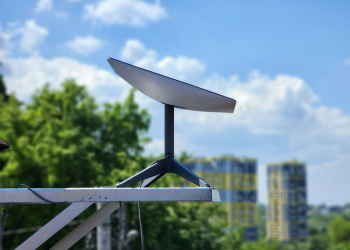
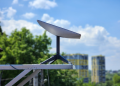
The antenna Delta is buying
Delta has singled out Amazon Leo’s upload capacity, saying passengers will be able to share photos and videos in real time and send large business files without waiting until landing, aviationa2z reports. Upload has historically been the weak side of airborne satellite internet, which is why the 400 Mbps figure is the number the airline chose to promote.
What Starlink and Amazon Leo actually are
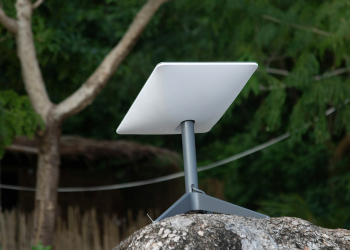
Starlink is SpaceX’s satellite internet service, delivered from a constellation in low Earth orbit — orbits close enough to the ground to cut the delay that made earlier generations of satellite internet feel sluggish in the cabin. aviationa2z describes it as already flying with several airlines and operating a much larger satellite network than its rival.
Amazon Leo is Amazon’s competing low Earth orbit satellite internet network. Amazon says it uses thousands of satellites and that its aviation antenna is specified at up to 1 Gbps download and 400 Mbps upload, with a single antenna designed to serve a full aircraft, according to aviationa2z. Amazon publishes its Leo announcements through its corporate news site, where the specification claims can be read in the company’s own words rather than through a third party.
The practical difference today is maturity: one network is carrying paying passengers, the other is still being built out, and Delta’s own installations are not scheduled to begin until 2028.
Where Starlink availability stands today — and a disputed count
Starlink availability on US carriers is no longer theoretical, which is what gives the leaked quotes their edge. United said in its second-quarter 2026 results that Starlink was installed on 450 mainline and United Express aircraft and that it remained on track to equip its entire fleet by the end of 2027, aviationa2z reports. United also said Wi-Fi satisfaction on Starlink-equipped flights was more than twice as high as on its other flights. Alaska and Hawaiian passing 150 Starlink-equipped aircraft adds a second large block of availability, as we reported on 28 September 2026. Delta’s number is zero, and remains zero while Delta’s Amazon Leo rollout does not start until 2028.
The counts themselves are contested. aviationa2z notes a 28 September post by John LeFevre claiming United had more than 600 Starlink aircraft, about 36% of its fleet, and flags that this does not match United’s most recent formal quarterly disclosure in the sources reviewed. Where a social-media figure and an investor filing diverge, our practice is to use the filing: it carries a company signature and legal exposure that a post does not. United publishes those results through its investor relations site, so the quarterly figure can be checked at source.
The price question
Price sits at the centre of Bastian’s public defence and is almost entirely missing from the record. News9Live reports that he cited a lower price from Amazon alongside the wider commercial package, but neither News9Live nor aviationa2z publishes a figure for what Amazon charged, what SpaceX quoted, or how either offer was structured per aircraft or per year. The one number readers are asked to accept as decisive is the one nobody has published, and without it the cheaper-bid explanation cannot be tested against the technical and timeline trade-offs.
What passengers pay is clearer, and on both sides it is currently nothing. Delta said in May 2026 that Delta Sync, supplied by T-Mobile, is free for SkyMiles members across more than 1,200 aircraft, aviationa2z reports. Airlines adopting Starlink have bundled it rather than sold it, which is how Alaska and Hawaiian have marketed the service. Delta, Amazon and SpaceX have not disclosed wholesale pricing for either deal, and neither outlet cites a price from any of the three companies’ own channels.
Why it matters — and what here is analysis
The judgements in this section are ours. No independent analyst or industry expert is quoted on the leak in either source reviewed, so nothing below should be read as a finding by News9Live or aviationa2z.
Stripped of the leaked quotes, the verified timelines alone are striking. Delta’s Amazon Leo installations begin in 2028; United expects to finish its entire fleet by the end of 2027, a year earlier, with its own survey data showing satisfaction on Starlink-equipped flights running at more than double its other flights. News9Live says that contrast creates a competitive question for Delta, and on the published numbers it plainly does: for roughly two more years, satellite internet of the current generation will be a reason to book a competitor.
If the quotes are accurate, they add a leadership and reputational factor to what News9Live calls an already complex commercial choice — a factor no connectivity comparison can price. If they are not accurate, the episode is still a live example of how a procurement decision at one airline becomes a public fight because of who owns the losing bidder. Either way, passengers judging which cabin has usable Wi-Fi will be comparing fleet availability, not statements.
Musk’s response and what remains unexplained
This is not Musk’s first intervention: Musk’s earlier warning that Delta would lose customers followed the same decision. His posts, unlike the Bastian remarks, are checkable at source on his own X account.
aviationa2z sets out the possibilities raised in the original commentary — that Bastian genuinely objects to associating Delta with Musk, that undisclosed disagreements arose in negotiations, or that Delta has concerns about Starlink’s long-term position — and says none can be independently established. Neither Delta nor SpaceX has given a complete public account of the talks in the sources reviewed. Three things would settle it quickly, and none exist publicly: a recording or transcript of the event, a Delta statement confirming or denying the wording, or disclosure of the competing bids. Until one appears, the verifiable core of the story is the March 2026 Amazon agreement, the 2028 start date, United’s 2027 target and today’s Starlink availability figures, and Musk’s own posts.
Sourcing note
This report is based on News9Live and aviationa2z, both published on or around 30 September 2026, plus our own earlier coverage of Delta’s Amazon Leo timeline and the Alaska and Hawaiian Starlink rollout. The Bastian quotations remain unverified first-hand: there is no recording, transcript or company confirmation, and the account that published them said it could not vouch for the wording. Every attributed claim is marked to the outlet that carried it, and the primary channels — JonNYC’s X profile, One Mile at a Time, Delta’s newsroom, United’s investor relations pages, Amazon’s corporate news site and Musk’s X account — are linked above so the chain can be checked directly. aviationa2z also reports that JonNYC’s post contained unrelated company-event claims, including that Delta would generate roughly 70% of industry profits on about 20% of market share, a figure JonNYC said he wanted to fact-check, and a reaffirmation of planned Riyadh service; neither was independently verified in the reporting reviewed, and neither bears on the Starlink question. We will update this piece if Delta, Bastian or SpaceX comments on the record.
Frequently Asked Questions
Did Delta CEO Ed Bastian really say he does not want to be with Elon Musk?
Unconfirmed. The wording reached the public through an unnamed attendee at a company event, the aviation account JonNYC on X and the travel site One Mile at a Time, and JonNYC said he could not vouch for its accuracy, according to aviationa2z. Delta and Bastian have not confirmed or denied it, and no recording or transcript has been published.
How much does Starlink in-flight Wi-Fi cost passengers?
Nothing, on the airlines that have adopted it so far. Airlines set the passenger price, not SpaceX, and Alaska and Hawaiian market Starlink as free Wi-Fi, as we reported on 28 September 2026. The wholesale contract price is a separate matter and has not been published by Delta, Amazon or SpaceX.
Which airlines already offer Starlink satellite internet?
United Airlines reported 450 Starlink-equipped mainline and United Express aircraft in its second-quarter 2026 results and a target of its entire fleet by the end of 2027, aviationa2z reports. Alaska and Hawaiian passed 150 equipped aircraft, as we reported on 28 September 2026. Delta has none, and its chosen rival network will not start going on Delta aircraft until 2028.
What Wi-Fi does Delta offer now, before Amazon Leo arrives?
Delta said in May 2026 that its Delta Sync Wi-Fi, provided by T-Mobile and free for SkyMiles members, was available on more than 1,200 aircraft, according to aviationa2z. The airline said more than 160 million customer sessions had been recorded since launch and that trans-Pacific coverage was coming online during 2026.
What reason did Musk give earlier for Delta turning down Starlink?
News9Live reports that Musk previously argued Delta rejected Starlink because SpaceX wanted passengers to connect without an annoying login portal. Delta disputed that, saying passengers would still use Delta Sync through a SkyMiles login and that its choice reflected fleet needs and a potentially broader Amazon partnership. News9Live notes other Starlink airlines also integrate branded loyalty systems, so the portal dispute does not fully explain the decision.
Is 2028 the launch date for Amazon Leo?
No. aviationa2z states that calling 2028 the launch date for Amazon Leo would be inaccurate: 2028 is when Delta’s own aircraft installations are scheduled to begin, while Amazon Leo’s wider satellite network is being developed for commercial service earlier.
Will Delta’s entire fleet get Amazon Leo?
Delta has not announced a whole-fleet commitment, according to aviationa2z. Its public announcement specifies hundreds of aircraft, beginning with an initial 500-aircraft installation in 2028.
Follow Starlink News on Google. Make us a preferred source to see more of our reporting in Google search results.