Airtel Africa and SpaceX’s Starlink have switched on a commercial satellite-to-mobile service in Uganda, unveiled at an event in Kampala on 24 September 2026. SatellitePro ME places Uganda as the second African market where Airtel Africa has taken the service commercial — it is branded Starlink Mobile — after the Democratic Republic of the Congo.
What customers get, for now, is text rather than broadband. Subscribers with compatible handsets can send SMS and use messaging apps such as WhatsApp in places the terrestrial network does not reach, provided the phone has a clear view of the sky. That is the shape of the offer in Telecompaper‘s summary, and the other three launch accounts do not stretch it further.
Key facts
- Commercial launch in Uganda on 24 September 2026, announced in Kampala.
- Second African market after the DRC, where Space in Africa dates the launch to 14 August 2026.
- Supported today: SMS plus light-data applications including WhatsApp messaging.
- No satellite dish, specialised equipment or separate device required.
- Space in Africa and SoftPower News put the satellite-to-mobile constellation at 650 satellites launched as of the 24 September 2026 announcement — a figure that moves upward with each SpaceX batch, so treat it as a snapshot rather than a standing number.
- Eligible customers register in the MyAirtel App for a free 30-day introductory trial, then buy access through eligible Airtel Uganda data bundles.
Starlink Mobile is not the Starlink dish
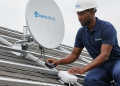
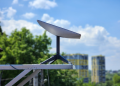
The two products share a brand and a constellation operator, and almost nothing else. The fixed Starlink service — the satellite internet product most people picture when they hear the name — is built around a terminal, the dish, installed at a home, office, school or clinic. It is bought and subscribed to as its own line item, and it carries video calls, cloud work and streaming. Its progress is measured in installed units and market share, the way Starlink’s fixed satellite internet service in Kenya is tracked.
Starlink Mobile inverts nearly all of that. The handset already in the customer’s pocket is the terminal. The commercial relationship stays with Airtel rather than moving to SpaceX, because capacity is sold inside mobile data bundles. And the capability shrinks to what a satellite pass can carry to a phone-sized antenna: messages and selected light-data applications. On the facts the four outlets report, reading “Starlink launches in Uganda” as “satellite internet is now on sale in Uganda” points at the wrong product — and the distinction also governs availability, since Starlink Mobile exists only in markets where a licensed operator has switched it on.
Airtel is explicit that the trade-off is deliberate. The pitch is coverage, not speed.
How to get it
The path Airtel set out at launch is short, and Space in Africa, SoftPower News and SatellitePro ME describe it identically: be an eligible Airtel Uganda customer with a compatible smartphone, register for the service in the MyAirtel App, and use it free for 30 days. After the introductory period, access continues through eligible Airtel Uganda data bundles. Nothing is installed and nothing is bought.
Two caveats are worth carrying into the shop. The first is line of sight — the service assumes an unobstructed view of the sky, which favours open ground over indoors or dense canopy. The second is price: not one of the four launch reports named the qualifying bundles or their rates, so the only authoritative source on cost today is Airtel Uganda’s own bundle list.
Why it matters
Airtel’s framing, which SoftPower News returns to several times in its write-up, is that the service reaches people and organisations terrestrial infrastructure struggles to serve economically, and that it complements rather than replaces the existing network.
For African readers tracking Starlink’s expansion, the significance is less about raw capability than about who now sells satellite connectivity. A national mobile operator, not a satellite retailer, is the front door. The same commercial shape has appeared outside Africa: in Bangladesh, the BTRC cleared Banglalink to run Starlink’s direct-to-cell service, with the licensed mobile network — not the customer — holding the satellite arrangement. Two approvals in two very different regulatory systems is not yet a global pattern, but it is the same structure twice: SpaceX supplies the space segment, the carrier owns the customer.
Who Airtel says the service is for
Space in Africa lists the target users as transport and logistics operators, humanitarian organisations, farmers, mining operations and communities beyond existing network reach. SoftPower News and SatellitePro ME add health workers and healthcare operations to that list — a use case worth reading against the service’s actual capability, because a messaging-only channel is a far thinner clinical tool than a dish-fed broadband connection, and none of the launch accounts claims otherwise.
Airtel also pitches the service as a fallback during emergencies, natural disasters and temporary outages on the terrestrial network. That use case turns up in all four accounts, and it is the one where a text-only link is closest to being sufficient on its own.
What the regulator said
Nyombi Thembo, executive director of the Uganda Communications Commission (UCC), the country’s telecoms regulator, commended Airtel Uganda for using emerging technologies to close coverage gaps, in remarks Space in Africa reported from the Kampala event. He tied the launch to licensing obligations that, as he described them, require Uganda’s mobile operators to cover at least 90% of the country’s geographical area, including islands, mountainous regions and forests.
“What matters now is that Ugandans, wherever they are located, have access to communication services,” Thembo said, in the quote Space in Africa carries.
SatellitePro ME’s account adds regulatory detail the other three outlets leave out. It reports that the UCC has already published a framework allowing licensed mobile operators to fold satellite capacity into their networks; that Starlink holds provisional infrastructure and service licences in Uganda; and that Starlink may share infrastructure with licensed operators to extend connectivity in underserved areas. That framework is technology-neutral, the outlet writes, meaning an operator can meet its coverage obligations using either satellite or terrestrial infrastructure. Thembo, in the same report, said the regulator will monitor the service for quality, reliability and consumer-protection compliance.
What the launch coverage does not do is reproduce the framework or the licence conditions themselves. So how a deal like this one counts, if at all, towards the 90% geographic obligation Thembo cited is a question these four reports raise without answering — and one only the UCC’s own documents can settle.
Government reaction
Justine Kasule Lumumba, Uganda’s Minister of ICT and National Guidance, said government’s responsibility is to build an enabling policy environment for private sector growth in ICT, and congratulated Airtel and Starlink on the partnership. Space in Africa and SoftPower News both carry her remarks, including her argument that the technology supports productivity and connectivity across the economy.
Soumendra Sahu, managing director and chief executive of Airtel Uganda, struck the complementary note again, casting Starlink’s satellite technology as an addition to the operator’s continuing terrestrial investment that keeps customers connected beyond conventional coverage. All four accounts quote him to that effect, which makes it the single most consistent message from the launch.
Background: how Airtel got here
The December 2025 SpaceX deal
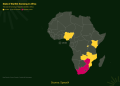
Uganda is one step in an agreement Airtel Africa and SpaceX announced in December 2025 to deploy Starlink’s direct-to-cell service across 14 of the group’s markets, according to Space in Africa. The deal is what makes the Ugandan launch an instalment rather than a one-off, and the arithmetic is the thing to watch: 14 markets committed, two live.
Kenya pilot and DRC launch
Space in Africa dates a Kenyan pilot of the technology to March 2026, ahead of the DRC commercial launch on 14 August 2026. SatellitePro ME and SoftPower News describe the Kenyan stage more loosely — successful testing of satellite-to-mobile data and messaging services earlier this year — without naming a month, so the March date rests on a single outlet and should be read as such.
Airtel Africa chief executive Sunil Taldar cast the Ugandan launch as evidence of progress across the group. “Our ambition is to complement the reach of our terrestrial networks with satellite technology so that our customers can remain connected wherever they live, work or travel,” he said in remarks published by SoftPower News, which also notes he thanked the Ugandan government for backing the deployment.
Where these numbers come from
Every figure in this article — the 24 September launch date, the 650 satellites, the 90% geographic coverage obligation, the 14 committed Airtel markets, the 14 August DRC launch, the March 2026 Kenyan pilot — reaches the page through four secondary outlets: Space in Africa, SoftPower News, SatellitePro ME and Telecompaper. None of those reports reproduces or links a primary document, and we have not seen an Airtel Africa press release, a SpaceX statement or a UCC notice that sets out the figures independently.
Readers who want first-party confirmation have two places to look: Airtel Africa, which publishes group and market announcements, and the Uganda Communications Commission, which publishes licensing frameworks and regulatory notices. Until one of those carries the detail, the numbers above are best treated as well-corroborated secondary reporting rather than verified primary fact. The 650-satellite count is the most perishable of them: it is a launch-day snapshot of a constellation SpaceX adds to in batches.
What is still unclear
Three gaps remain after the launch. Pricing is the largest: the qualifying bundles and their rates were not published, so the cost of the service beyond day 30 is unknown outside Airtel’s own channels. Device support is the second — compatible Android handsets at launch, no iPhone announcement, and no published compatibility list a buyer could check a model against. The third is sequencing: further launches across Airtel Africa’s footprint are planned subject to regulatory approvals, both SoftPower News and SatellitePro ME report, but neither the operator nor any regulator has put a country-by-country timetable on the record. A fourth, smaller gap sits behind the regulatory section: the text of the UCC framework that permits this arrangement has not surfaced in any of the launch coverage.
Frequently Asked Questions
Is Starlink Mobile the same as Starlink’s dish internet?
No. Starlink Mobile is a satellite-to-mobile service sold by Airtel Uganda that works through an ordinary compatible smartphone and currently carries SMS and light data such as WhatsApp messaging. Starlink’s satellite internet product is a separate service built around a Starlink terminal (a dish) installed at a home or business and sold on its own subscription. The four launch reports — SatellitePro ME, Space in Africa, SoftPower News and Telecompaper — agree on the key practical point: Starlink Mobile needs no dish, no specialised equipment and no second device, and it does not deliver broadband-grade capacity.
Which phones work with Starlink Mobile in Uganda?
According to SatellitePro ME, the service is being introduced initially on compatible Android smartphones, and Airtel has not announced iPhone availability. The same report describes Starlink’s satellite-to-mobile network as designed to work with existing LTE handsets, so the requirement is a compatible phone already in the customer’s hand rather than new hardware. No published compatibility list names specific models. One physical condition appears in every account: the phone needs a clear view of the sky, which in practice means outdoors and away from heavy cover.
How much does Starlink Mobile cost in Uganda?
The billing model is public even though the price points are not. Eligible Airtel Uganda customers register in the MyAirtel App and get a 30-day free introductory trial; after that, access is delivered through eligible Airtel Uganda data bundles rather than a separate satellite subscription, and there is no terminal to buy. None of the four launch reports published the bundle rates or named which bundles qualify, so the current list sits with Airtel Uganda and the MyAirtel App. This article will be updated if the operator publishes a tariff.
Can you browse the web or stream video over Starlink Mobile?
Not today. SatellitePro ME describes current capabilities as focused on messaging and selected data applications, with future generations of the satellite network expected to support higher-bandwidth services. No source attaches a date to that upgrade. Readers who want broadband-grade satellite internet in the near term are looking at the dish-based Starlink service, not this one.
Does the launch mean Starlink satellite internet is licensed in Uganda?
SatellitePro ME reports that Starlink holds provisional infrastructure and service licences in Uganda and that the UCC has published a framework allowing licensed mobile operators to incorporate satellite capacity into their networks, including infrastructure sharing with Starlink in underserved areas. The launch coverage does not address the availability, pricing or subscriber numbers of the dish-based satellite internet service in Uganda, and none of the four reports reproduces the licence or framework text, so the detail of what those provisional licences permit is not established by this reporting.
Which other Airtel markets are getting Starlink Mobile?
Space in Africa reports that the December 2025 Airtel Africa–SpaceX partnership covers 14 of the group’s markets. The Democratic Republic of the Congo went first on 14 August 2026 and Uganda is second, after a Kenyan pilot that Space in Africa dates to March 2026. Airtel Africa chief executive Sunil Taldar has said the rollout will expand progressively across the group’s African footprint subject to regulatory approvals — remarks that appear in both the SatellitePro ME and SoftPower News accounts. No country-by-country timetable has been published.
Follow Starlink News on Google. Make us a preferred source to see more of our reporting in Google search results.






Comments 1