Starlink, the satellite internet service operated by SpaceX, dropped the upfront cost of its home-use Mini rental kit to 0 yen in some areas of Japan on Tuesday, September 22, 2026, according to Tesla North, which published its report the following day. The company made the announcement in a Japanese-language post and, rather than listing the qualifying areas, pointed customers to its own website — Starlink’s Japanese residential page, where availability and pricing are shown by address.
A note on sourcing: Starlink News has not independently seen the original Japanese-language post. Everything attributed to Starlink below is as rendered by Tesla North or, separately, by Zamin.uz, which is itself working from the Russian-language tech site ixbt.com. That chain matters, because the two accounts do not describe the offer with the same precision — see Where the two reports differ below. The primary document is Starlink’s own Japan page, linked above.
Key facts
- The 0-yen figure applies to the upfront cost of the home-use Mini rental kit, and only in some parts of Japan, Tesla North reports.
- Under the rental model, households no longer need to buy the Mini dish outright — the change removes the hardware purchase, not the service charge, according to Tesla North.
- Starlink said installation is quick in most regions across the country and delivers optimal performance at all times, according to the same report.
- Japanese-language customer support will be available before signup, after signup and once service is active, the company said.
- Zamin.uz, citing ixbt.com, reports that the Mini hardware kit is being offered for free rental with no initial fee in certain regions.
- Starlink directed customers to its residential page to check availability and pricing for their own address.
By the numbers
- 0 yen — the upfront cost of the home-use Mini rental kit in qualifying parts of Japan (Tesla North).
- 3 — the stages at which Starlink promises Japanese-language support: before signup, after signup, and once service is running (Tesla North).
- 2 — countries where Starlink pushed Mini rentals on the same Tuesday: Japan and the United States (Tesla North).
- 2 — further international announcements Tesla North ties to the same week: phone-to-satellite service in Mongolia with operator Mobicom, and gate-to-gate Wi-Fi for Vietnamese airline Vietjet.
- 0 — qualifying Japanese regions named in either report.
- 0 — monthly prices, rental terms, minimum contract lengths or cancellation conditions disclosed in either report.
That last pair of zeros is the story’s real shape: the hardware number is public and the service numbers are not.
Why it matters, and who the offer targets
Tesla North frames the rental model as removing the biggest hurdle for new customers, because households no longer need to buy the Mini dish outright. Zamin.uz reports that the initiative is aimed at significantly reducing the initial financial costs for people who want to connect to high-speed satellite internet.
The audience Zamin.uz describes is specific: residents of remote and mountainous areas, and small businesses, for whom the outlet says the technology is becoming a primary means of communication in places that lack quality internet access. That targeting is consistent with the product itself — the Mini is the smaller, more portable of Starlink’s home kits — and with the competitive problem Starlink faces in Japan. As Tesla North puts it, “Japan is known for fast and affordable fiber and mobile networks,” and the outlet argues a zero-upfront-cost rental could be the nudge that convinces hesitant households to try satellite internet. In a market that is already well served by terrestrial networks in its cities, the households with an unmet need are the ones fiber has not reached.
Zamin.uz also attributes to unnamed experts a prediction that scrapping the initial fee will strengthen Starlink’s position in the Japanese telecommunications market. With no names, no affiliations and no supporting figures attached, Starlink News is not carrying that forecast as evidence of anything.
What Starlink said about installation and support
Both reports say the company stressed speed of setup. Zamin.uz says the installation process takes very little time in most parts of Japan and that users will be able to connect to a stable, high-performance network in a short period. Tesla North reports Starlink’s claim that installation is quick in most regions and that the service delivers optimal performance at all times — marketing language, in both cases, with no installation time, speed figure or uptime commitment attached.
The second plank is language. Zamin.uz reports that full Japanese-language support has been implemented, covering everything from ordering and equipment installation through to later stages of using the service. Tesla North gives the same commitment in three stages: before signup, after signup and once the service is running. For a US-headquartered operator selling into Japan, that is a distribution claim as much as a customer-service one — it addresses the friction of buying a foreign telecoms product, which is a separate barrier from price.
The same 24 hours: a rental strategy, not a Japan promotion
The Japanese move did not land alone, and that context changes how to read it. Tesla North reports that Starlink made a parallel rental push in the United States on the same Tuesday, where it expanded free Mini rentals to more residential customers. Two rental expansions in two large, well-connected markets on one day reads less like a local Japanese discount and more like a company-wide decision to stop asking new subscribers to buy a dish first.
Tesla North also reports two other international items from the same week: Starlink said it will connect regular phones to satellites across Mongolia through a deal with Mobicom, a Mongolian mobile operator, and that it plans to bring gate-to-gate Wi-Fi to passengers of Vietjet, the Vietnamese airline. Neither touches the Japanese rental terms, but together they mark the week as an expansion push across Asia — which is the frame Tesla North itself uses when asking whether other Asian markets get a similar rental deal next.
Where the two reports differ
The sources describe the same offer with different precision, and the gap is worth stating plainly before it gets copied further.
- Tesla North specifies a 0-yen upfront cost on a home-use Mini rental kit, in some areas of Japan.
- Zamin.uz, working from ixbt.com, headlines the Mini kit as being offered for free and describes free rental without an initial fee in certain regions.
“Free kit” and “0 yen upfront on a rental” are not the same proposition: the first implies the customer ends up with hardware, the second describes borrowed equipment with no entry fee. Tesla North’s formulation is the narrower and, on the evidence of the two write-ups, the more defensible one. Neither report states a monthly service charge, a rental term, or what happens to the hardware if a customer cancels.
What is still unknown
Four things are missing from both accounts: the qualifying areas, the monthly service price, the rental term, and the cancellation or return conditions on the dish. Beyond the offer itself, neither report gives a Japanese subscriber figure or any count of Mini units placed, so there is no published basis for measuring what this promotion is meant to fix or what it achieves. Tesla North’s open question is how far Starlink extends the 0-yen rental beyond the initial areas and whether other Asian markets get a similar deal; Zamin.uz says there is no official word on widening the promotion’s geography or introducing it elsewhere. Customers in Japan can only resolve the first of those gaps themselves, by entering an address on Starlink’s residential page.
Background: the Mini, and rental versus buying outright
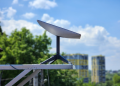
The Starlink Mini is the smaller of the company’s home kits. Zamin.uz calls it the Starlink Mini hardware kit; Tesla North refers to the home-use Mini rental kit and the Mini dish. The distinction that matters commercially is ownership: in most markets Starlink has sold the dish as a one-off hardware purchase before any subscription begins, which is precisely the upfront cost this offer removes in parts of Japan.
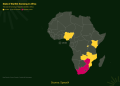
Not every market is moving that way. Where customers still buy the kit outright, the entry cost — and, in some countries, regulatory licensing on top of it — remains the gating factor; our guide to Starlink prices and POTRAZ licensing in Zimbabwe sets out what that looks like in one such market. Nothing in either Japanese report indicates that this rental offer extends to African markets, and the two are separate reporting.
Japan is also a market where satellite hardware plans are shifting on the manufacturing side. Sharp, the Japanese electronics maker, is reportedly building a multi-network satellite antenna, as Starlink News has covered separately; neither of the reports on the 0-yen rental mentions that work.
Frequently Asked Questions
Which parts of Japan qualify for the 0-yen Mini rental?
Neither report names a single qualifying region. Tesla North says Starlink directed customers to its own website for the details, and Zamin.uz says only that the promotion covers "certain regions" of the Japanese market. The place to check is Starlink’s Japanese residential page at starlink.com/jp, where the company says availability and pricing are shown by address.
Does 0 yen mean Starlink in Japan is now free?
No. Tesla North reports that the 0 yen applies to the upfront cost of the home-use Mini rental kit — the hardware — and that the rental model means households no longer need to buy the Mini dish outright. Neither Tesla North nor Zamin.uz publishes a monthly service price for Japan, and Tesla North points customers to Starlink’s residential page for pricing in their area.
What is the rental term, and what happens to the dish if I cancel?
Neither report says. No rental period, no minimum contract, no return conditions and no cancellation or non-return fee appear in either write-up. Because the kit is rented rather than sold, the hardware is not the customer’s to keep, but the terms governing that are not stated in the reporting available on this offer.
When was the 0-yen offer announced?
Tesla North dates the announcement to Tuesday — September 22, 2026 — in a Japanese-language post by Starlink, and published its own report the following day, September 23. Tesla North says the same Tuesday also brought Starlink’s expansion of free Mini rentals to more residential customers in the United States.
Is the free Mini rental offer available outside Japan?
Tesla North reports a parallel rental push in the United States, where Starlink expanded free Mini rentals to more residential customers on the same Tuesday. Zamin.uz says there is no official information yet on whether the Japanese promotion’s geography will be widened or the offer introduced in other countries.
Follow Starlink News on Google. Make us a preferred source to see more of our reporting in Google search results.