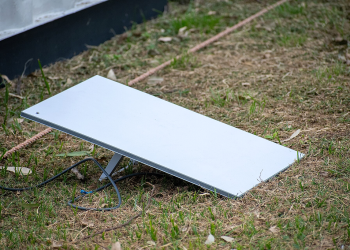
An Israeli company, Discover-Tech, allegedly used the online advertising system to collect location data on users of Elon Musk’s Starlink satellite internet service in more than 100 countries, according to a Reuters report relayed by the Cyprus Mail and the Tehran Times. The allegations rest on research by TrendAI, a unit of Tokyo-based cybersecurity firm Trend Micro, and have since been widened by Canada’s Citizen Lab and the US digital advertising security firm Confiant, both of which named the company themselves.
How this was reported: the account below draws on those two outlets’ summaries of the original Reuters investigation. The underlying research is published by TrendAI’s parent, Trend Micro, and by Citizen Lab and Confiant. Where the two outlets diverge, or where only one carries a claim, that is flagged.
Key facts
- Reuters, citing six sources with knowledge of the case, reported that the firm used advertising auctions to track users’ locations and potentially monitor their online activity.
- TrendAI published its report on 15 October under the codename “Shadow-Earth-79”; all six Reuters sources identified that codename as Discover-Tech.
- The company appeared to be the highest bidder for advertising space linked to Starlink in more than 100 countries, including states where the satellite internet service is banned, restricted or not officially available.
- Activity was heaviest in Syria, Libya, Yemen and South Sudan. The Tehran Times also listed Venezuela.
- Only the Tehran Times puts a number on the scale, saying the firm accounted for nearly 13 per cent of winning ad bids worldwide on observed Starlink connections. The Cyprus Mail does not carry that figure.
- The outlets date the Reuters story differently: 28 October per the Cyprus Mail, 27 October per the Tehran Times.
Why it matters
Starlink delivers internet access by satellite and can bypass local telecoms networks and national internet blocks, which both outlets identify as the reason it matters in conflict zones and in countries with tight state control of information. The Cyprus Mail notes its significance for Ukrainian military operations, where previous reporting has examined its role on Ukraine’s front line. The flip side, per the Tehran Times, is that the same terminals become prime targets for intelligence agencies trying to identify, geolocate and compromise equipment inside sensitive territory.
How an ad auction becomes a tracking tool
Auctions run automatically each time someone visits a website or opens an app, with advertising firms competing to show an advert. Details of the user’s device, IP address and approximate location may be passed on in the process; the Tehran Times itemises that telemetry as IP address, device model, software configuration, autonomous system number and location parameters.
A firm that takes part systematically can harvest the data without ever displaying an advert, then combine it with other information to identify users and follow them across sites and apps, the Cyprus Mail explained.
Both outlets give the same reasoning behind TrendAI’s conclusion that this was a dedicated tracking operation rather than commercial marketing: ordinary Western advertising demand in heavily sanctioned states is virtually non-existent, so sustained high bidding in Syria, Libya, Yemen and South Sudan points to information gathering rather than product promotion.
The spyware allegation
A separate investigation linked some of the company’s activity to the distribution of spyware through adverts, according to the Cyprus Mail, which stressed that this does not mean every targeted Starlink user was attacked. The Citizen Lab and Confiant work exposed an exploitation vector that the Tehran Times names “AdFection”.
AdFection: the name given to a technique in which an advertising platform connects mainstream ad exchanges to mercenary spyware operators, so a malicious payload can be delivered through a routine advertising slot.
Zero-click attack: a compromise that requires no action from the victim — no tap, no download, no visible prompt — leaving little for a user to notice or avoid.
The figure to remember: Citizen Lab confirmed with high confidence that at least 45 devices belonging to news personnel at the broadcaster Al Jazeera were targeted with Candiru spyware, a tool described by the Tehran Times as specialising in zero-click desktop compromises.
On that account, when a targeted device loaded a background advertisement the company’s servers screened the incoming telemetry: high-value targets were served malicious JavaScript carrying zero-click payloads, while ordinary users received empty responses.
What is not proven
The findings do not establish that specific Starlink users were successfully tracked, or that their devices were infected, the Cyprus Mail cautioned. Readers weighing their own exposure can see what Starlink users can do about the ad-tracking claims.
Reach and inquiries
Citizen Lab and Confiant found the advertising activity had reached sensitive networks including those of news organisations, government agencies, international bodies and technology companies, per the Cyprus Mail. Both outlets report that at least one major US technology company and one international organisation have opened internal inquiries into whether their staff were targeted. Advertising providers have since cut off the firm’s access to their ad platforms.
One strand of the story rests on a single outlet. The Tehran Times reports that Discover-Tech’s corporate history shows ties to past directors associated with Circles, an affiliate of NSO Group, and to Senpai Technologies, which it links to the Intellexa consortium. The Cyprus Mail’s account does not carry those claims, and they remain single-sourced rather than established. The Tehran Times also argues that the platform removals close specific operational routes while leaving the underlying weakness untouched: as long as commercial ad exchanges permit real-time data harvesting, the same bidding channel stays open.
Frequently Asked Questions
Have Discover-Tech or SpaceX responded to the allegations?
No. According to the Cyprus Mail’s account of the Reuters report, Discover-Tech, its chief executive and SpaceX did not respond to requests for comment.
Which advertising platforms have blocked Discover-Tech?
The Cyprus Mail reported that Google, Comcast and other advertising providers have blocked the firm from their platforms. The Tehran Times listed Google, Comcast’s Beeswax, Vungle and Eskimi, and said IAB Europe suspended the company from its approved vendor list.
Why did TrendAI not name the company in its own report?
The two outlets give different explanations. The Cyprus Mail said TrendAI’s policy on identifying those responsible is meant to avoid misattribution, while the Tehran Times said the name was replaced with the “Shadow-Earth-79” alias after corporate executives raised legal concerns.
Had anyone flagged Starlink ad-based tracking before this case?
Yes. The Cyprus Mail reported that last May, Haaretz and Intelligence Online said some firms were offering ways to track Starlink users through advertising data. The Tehran Times said the Discover-Tech case shows those pitches were already being run at a global scale.