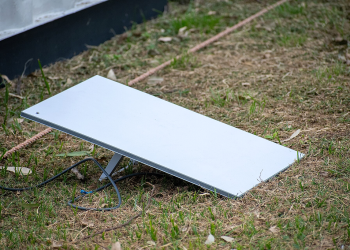
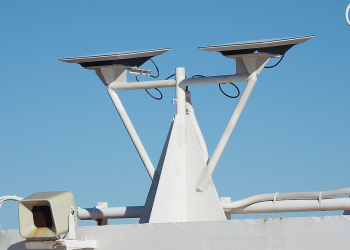
Ukrainian President Volodymyr Zelensky told European leaders in Dublin on Thursday, 12 November, that Starshield — the military version of SpaceX’s Starlink satellite internet service — is being throttled again, and that the slowdown is blunting Ukraine’s ability to shoot down Russian drones. He spoke while briefing the European Political Community summit in Ireland, days after US-mediated peace talks between Russia and Ukraine in Abu Dhabi, The Globe and Mail reported.
Key facts
- Zelensky said Ukrainian military units recorded several days of disruption, with restrictions limiting Starshield terminal speeds to about 161kph (100mph), according to London Business News.
- He said that limit stops Ukrainian interceptor drones reaching the speeds needed to destroy Russian jet-powered Shahed attack drones.
- “We are again seeing problems with Starshield,” he said in Dublin, as quoted by The Globe and Mail.
- Kyiv is seeking clarification from the United States and says it does not yet know who authorised the restrictions.
- A previous cap in mid-October was lifted and service restored on 24 October, both outlets report.
Why it matters
Zelensky linked the slowdown directly to civilian deaths, saying more Russian strikes get through when interceptors cannot catch the incoming drones, The Globe and Mail reported. Writing on Telegram, he put it more bluntly: “This helps Russians kill more Ukrainians and carry out more accurate strikes on Ukraine,” according to London Business News.
What Zelensky says is happening
The reported mechanism is a speed limit rather than an outage: terminals are said to keep working while slow and to stop once they move faster than the threshold, which matches our own report earlier this week on the capped speed. “Because of the speed restrictions we simply cannot catch up with them in time,” Zelensky said of the Russian drones, per The Globe and Mail. London Business News reports he said some interceptions had already been affected; neither outlet reports a figure for how many.
How a speed cap would be imposed
Neither outlet explains the technical means, and SpaceX is not quoted in either report. But the company’s own published Starlink product documentation makes clear that in-motion use is a service and hardware parameter SpaceX sets, not a fixed property of a dish: mobility is sold as a separate tier, terminals are rated for in-motion use at stated speeds, and service can be enabled, restricted or geofenced per account from the ground network. That means a speed ceiling can in principle be applied or lifted remotely, without touching the terminal — which is consistent with both outlets’ account of a restriction that appeared in mid-October and was removed on 24 October. Starlink News could not confirm which specific control was used in either episode.
Where it is happening
The Globe and Mail quotes Zelensky calling it disturbing that satellite internet speeds are being disabled on Russian-occupied territory of Ukraine, and warning that if someone in America is making decisions that treat Ukrainian territory as if it is not Ukrainian, that tells Kyiv where things are going. London Business News, by contrast, reports the slowdown as affecting the whole front line.
Neither outlet publishes enough of the remarks to show whether Zelensky described two different things — a broad front-line degradation plus a specific concern about occupied areas — or whether one account summarises him more loosely than the other. The discrepancy is unresolved in the sources, and Starlink News could not independently verify the geographic extent of the restriction.
No answer yet on who ordered it
Zelensky said Kyiv is trying to get answers from the United States and knows very little so far, The Globe and Mail reported. A Ukrainian official told London Business News that the satellite disruptions were not raised during the Abu Dhabi discussions and that it remained unclear who had authorised the latest restrictions.
Those talks, brokered by the US, ran for two days and ended on Wednesday. Russian and Ukrainian negotiators agreed a major prisoner exchange, but US mediators said differences remained on major issues including territory, according to The Globe and Mail. The two outlets describe the meeting’s status differently: The Globe and Mail calls it the first in nine months, while London Business News says it was the first such meeting since February.
Europe’s exposure
Andrius Kubilius, the European commissioner for defence and space, warned that Starlink’s privileged position in Europe depends on the company honouring its contractual commitments, London Business News reported. The question, he said, was not whether SpaceX wanted to support Ukraine but whether it delivered services European governments were paying for — and failure to meet those obligations could undermine confidence in the company and threaten its ability to serve European governments and citizens.
London Business News frames the episode as a wider strategic vulnerability, arguing in its own analysis that Europe’s growing military ambitions rest on critical infrastructure controlled by private companies, many of them based outside the continent’s jurisdiction, whose decisions can immediately affect military operations thousands of miles from their headquarters. On the same point, we have reported separately on the absence of a comparable European alternative.
Speaking in Dublin, French President Emmanuel Macron said Europe cannot rely on the US over Ukraine and that European leaders will define and decide their own future security, The Globe and Mail reported. Canadian Prime Minister Mark Carney said security guarantees for Ukraine are the responsibility of Europeans as well as Canadians and Americans. European Commission President Ursula von der Leyen said the EU is preparing a 22nd sanctions package on Russia and a proposal for covering Ukraine’s financial needs in 2027.
Background: the October cap
In mid-October, Ukrainian officials said SpaceX had abruptly capped the speed of Starlink and Starshield at the same threshold now reported, cutting off drones and other equipment moving faster than that, amid tensions with the Trump administration over Ukrainian attacks on Russian oil refineries, The Globe and Mail reported. London Business News dates one such episode to 14 October and says Zelensky then accused Elon Musk and US President Donald Trump of a “planned operation” to restrict access.
Ghana’s Graphic Online reported on 18 October that the restriction disrupted some battlefield missions and hampered Kyiv’s ability to protect itself, and that Russia launched several deadly strikes during the slowdown — the period examined in our coverage of that period. Service was restored on 24 October.
Frequently Asked Questions
Is Starshield separate hardware from commercial Starlink?
The sources do not say. The Globe and Mail describes Starshield as the military version of SpaceX’s commercial Starlink service, and London Business News describes its terminals as an essential part of Ukraine’s military infrastructure on a battlefield where conventional networks have been repeatedly damaged. Neither outlet states whether the affected drone terminals are military-only units or standard commercial kit running on a military service plan — a gap that matters, because it determines whether a cap would hit civilian users too.
Did the same terminals behave differently outside Ukraine?
Yes. London Business News reports that after the earlier episode, Ukraine tested the system in European Union territory, where terminals used by its drones reportedly kept working at speeds of up to 180kph — well above the limit Zelensky says applies inside Ukraine.
Has the Trump administration responded to the throttling claims?
Ghana’s Graphic Online reported in October that Trump denied halting intelligence-sharing and denied deliberately slowing down Ukraine’s Starlink network. That report came during the first episode, when Zelensky said speeds had still not been fully restored; the sources carry no US response to the latest disruption.
What else did Zelensky ask European leaders for in Dublin?
According to The Globe and Mail, he pleaded for more money, more military support and further sanctions on Russia. He specifically asked allies to help find interceptors and missiles for Ukraine’s Patriot and NASAMS air defence systems, and ammunition for the F-16 fighters Ukraine uses against Russian jet-powered Shahed drones.