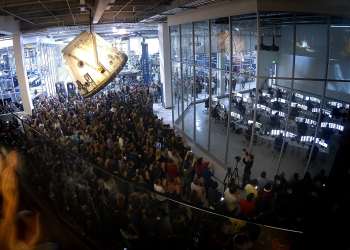
Belgium’s King Philippe on Tuesday, 24 November, inaugurated a satellite manufacturing plant in Charleroi, in the south of the country, that is set to become the European Union’s largest. The factory is run by Aerospacelab, a Belgian satellite manufacturer, and will build spacecraft for Iris2, the EU constellation intended to rival Elon Musk’s Starlink, according to Kyiv Post and The Straits Times.
Key facts
- The plant sits in Charleroi; a photo caption published with the Kyiv Post report places the site at Marcinelle, near Charleroi.
- Annual production capacity is about 500 satellites, both outlets report.
- Aerospacelab won a €2.4 billion contract in September to manufacture 264 of the 348 satellites planned for Iris2.
- The oval-shaped building spans roughly 20,000 square metres and is described as still sitting idle.
- Staff move in during January, with production targeted for the end of 2028.
- Aerospacelab’s chief executive is Benoit Deper, who told reporters at the opening: “We’ve grown even faster than our own ambitions.”
Why it matters
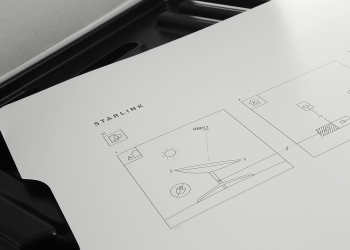
Iris2 is the EU’s answer to Starlink, which is operated by SpaceX and currently sells satellite internet in markets across Africa, Europe, the Americas and Asia. The Charleroi factory is the industrial step behind that plan: before Iris2 can carry traffic, someone has to build 348 satellites. Kyiv Post and The Straits Times both report that the hall opened this week is not yet producing anything.
For readers watching the satellite internet market, the schedule is the headline. A factory that starts production at the end of 2028 is a long way from a service you can order, and neither report gives a launch date, a coverage map or a price for Iris2. That gap is one reason few alternatives to Starlink exist for governments shopping for satellite capacity right now.
What was announced in Charleroi
The inauguration was carried out by Belgium’s head of state, King Philippe, with Deper guiding him through the site, according to the caption accompanying the Kyiv Post report. The stated aim of the facility, both outlets write, is to meet growing European demand for space infrastructure.
Aerospacelab will produce satellites for Iris2 “among others”, both reports say, without naming the other programmes or customers. The 500-satellites-a-year capacity figure is the plant’s stated ceiling rather than a confirmed order book; the only contract named in the reporting is the September deal for 264 Iris2 satellites.
The money, reported two ways
The contract value is given as €2.4 billion by both outlets, but their currency conversions differ. Kyiv Post puts it at $2.6 billion, while The Straits Times renders the same euro figure as S$3.4 billion, in Singapore dollars. Both attribute the September agreement to Deper “and his partners”, without naming those partners.
From startup to “space sovereignty”
Deper described Aerospacelab’s trajectory from what he called a “tiny startup” in 2018 to a large-scale operation with a role in what he termed Europe’s “space sovereignty”, according to all three reports. News.az, which also covered the opening, credits its account of the event to Kyiv Post and repeats the same quotes and figures.
Both AFP-sourced reports frame the project against a wider push: Europe has been looking to boost its space sector as it chases growing off-earth economic opportunities and self-reliance, they write, amid concerns about US reliability. Neither report elaborates on what those concerns consist of.
Charleroi’s industrial past
The reports note that Charleroi is more commonly associated with its low-cost airport and with abandoned factories from Belgium’s industrial past. The new plant is described as a “megafactory”, the term used by the company and repeated in the coverage.
Where this sits among Starlink challengers
Iris2 joins a short list of constellations positioned against Starlink, each at a different stage. Amazon’s service, Amazon Leo, which had nearly 400 satellites in orbit, is already launching hardware, while Russia’s own planned Starlink rival has drawn attention for military reasons. The Charleroi reporting makes no comparison to either; it addresses only the EU programme and the factory that will supply most of its satellites.
What the sources do not say
None of the three reports gives a date for the first Iris2 launch, a service start date, pricing, subscriber targets, or the countries and regions Iris2 will cover. There is also no detail on the satellites themselves — mass, orbit, capacity or user terminals — and no mention of Africa or any individual market. Readers in Zimbabwe and elsewhere on the continent should treat Iris2 as an EU manufacturing and sovereignty programme at this stage, because that is all the reporting establishes.
Frequently Asked Questions
When will the Charleroi factory actually begin building satellites?
Not for another two years. According to The Straits Times and Kyiv Post, staff will move into the building in January and the aim is to start production by the end of 2028. Both outlets note the 20,000 sq m hall is still sitting idle at the moment of its inauguration.
How many satellites will Iris2 have in total, and who builds the rest?
Iris2 is planned at 348 satellites, of which Aerospacelab’s September contract covers 264, according to Kyiv Post and The Straits Times. Neither report names the parties responsible for the remaining 84 satellites.
How much is the Aerospacelab satellite contract worth?
The contract is for €2.4 billion, agreed in September, according to both Kyiv Post and The Straits Times. The two reports convert that figure differently: Kyiv Post gives $2.6 billion, while The Straits Times gives S$3.4 billion in Singapore dollars.
Does Iris2 mean Starlink will have competition in Africa?
The reports do not say. Kyiv Post, The Straits Times and News.az describe Iris2 only as a European Union project meant to rival Starlink and support what Aerospacelab’s chief executive calls Europe’s “space sovereignty”, and none of them lists the countries or regions the constellation will serve.










Comments 1