Elon Musk said on Sunday 22 November that he hopes built-in Starlink satellite internet will reach Tesla vehicles beyond the two-seat Cybercab towards the end of 2027. He was replying on X to David Marcus, the former PayPal president, who had asked Tesla to embed the satellite connection across the whole model range rather than in the robotaxi alone.
“Hopefully available towards the end of next year.”
— Musk, replying on X, as transcribed by TeslaNorth
That line is the only wording from the thread any outlet has published verbatim. The exchange sits on Musk’s own X account, under a request from Marcus, and TeslaNorth — which timestamps the two replies at 8:15 p.m. and 8:37 p.m. ET — stresses that it is a window Musk hopes for rather than a schedule Tesla has announced. The second reply names China as an exception because Starlink is illegal there, per EVXL, which renders that point as a paraphrase rather than a quotation.
What the replies never touch is the hardware. Receiving a satellite signal needs antenna space secured inside the vehicle, which is why a Tesla already with its owner cannot simply be switched on. That is the most consequential claim in the story and also the thinnest-sourced: it reaches readers at two removes, published by South Korean outlet DigitalToday but credited there to US outlet InsideEVs, whose original wording has not been republished. Tesla has not addressed it, and no other outlet covering the reply has corroborated it.
Where built-in Starlink stands
| Question | Published position |
|---|---|
| Available today | Cybercab only — and Dallas riders do not appear able to connect to it (EVXL, DigitalToday) |
| Target for other models | “Towards the end of next year” — a hope Musk voiced on 22 November, not a Tesla schedule (TeslaNorth) |
| Named exclusion | China, where Musk said Starlink is illegal (EVXL) |
| Existing cars | No retrofit announced, costed or confirmed as possible; antenna space said to be lacking (DigitalToday, citing InsideEVs) |
The antenna problem
Tesla filed a patent last year for a vehicle roof structure that allows satellite communications signals to pass through, DigitalToday reports. Set that beside the antenna-space requirement and the obstacle looks structural rather than modular — this publication’s reading of the two documents, not a Tesla position: a roof specified to pass satellite signals is decided when a car is designed and stamped, not fitted at a service centre.
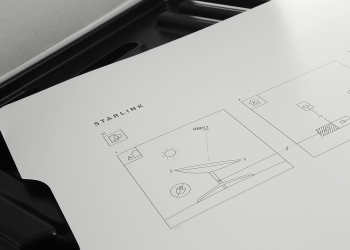
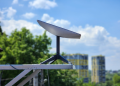
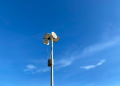
TeslaNorth treats the Cybercab, built around hardware Tesla has publicly shown, as the clue to how the packaging works. Our earlier report covered the satellite hardware now visible on Cybercabs in Dallas, where the antenna sits on the trunk lid rather than under a redesigned roof. On the published record, then, the late-2027 hope is most clearly applicable to cars yet to be built.
Why it matters
Starlink availability is the whole premise
Tesla’s current Premium Connectivity runs over the car’s cellular connection, so it does nothing in a dead zone, EVXL notes. Starlink availability in outlying areas with weak communications infrastructure is cited as the service’s key competitive strength, according to DigitalToday, and Musk has framed high bandwidth everywhere as a requirement for passengers who want to work or watch video while the car drives itself. We have examined how the plan rests on unsupervised Full Self-Driving.
What connectivity costs today
Premium Connectivity was listed at $9.99 a month or $99 a year plus tax on Tesla’s connectivity support page when EVXL checked it on 23 November, covering music streaming, satellite-view maps and live traffic; Standard Connectivity is free for eight years after delivery and runs most features over Wi-Fi. Starlink pricing has gone the other way on the consumer side, and we track Starlink’s own home subscription prices, down from $99 a month in 2020 to $55 in 2026.
What the Cybercab link does today
Dallas Cybercabs began operating on 19 November fitted with the equipment, but passengers are not yet at a stage where they can use the satellite internet directly, DigitalToday reports, matching an observation from Tesla investor Sawyer Merritt relayed by EVXL. Ashok Elluswamy, Tesla’s vice president of AI software, has explained that the link is used mainly for vehicle management, navigation and customer support, and is not an essential condition for safe autonomous driving — a description that makes the satellite feed a fleet-operations tool first.
The driving side is on its own clock. EVXL reports that Musk has said FSD V15 will go wide in December, though the outlet does not specify where he said it, and both EVXL and TeslaNorth point out that V15 is still supervised and requires an attentive driver. DigitalToday puts the two tracks plainly, describing the Starlink rollout and the commercialisation of unsupervised autonomy as separate tasks.
What is still unknown
Rollout timing by model, the order in which models would get the hardware, whether existing vehicles can be retrofitted at all, and any market limit beyond the China exclusion all remain undisclosed. DigitalToday states plainly that the late-2027 date is not a confirmed launch schedule.
Frequently Asked Questions
Do Tesla’s Cybercab terms already mention satellite service?
Yes. According to TeslaNorth, Tesla’s Cybercab subscription terms state that vehicle connectivity may include satellite service. The outlet notes this is the clearest written hint so far of how Tesla frames the feature.
Has Musk talked about Starlink in all Teslas before this month?
He has. EVXL reports that on 9 August 2026 Musk said all cars will have Starlink in the future, with no date attached, and that Tesla showed the first Cybercab with built-in Starlink the same month. The 22 November reply was the first time he named a target window.
Will built-in Starlink cost Tesla owners an extra monthly fee?
Tesla has not said. EVXL writes that Tesla could add another monthly charge for the Starlink feature or fold it into the car’s purchase price, and that no price for built-in Starlink has been published.
Have newer Teslas been seen with satellite hardware fitted?
TeslaNorth reports that newer vehicles photographed at Giga Texas carried a darker cover on the rear hatch, alongside the satellite hardware Tesla has already shown built into the Cybercab. Tesla has not confirmed what those covers are for.