SpaceX has opened a beta for a programme that lets one Starlink customer sell satellite internet access to neighbours, dated October 1, 2026 — but the only detailed account of how it works comes from a single applicant. Exploraphones, which says it submitted its own beta application from Rantepao, South Sulawesi, in Indonesia, is the source for every operational detail below. Teslarati, the EV and space news outlet, reported the launch on October 3 under the headline “Starlink launches Communities Program for passive income through internet sharing,” but its page as captured here carries no reported specifics.
Neither outlet points to a SpaceX newsroom post, an app changelog or an official Starlink account; Exploraphones traces the launch date to a third-party post on X, and publishes on a page that also carries a Starlink referral link, though it says it takes no compensation from SpaceX. The two do not even agree on the name — Starlink for Communities at Exploraphones, the Communities Program in Teslarati’s headline. Nothing available so far is primary confirmation that the programme exists on the terms described.
What the beta materials show
All of the following is attributed to Exploraphones, drawing on the host dashboard and the Starlink Community Beta Interest Form it says it used to apply.
Passes and billing
- The host installs one dish and neighbours buy hourly, daily, weekly or monthly passes.
- SpaceX runs account creation, payments, access controls and bandwidth management, so the host does not become tech support.
Device limits
Hour, day and week passes cover one device; the month pass allows up to four.
What the host provides
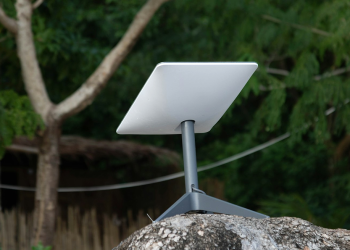
Power, a placement with a clear view of the sky, and basic upkeep of a Starlink Standard or Mini kit — the dashboard frames those three items as the full extent of the host’s obligations.
Markets, and the two numbers missing
The beta is listed as open in the US, Mexico, Canada, Indonesia and “other active Starlink markets.” As of October 2, 2026, pass pricing had not been published, and the revenue split is shown only to applicants after approval.
Exploraphones’ own estimates
These figures are the outlet’s assessments, not SpaceX specifications or published prices.
- 10 to 15 nearby users per dish, based on what it describes as two years covering rural Indonesian deployments.
- A “$3 day pass or $5 week pass,” used illustratively in its affordability argument; it states that no published tariff supports either number.
- Campground owners, homestay operators in Toraja and US apartment-building owners as the likely hosts, with a host already paying $120 a month able to “offset that cost or profit.”
Why it matters: the entry-cost arithmetic
The model shifts who pays for the hardware. Exploraphones puts the current barrier to satellite internet at a $149 kit plus $120 a month — a hardware figure consistent with the $149 Starlink Mini kit listing reported last week — or roughly $1,589 across a first year, which it says is beyond many households in Sulawesi and the rural United States. Under the beta those households buy a pass instead, and the host carries the dish and the monthly subscription. That makes the withheld tariff and revenue share decisive rather than incidental, which is why the outlet calls pricing the programme’s biggest unknown and advises applicants against modelling income before approval. The beta follows earlier reports of a paid community Wi-Fi hosting test.
Our arithmetic, built on illustrative inputs: a host would need about $4 a day in pass sales simply to clear a $120 subscription, before power and repairs — roughly $8 to $12 per user a month across the 10 to 15 users one dish is estimated to carry. These are our calculations, not SpaceX projections, and the pass prices feeding them are Exploraphones’ illustrations rather than published rates, so treat the range as a sketch of the problem, not a forecast.
Availability: no African market named
Neither report names an African country, so it is unclear from these sources whether Zimbabwean or other African customers can apply — and neither touches the regulatory questions around Starlink’s African rollout that reselling access would raise.
How to apply, and when to check back
Applications go through the Starlink Community Beta Interest Form, reached from a Starlink account at starlink.com and linked from Exploraphones’ post; approval is currently the only route to seeing the revenue split. Exploraphones says it will update its post once approved. We will update this report when either the pass tariff or the host’s share is published by SpaceX or confirmed by a second independent applicant.
Frequently Asked Questions
Where did the October 1, 2026 launch date come from?
Exploraphones states that its source for the date is a post from @SawyerMerritt on X, which it says it verified at 19:36 UTC on October 1, 2026. Teslarati published its own report two days later, on October 3, 2026.
How is this different from Starlink’s 2025 reseller arrangements?
Exploraphones reports that the earlier reseller models, dating from 2025, required the seller to issue and track vouchers by hand. Under the new programme the outlet says the process runs automatically inside the Starlink app, with SpaceX rather than the seller handling billing and access control.
Has SpaceX said it is targeting low-income markets?
Not in either report used for this article. Exploraphones writes that PCMag’s reporting confirms SpaceX is aiming the programme at low-income markets, but that is the outlet’s characterisation of a third report that was not reviewed here, and no direct SpaceX statement to that effect appears in either source.
Who are the two outlets reporting this?
Exploraphones describes itself as having operated Starlink Standard and Mini kits in South Sulawesi since 2024 and spent roughly two years covering Starlink deployments in rural Indonesia. Teslarati’s report is attributed to Joey Klender, a journalist the outlet says has covered electric mobility for it since August 2019.
Follow Starlink News on Google. Make us a preferred source to see more of our reporting in Google search results.




![Using Your Own Router with Starlink: Bypass Mode [2026]](https://starlink-news.com/wp-content/uploads/2026/09/using-your-own-router-with-starlink-bypass-mode-20-f6c09f95-120x86.png)