Ten months after SpaceX’s Starlink switched on service in South Korea, the satellite internet operator’s growth in the country is coming from aircraft cabins and the electricity grid rather than from households, according to a report published on 5 October by BigGo Finance. The outlet says Starlink entered the South Korean telecom market last December, has failed to produce notable results in a consumer segment dominated by the country’s three major mobile carriers, and is instead generating new demand in in-flight Wi-Fi and national power infrastructure. That consumer-versus-aviation contrast is the outlet’s own characterisation: it publishes no subscriber or coverage figure for Starlink in South Korea, and this site has found none published elsewhere, so the household half of the comparison rests on inference rather than on adoption data.
Key facts
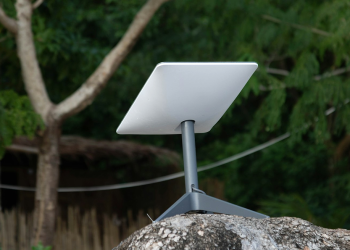
- Starlink’s cheapest South Korean plan starts at 68,000 won (about $51) a month, with equipment costing roughly 500,000 won (about $370), BigGo Finance reports.
- Korean Air and Asiana Airlines launched Starlink-based in-flight Wi-Fi in September.
- Korea Electric Power Corporation (KEPCO), the national utility, said in June it would apply low Earth orbit satellite communications to the power grid with Starlink Korea and SK Telink.
- Starlink operates more than 11,000 satellites as of August 2026, at an altitude of 550 km, per the report.
Why it matters: the hardware takes years to repay
In a country where ultra-high-speed wired and wireless networks are densely built nationwide, Starlink has found relatively little room to squeeze in, BigGo Finance reports, and pricing has also been a hurdle. The outlet puts the carriers’ plans at 77,000 won to 153,000 won (about $57 to $110) a month against Starlink’s 68,000-won entry price. On those reported figures, Starlink undercuts the cheapest carrier option by 9,000 won a month — meaning the 500,000-won terminal takes more than four years of subscription to pay back, by this site’s arithmetic.
Treat that four years as a floor rather than the full switching cost. It sets the terminal price against the monthly gap and nothing else: it ignores any data caps or fair-use throttling on either service, installation labour, mounting hardware and shipping, and the benchmark is not like-for-like, because the carrier prices are mobile plans rather than fixed broadband. Readers who want current terms can check Starlink’s own Korean storefront; this site has not verified the won figures against it. BigGo Finance notes that overseas, satellite communications are increasingly bought by governments and businesses for maritime, military and public safety work — the segments where that upfront cost is easier to justify.
The breakthrough is in the air
Existing in-flight Wi-Fi in South Korea was slow — limited to basic web browsing or messaging — and expensive, according to the report. BigGo Finance says Starlink has raised connection speeds to 350 Mbps, dozens of times faster than the 10–70 Mbps offered by legacy geostationary satellites, and cut latency from 600 ms to 25 ms, making online gaming and high-definition streaming on platforms such as Netflix and YouTube possible.
Korean Air is offering the service on four aircraft — three Airbus A350-900s and one Boeing 777-300ER — and plans to expand to most of its operating fleet by the end of 2027, the outlet reports. Asiana Airlines will roll out the service sequentially, starting with nine Airbus A350-900s and ten A330-300s.
How big the aviation business could get
Valour Consultancy, an aviation-focused market research firm, projects that Starlink will equip more than 7,000 aircraft by 2034, giving it a 39% share of the global aviation market, according to BigGo Finance — and that number should not be quoted without the caveats attached to it. The outlet does not describe how the firm reached it, does not say when the forecast was published, and sets no competing analyst estimate against it, so it is one firm’s projection rather than a settled number.
The time horizon is the second reason for caution. Fleet-wide retrofits are announced years before they are finished: Lufthansa’s own programme, which began this month, targets about 850 aircraft by 2029, and a single such commitment moves a meaningful slice of a 7,000-aircraft total. BigGo Finance says Starlink has signed successive contracts with major carriers including United Airlines, Air France, Qatar Airways and Emirates.
Satellite links for the national power grid
The June KEPCO announcement marks the first time low Earth orbit satellite communications have been introduced to South Korea’s national power infrastructure, according to the report. BigGo Finance says the move is designed to keep the grid running even if terrestrial communication networks are knocked out by large-scale wildfires, earthquakes or other disasters, with a real-time monitoring system and safeguards against simultaneous failures.
What satellite internet is actually available in Korea
The report describes Starlink as commercially on sale to South Korean consumers since December, but it does not state the terms of Starlink Korea’s licence or name the regulator that cleared it. Both non-consumer deployments are still narrow: in-flight Wi-Fi is live on a handful of Korean Air and Asiana widebodies, and the KEPCO link is at trial stage, with wider rollout promised in phases.
The 6G argument
Global 6G standards aim to integrate terrestrial and satellite networks to guarantee seamless connectivity regardless of time and location, the outlet reports, and BigGo Finance’s own reading is that such an environment could broaden the areas where Starlink competes with the existing mobile carriers. The only expert the report names is Choi Sung-ho, a planning director at the Institute of Information & Communications Technology Planning & Evaluation, who said satellite communications are essential for future services needing constant connectivity, “such as autonomous driving, robotics, and urban air mobility.” He is not quoted on the competitive question.
Background: the constellation and the rocket
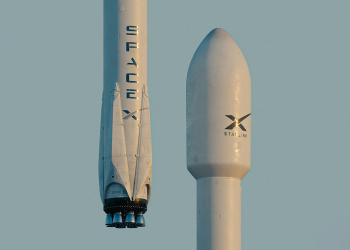
The more than 11,000 satellites BigGo Finance counts as of August 2026 match the figure Elon Musk has also cited publicly. The report adds that SpaceX is reaching a turning point in launch capability: Starship entered Earth orbit for the first time on its 14th test flight on 28 September, deploying 26 next-generation Starlink V3 satellites, and SpaceX expects a faster pace of network expansion from here. That payload lifted total network throughput by roughly 3% — see the capacity that flight added to the network.
How we sourced this
Every factual claim above is attributed to BigGo Finance because this account rests on that one outlet. Starlink-news has not reviewed KEPCO’s June announcement, Korean Air’s or Asiana’s service notices, or the Valour Consultancy report, and none of those organisations has confirmed the figures to us; the two primary links here point to Starlink’s Korean storefront and to the research firm itself, neither of which corroborates the specific numbers. The report also says nothing about Starlink availability, pricing or licensing in Zimbabwe or elsewhere in Africa, and this article makes no claims about those markets.
Frequently Asked Questions
Why does the report say Starlink is faster than older satellite internet?
BigGo Finance says Starlink’s satellites fly in low Earth orbit at an altitude of 550 km, while traditional geostationary satellites sit at 36,000 km. Because the distance to the ground is much shorter, the outlet reports, data transmission speeds are faster than on geostationary systems.
Which KEPCO facilities get satellite links first?
KEPCO will apply the satellite communication network first at its headquarters in Naju, South Jeolla Province, and at two regional headquarters, BigGo Finance reports. Based on those results, the utility plans to extend the satellite network to all 15 of its regional headquarters nationwide.
Why does SpaceX need Starship to launch the V3 satellites?
Each Starlink V3 satellite weighs approximately 2 tons, far heavier than the existing V2 Mini at about 575 kg, according to BigGo Finance. The outlet reports that this makes the Falcon 9, SpaceX’s current workhorse rocket, insufficient for the job, and that SpaceX aims to fly Starship thousands of times a year.
Follow Starlink News on Google. Make us a preferred source to see more of our reporting in Google search results.




![Starlink Australia: NBN Alternative for Rural Areas [2026]](https://starlink-news.com/wp-content/uploads/2026/09/starlink-australia-nbn-alternative-for-rural-areas-9f7790a6-120x86.png)


![Using Your Own Router with Starlink: Bypass Mode [2026]](https://starlink-news.com/wp-content/uploads/2026/09/using-your-own-router-with-starlink-bypass-mode-20-f6c09f95-120x86.png)