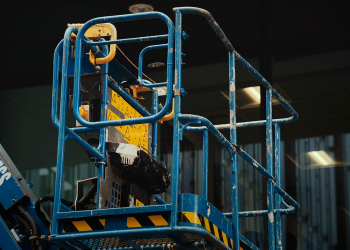
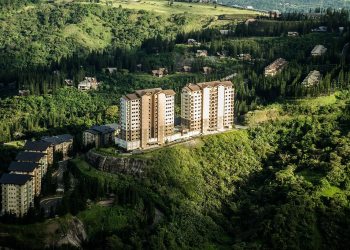
Polish Prime Minister Donald Tusk said on Monday, 12 October, that German police had detained two Turkish citizens suspected of setting fire to a Starlink ground station in Poland’s Masovian Voivodeship, acting at the request of Polish intelligence agencies. The site, at Wola Krobowska in Grójec County, is a gateway — one of the antenna installations that link Starlink satellites to terrestrial networks, carrying satellite internet traffic for users in Central Europe and Ukraine (Tesla North). Polish ministers say the two men will be handed over to Poland to face sabotage charges over the September blaze.
Key numbers
- 2 — Turkish citizens detained in Germany.
- 23 September — the date of the fire per Tesla North and Charter97; Glavnoe in Ukraine puts it overnight on 23–24 September.
- ~50 km — distance of the burned Exatel antenna site south of Warsaw.
- 2 days — gap between the fire and the opening of the sabotage investigation.
- European Arrest Warrant — the procedure under which the men are awaiting transfer to Poland, police say.
Key facts
- Tusk announced the detentions on his X account, writing in Polish that “this is another act of hybrid warfare” and that those behind the sabotage would answer to the Polish justice system (Tesla North).
- Interior and Administration Minister Marcin Kierwiński said Germany’s federal criminal police, the BKA, made the arrests on the basis of material prepared by the Polish police, the ABW internal security agency and prosecutors (Tesla North; Glavnoe in Ukraine).
- The charge will be sabotage and subversion — Tesla North renders it “sabotage and diversion” — commissioned by a foreign intelligence service. Kierwiński did not say which country that service belongs to.
- Tomasz Siemoniak, Poland’s special services minister and coordinator, said he had “no doubt” Russian intelligence services were responsible, and that those services were increasingly recruiting people with links to criminal networks (kiprinform).
- Investigators concluded the perpetrators’ goal was to disrupt the operation of the Starlink system, including internet connectivity, in Poland and other countries in Central and Eastern Europe (Charter97).
How to weigh the sourcing
Every official claim above traces to two events: Tusk’s post on X, and a Warsaw news conference given by his ministers. We have seen no Polish government press-office text, no Polish-language wire copy from PAP and no international wire report. The story therefore reaches this article secondhand and in translation, through four outlets of uneven standing:
- Tesla North — a SpaceX and Tesla enthusiast site. The fullest account, but not a news agency.
- Glavnoe in Ukraine — a Ukrainian news site, and the only source for the arrest-warrant procedure and the prosecutor’s filing.
- Charter97 — a Belarusian opposition outlet operating in exile. Its English garbles the names: “Marcin Kervinski”, “Tomasz Semoniak”, “Volia-Krobovska”.
- kiprinform — an aggregator, carrying the Russian-attribution lines and the Ukraine background.
The pivotal claim is thinner still. Russian responsibility rests on Siemoniak alone; neither Tusk nor Kierwiński named a country. No evidence behind the attribution has been published, and none of the four reports corroborates it independently. Treat it as a single-sourced official accusation, not an established finding.
Why it matters
Poland’s digital minister, Krzysztof Gawkowski, called the fire an act of sabotage against a station he described as vital to keeping internet service running in Ukraine (Tesla North). Ukraine’s armed forces continue to depend on “tens of thousands” of Starlink terminals for battlefield communications and certain drone operations, kiprinform says — the only quantity in any of the four reports, and one none of them traces to a Ukrainian or SpaceX source. Ukrainian officials insist no one will disconnect Starlink.
The case puts the ground side of satellite internet into a fight that has mostly played out in orbit. SpaceX has recently been pressing for openness about threats to its satellites, calling undisclosed manoeuvres the biggest risk it faces in low Earth orbit (Tesla North) — a debate running alongside warnings from Germany about Russian satellites shadowing Starlink, even as Russia’s own low-orbit constellation has stumbled. Officials in several EU countries have for months accused Russia of sabotage, cyberattacks and other hybrid operations across Europe aimed at weakening support for Ukraine, kiprinform adds.
What happened at the station in September
The fire broke out at the antenna installation run by Exatel, Poland’s state-owned telecommunications company. Firefighters found a burned power supply cabinet, nobody was hurt, and Exatel said its services were not affected (Tesla North). Kiprinform describes the blaze as engulfing both the station’s power system and its backup generator.
Two days later, a prosecutor from the Masovian branch of Poland’s National Prosecutor’s Office opened an investigation into an act of sabotage and a terrorist offence carried out on behalf of a foreign intelligence service (Glavnoe in Ukraine). Polish authorities had already called the incident suspected sabotage intended to interrupt internet access, including services used by Ukraine’s military, kiprinform says.
Background on Starlink in Ukraine
Musk later clashed with Ukrainian officials over his positions on the war, kiprinform notes, though Ukraine’s forces kept relying on the network. What the reporting does not establish: how much Starlink capacity in Poland or elsewhere in Central and Eastern Europe runs through Wola Krobowska, and whether any customer lost service.
Frequently Asked Questions
Has Russia responded to Poland’s accusation?
Kiprinform reports that an emailed request for comment drew no immediate response from Russia’s embassy in Warsaw. The same report notes Russia has rejected European sabotage allegations as unfounded and attributed them to anti-Russian hysteria.
Who pays for Ukraine’s Starlink service?
Kiprinform reports that Poland has previously stated it covers Ukraine’s Starlink subscription costs. The same report says Elon Musk enabled Starlink access in Ukraine in 2022 after an appeal from Kyiv in the opening days of Russia’s full-scale invasion.
What happened to Russian "grey-market" Starlink terminals?
Kiprinform reports that this year Musk agreed to deactivate thousands of Russian grey-market Starlink terminals operating in Ukraine, creating difficulties for Russian troops. The same report says Ukraine is now looking to use the terminals for attacks inside Russian territory as well.
Has the fire changed Starlink availability or prices in Poland?
None of the four reports mentions Starlink price changes or any limit on new sign-ups for satellite internet in Poland. They cover the criminal investigation only.
Follow Starlink News on Google. Make us a preferred source to see more of our reporting in Google search results.






![Using Your Own Router with Starlink: Bypass Mode [2026]](https://starlink-news.com/wp-content/uploads/2026/09/using-your-own-router-with-starlink-bypass-mode-20-f6c09f95-120x86.png)