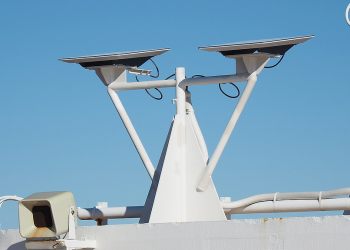
Slate Aviation, a private aviation operator based in West Palm Beach, Florida, said on 10 November 2026 that it will fit Starlink satellite internet across its entire fleet, with installations beginning in December. The company’s announcement, distributed by PRNewswire and carried by Yahoo Finance, says owners, members, on-demand charter clients and by-the-seat shuttle passengers will all get the same connection.
Key facts
- Who: Slate Aviation, which sells on-demand charter, fractional and whole aircraft ownership, and by-the-seat shuttle flights.
- What: Starlink installed fleetwide, including on the shuttle aircraft.
- When installations start: December 2026.
- When the fleet is finished: the press release says early 2027; Slate’s own post on X says mid-2027.
- Fleet size: the company and its affiliates own and/or operate more than 30 Bombardier aircraft, flying over 7,000 flights a year.
- Price: not disclosed by Slate or SpaceX.
Why it matters
The announcement makes satellite internet a fleet standard rather than an upsell on particular tails. Slate’s release argues that its clients buy private aviation for control over their time, and that fleetwide connectivity extends that control to the hours in flight.
Drive Tesla Canada, reporting the same day, frames the move as extending a push already seen among private jet operators adding the service. That push is visible on the commercial side too: Cebu Pacific said it would add Starlink Wi-Fi from 2027, and Singapore Airlines is fitting free Starlink to 53 aircraft from 2027.
Two finish dates in one announcement
The one point on which Slate contradicts itself is the end date. The press release says Starlink is expected to be aboard every Slate aircraft in early 2027. Drive Tesla Canada noticed that Slate’s post on X instead said the full fleet is expected to be equipped by mid-2027, and quoted the post directly. Neither source reports an explanation for the gap, and the December start date is the same in both.
Against the in-flight Starlink announcements this site has covered in the past week, a named start month still puts Slate ahead: Frontier has announced Starlink Wi-Fi without naming a date or a price, while Cebu Pacific and Singapore Airlines committed only to a 2027 start year.
No price disclosed
Neither Slate nor SpaceX has said what the fleetwide installation costs, and the release does not say whether connectivity is bundled into charter rates, membership fees and shuttle fares or billed separately. Starlink’s published aviation pricing is not referenced anywhere in the announcement, and neither outlet asked. For charter buyers comparing operators on connectivity, that leaves the commercial terms of this deployment unknown.
Operator profile, and the one outside check
Slate describes itself as a private aviation operator offering ultra-large cabin travel and premium shuttle services throughout North America, with in-house, vertically integrated pilot training and maintenance and over 300 employees nationwide.
One element of that profile does rest on an external audit: Slate calls itself an ARGUS Platinum Safety-rated carrier. ARGUS International is an independent aviation auditing firm, and Platinum is the top tier of its operator ratings, requiring an on-site audit and a functioning safety management system rather than records review alone. That rating covers flight operations, not cabin equipment — nothing in the connectivity announcement itself has been checked by anyone outside Slate.
The release also lists private lounges at several New York and South Florida airports, open to both Private and Shuttle clients, but says nothing about the internet in them. The Starlink commitment is an aircraft commitment only.
What the company said
Heather Maguire, Slate’s CEO and Co-Owner, is quoted in the release on the choice of supplier: “Connectivity is now part of how people live in the air as much as on the ground, and Starlink was the clear choice.” That is a press-release endorsement rather than an operational claim — it names no rival system Slate evaluated, no comparison data, and no performance level the operator expects the installation to hit.
Speed claims nobody has tested
The announcement says Starlink has often been described as “the fastest internet in the sky” — promotional language, not a measurement, and the surrounding description of the service matches the standard boilerplate SpaceX supplies for partner announcements.
The nearest thing to a figure comes from the supplier itself: SpaceX’s Starlink Aviation product page advertises up to 350 Mbps per aircraft and latency as low as 20ms. That is a vendor specification rather than an independent benchmark, and no third-party test of Slate’s installation can exist yet, because no aircraft has one. Neither outlet sought comment from an independent connectivity analyst. Until an aviation connectivity reviewer measures a fitted Slate jet in flight, the performance case rests on SpaceX’s own numbers.
The primary announcement is published on PRNewswire; Slate’s corporate site is flyslate.com.
What the sources do not cover
Neither report gives a per-aircraft installation schedule or a hardware model, and neither addresses Starlink availability or satellite internet licensing outside North America. Africa is not mentioned. Readers in Zimbabwe and the wider region should treat this as a North American business-aviation deployment only, with no bearing on Starlink’s consumer service or country coverage.
Frequently Asked Questions
Is any Slate Aviation aircraft already flying with Starlink?
No. Both the company’s press release and Drive Tesla Canada state that installations begin in December, and no Slate aircraft is described as equipped at the time of the 10 November 2026 announcement.
Why would a lower orbit matter for in-flight internet?
Slate’s release credits altitude rather than new cabin hardware. SpaceX operates most Starlink satellites at roughly 550km above Earth, while the geostationary satellites behind legacy in-flight internet sit at about 35,786km — a far shorter signal round trip, which is the published basis for lower latency. Slate does not cite measured figures for its own aircraft.
Does Slate say the service will work over open water?
Yes. The release claims coverage continues over water on its coastal routes to Nantucket and the Hamptons, and that calls and video streaming carry on as they would on the ground. Neither of the two outlets reporting the announcement tested those claims in flight.
Who flies with Slate Aviation?
According to the company’s own release, its clients include government officials, former heads of state, award-winning artists, and private principals and their families. The release names no individual client and no corporate account.