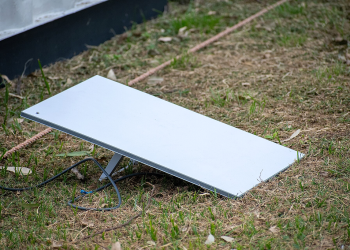
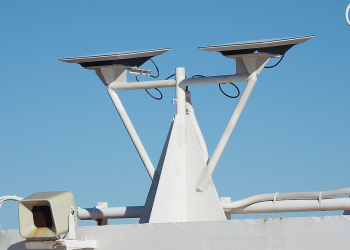
Elon Musk has publicly admitted that SpaceX, his US rocket and satellite company, deliberately slowed Starlink service in Ukraine, hours after Kyiv announced on Saturday 24 October that the restrictions had been lifted. The disruption had run for more than a week and, according to Al Jazeera, hampered Ukrainian military drone operations against Russian forces.
Key facts
- Ukrainian Defence Minister Yevhenii Khmara said on 24 October that Starlink and Starshield connections were stable on equipment travelling above 400km/h (250mph), crediting talks with Washington and President Volodymyr Zelenskyy’s diplomacy, Al Jazeera reported.
- Zelenskyy said on X that access had been returned to pre-restriction speeds, that restoration began overnight and that speeds were already sufficient by that morning, per Al Jazeera.
- Musk wrote on X that Ukraine’s military had violated Starlink’s terms of service by using it for offensive drone strikes, and that the “loophole was closed last week,” as The New Republic reported.
- Serhii Beskrestnov, a defence technology adviser to Zelenskyy, publicly rejected that account on Telegram, according to Al Jazeera.
- Six former senior US officials told Reuters, the news agency, that both the Biden and Trump administrations had previously asked SpaceX to adjust Starlink availability in various countries, including Ukraine and parts of the Middle East — an account relayed by The New Republic, which cited the Reuters report.
Khmara’s 400km/h figure describes terminals in motion rather than fixed ground receivers — a dish moving faster than that is airborne or on a fast-moving vehicle — but he did not name the platforms tested, and neither outlet explains why that speed was the threshold or whether slower equipment had also been affected.
Why it matters
Al Jazeera reports that Ukraine relies heavily on SpaceX’s satellite internet for both communications and drone missions, and that the throttling disrupted front-line operations — the same effect reported earlier, when throttling that hit drone and air-defence operations was documented but unexplained.
Musk himself set out the stakes bluntly, writing that Ukraine’s front line would “collapse immediately” if Starlink were switched off and that SpaceX had done more to defend Ukraine than any private company on Earth. For Kyiv, no comparable European alternative exists.
What Musk said, and who disputes it
In his X post, carried by both outlets, Musk argued that using Starlink — which he described as a civilian commercial service — for offensive drone strikes to kill people had never been allowed. He drew a line between that service and Starshield, which he said is a different system controlled by the US government.
He did not say which clause of the terms of service the “loophole” involved, how Ukrainian units had been getting around it, or how SpaceX closed it, and neither outlet reports those details. That leaves unstated what rules now govern Ukrainian military use of the commercial service, and what would stop another slowdown.
Beskrestnov contradicted the premise. He wrote on Telegram that longstanding restrictions on how the civilian system operates in Ukraine made the offensive use Musk described impossible, and said it was very strange that Musk appeared unaware of those limits, Al Jazeera reported.
Who held the switch
The sources agree that responsibility was unclear while the disruption was under way, and that Musk’s position shifted. The New Republic reports that Musk had earlier blamed the drop in service on recent decisions by the US military and President Donald Trump; Al Jazeera reports that Trump denied responsibility while defending Musk. Only after Kyiv said service was back did Musk claim the throttling as a SpaceX decision.
The Reuters account complicates both versions, indicating that requests to adjust availability by country had come from two successive US administrations. That backdrop fed political pressure on SpaceX to restore service to Kyiv.
What was happening on the ground
- During the week of the slowdown, Russian ballistic missiles struck two plants supplying heat and electricity to Kyiv and damaged a residential building, killing at least nine people, The New Republic reported, citing a Telegram statement from Ukraine’s State Emergency Services.
- Ukrainian officials suggested those strikes could have been prevented with proper intelligence, which did not arrive, per The New Republic.
- Multiple sources told CBS News, the US broadcaster, that US officials attributed the failure of their detection systems to “bad weather” — an explanation The New Republic, which cited the CBS reporting, says Kyiv did not accept.
- As the restrictions were lifted, Al Jazeera reported a Russian missile strike that killed a man in Lozova, Kharkiv region, and a Russian drone attack that killed at least three people in the Dnipropetrovsk region, citing regional officials.
The diplomatic backdrop
Both outlets place the dispute inside a wider rupture between Kyiv and Washington:
- Diesel deal: The New Republic reports that Trump brokered an agreement with Russian President Vladimir Putin to buy diesel from Moscow; Al Jazeera describes it as a temporary lifting of sanctions on Russian diesel allowing US imports.
- Zelenskyy’s criticism: His public objections were followed by calls to Kyiv and European capitals threatening to cut off intelligence sharing and weapons deliveries unless Ukraine stopped striking Russian oil refineries, The New Republic reports.
- Pressure on Zelenskyy: Al Jazeera adds that Trump had called earlier in October for Ukraine to have a new president and later suggested someone other than Zelenskyy should negotiate for Kyiv, following their February 2025 confrontation at the White House.
- Abu Dhabi talks: Negotiators from Ukraine, Russia and the United States were expected to meet there in the first half of November, with Kremlin spokesman Dmitry Peskov confirming the plan and Zelenskyy announcing agreement on technical-level meetings.
Frequently Asked Questions
What is Starshield, and is it the same thing as Starlink?
Starshield is a separate SpaceX system from the commercial Starlink service, according to Elon Musk, who said in his X post that it is controlled by the US government and that what Washington decides to do with it is up to Washington. Ukraine’s defence minister referred to both Starlink and Starshield connections when he announced that restrictions had been lifted.
Did Donald Trump say he ordered the Starlink restrictions?
No. Trump told reporters as he left the White House that he did not know who did it and that he was not involved, as reported by Al Jazeera and The New Republic. The New Republic cited a Wall Street Journal report that Trump phoned Musk the same day to demand that service be returned to the region.
Was there any ceasefire in Ukraine around the time service was restored?
Al Jazeera reported that Trump credited his wife, Melania Trump, with securing a local ceasefire in Oleshky, in southern Ukraine’s Kherson region, which Russian forces have occupied since 2022. Later statements from Ukraine and Russia said the ceasefire would begin on 27 October, with a humanitarian operation planned for 29 October.
Were Ukrainian long-range strikes continuing when Starlink was restored?
Yes. Al Jazeera reported strikes inside Russia on the Friday and overnight into Saturday, including on the Togliattikauchuk petrochemical plant in Togliatti and, per the Ukrainian company Fire Point, a petrochemical plant and an Ozon warehouse in Omsk. Kyiv also claimed a strike on the Proton electronics plant in Oryol.