Ukraine may be moving some long-range drone communications away from Starlink and onto satellite links from HiSKY, an Israeli satellite communications company. UNITED24 Media reported the possible shift on November 17, citing the Kyiv Post. It fits a wider pattern: more governments are speeding up work on alternatives to Elon Musk’s Starlink after SpaceX and the White House traded blame for a satellite slowdown that Kyiv said undermined its defence efforts, Semafor reported on November 18.
Key facts
- Semafor said the push for alternatives follows the dispute over the satellite slowdown, with Ukraine’s president renewing his call on Washington and Musk to “be on the right side of history”.
- UNITED24 Media, citing a Kyiv Post report of November 9, said claims of Ukrainian HiSKY use first surfaced in Russian military media in late October.
- HiSKY is an Israeli company with a British subsidiary and a research and development centre in Oxfordshire, the Kyiv Post reported.
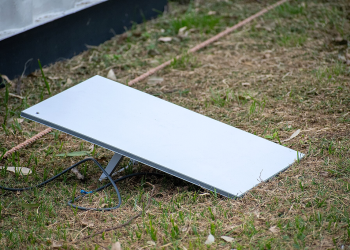
- Its Sirius 16×16 Ku terminal weighs about 6 kilograms and provides around 2 Mbps, against 50 to more than 250 Mbps from Starlink or Starshield, according to the same report.
- Terminals moving faster than 160 kilometres per hour lost communications under restrictions imposed in mid-October, the Kyiv Post said.
- Ukrainian communications company Himera plans a constellation of at least 100 satellites under full Ukrainian control, UNITED24 Media reported.
Why it matters
Semafor framed the moves as a direct consequence of the row over service limits. The near-term consequence for Kyiv is that it still has to borrow someone else’s satellites: Himera’s constellation is at the planning stage, so no Ukrainian-controlled network can carry strike missions this winter, and reducing exposure to US-imposed restrictions means trading one foreign commercial provider for another. For civilian users in the markets now shopping for alternatives, little changes: Starlink availability and pricing remain a matter of SpaceX’s rollout and national licensing, and the hardware being funded in these programmes is narrowband military kit, not household satellite internet.
What the reports say about HiSKY
Russian military analyst Konstantin Malofeev claimed Ukrainian drones had begun using HiSKY terminals for strikes on oil refineries and military infrastructure deep inside Russia, the Kyiv Post reported. He argued the system is harder to jam because it can switch between commercial satellites when signal quality deteriorates.
The Coordination Center for the Assistance of New Russia, a pro-Russian volunteer organisation that supplies technical, material and training support to Russian forces, also claimed Ukraine had begun testing HiSKY technology in Russian border regions. Its director Aleksandr Liubimov said: “This is not Starlink.” He described it as European equipment used to pilot long-range drones and crewless boats.
Asked about those claims by the Kyiv Post, Serhiy “Flash” Beskresnikov, a Ukrainian military communications expert and adviser to President Volodymyr Zelenskyy on military electronics, neither confirmed nor denied them. He said he did not understand why the reports had caused such a stir, because the technologies involved were “nothing unique”.
Ukrainian media cited by the Kyiv Post claimed the Armed Forces began using the Sirius terminal in mid-October, while the restrictions were still in effect, and that Russian forces later recovered debris from a Ukrainian drone fitted with such a terminal.
Where the speed limits stand
The two reports do not fully agree on the current position. The Kyiv Post, as relayed by UNITED24 Media, said SpaceX service was restored to Ukrainian units by October 24 following international criticism and pressure in the US Congress. Semafor, writing on November 18, said Ukraine’s president described speed restrictions as still in place and renewed his appeal to Washington and Musk to lift them.
The limits applied to SpaceX-associated terminals in Ukraine and, according to the Kyiv Post, disrupted both long-range strike drones and high-speed interceptor drones. The dispute has centred on Starshield, the military version of the SpaceX network.
Ukraine’s workaround
Semafor reported that Ukraine is pressing ahead with independent capabilities regardless, citing the Financial Times on the use of a remote drone network of “flying modems” to partially destroy the bridge linking Russia with occupied Crimea this week. UNITED24 Media said the Himera network is being designed so that no external provider could restrict or disable access.
India’s parallel effort
Ambani’s push mirrors the same logic in a commercial market. Semafor, citing Bloomberg, reported that the Indian billionaire is hunting for manufacturing partners for “an Indian-controlled alternative” to Starlink, amid what it described as an ongoing spat between Musk and New Delhi; Ambani’s satellite plans set out the constellation he has in mind.
What is not established
Neither source confirms that Ukraine has formally replaced Starlink or Starshield with HiSKY on any mission, and UNITED24 Media stressed that the claims originated with Russian military media and Russia-associated groups rather than independent verification. Neither report addresses Starlink availability, pricing, licensing or regulation in Africa.
Frequently Asked Questions
How credible do Ukrainian analysts consider the HiSKY reports?
UNITED24 Media reported that the Ukrainian research group DP Defpulse assessed Ukrainian use of HiSKY terminals as unconfirmed but highly probable. No Ukrainian official or company statement has put the matter beyond doubt.
Is HiSKY’s terminal fast enough to fly a drone by live video?
The Kyiv Post, as reported by UNITED24 Media, said the Israeli system would be less suited to continuous visual piloting at its roughly 2 Mbps capacity, but could still transmit course corrections to long-range drones already in flight.
Who is funding HiSKY’s work in Britain?
According to the Kyiv Post, cited by UNITED24 Media, the UK Space Agency is supporting the HiSKY project with £9 million, about $12 million, channelled through the European Space Agency.
Why do Russian refinery strikes feature in a story about satellite links?
Because deep-strike missions are the ones Russian sources claim run on HiSKY terminals rather than Starlink: drones flown hundreds of kilometres beyond line of sight need a satellite path to receive course corrections. The Kyiv Post reported that Ukraine resumed strikes on Russian oil refineries on October 30 after a two-week pause requested by the United States, hitting refineries and energy facilities in Novokuibyshevsk, Kstovo, Samara, Yaroslavl, Ryazan, Krasnodar, Saratov and Kirishi. That campaign restarted in the same weeks as the disputed satellite restrictions.