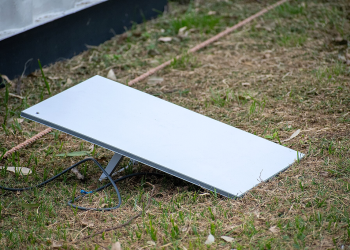
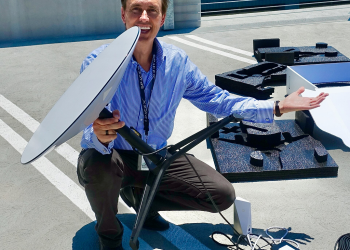
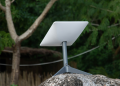
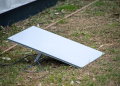
South Africa’s telecoms regulator has formally ordered SpaceX to stop providing Starlink satellite internet in the country without a licence. The Independent Communications Authority of South Africa (ICASA) issued a notice of non-compliance on 14 October 2026 demanding that SpaceX cease the unauthorised provision and operation of Starlink services in the republic, according to a written parliamentary reply by Communications and Digital Technologies Minister Solly Malatsi reported by MyBroadband and The Star, and compiled by Streamline Feed.
Key facts
- The notice was disclosed in Malatsi’s written reply to MK Party MP Adil Nchabeleng.
- ICASA spokesperson Ramasela Matlou confirmed the cease-and-desist letter to The Star.
- Starlink, the satellite broadband service operated by Elon Musk’s SpaceX, has never held a South African licence, according to Malatsi’s reply and ICASA’s own account to The Star.
- The Electronic Communications Act requires individual licence holders to be at least 30 per cent owned by historically disadvantaged groups.
- The service is live in 24 African countries, on MyBroadband’s count of Starlink’s African coverage (via Streamline Feed).
Timeline of the dispute
- 21 May 2025 — ICASA asks SpaceX for clarification; SpaceX replies that it has acted against unauthorised resellers.
- 13 May 2026 — ICASA takes the decision now under court challenge.
- 14 October 2026 — ICASA issues the notice of non-compliance, after forming a dedicated task team and carrying out an investigation and inspections in response to continued reports of use.
- 9 November 2026 — business organisation Sakeliga files a Pretoria High Court application seeking review of the 13 May decision.
Why it matters
This outlet’s reading of the notice: it orders an unlicensed service to stop. It is not a ban on a licensed product, and it is not continental — satellite internet availability is unchanged in the two dozen other African markets where Starlink operates, while the service stays absent from one of the continent’s largest economies.
Starlink’s own South Africa support page sets out the stakes it claims: 13.6 million South Africans without fast, reliable internet, and only about 1.7 per cent of rural households in Limpopo with reliable connectivity.
Roaming across borders
Starlink’s signals do not stop at borders. Users buy kits in licensed neighbouring countries, register them there and then connect from South Africa through roaming, Arthur Goldstuck, chief executive of the research firm World Wide Worx, told The Star. He said the operator has more control over this than individual customers do, because terminals report location data.
No published Starlink price for South Africa
Because SpaceX does not sell the service in the country, there is no South African Starlink price — no local order page and no local hardware or subscription rate — and the company is trying to block grey-market use, technology commentator Duncan McLeod told The Star. Any kit operating in South Africa was bought at a neighbouring market’s price and registered there, which is why ICASA’s case is about unauthorised provision rather than what customers pay.
MyBroadband’s speed-test platform nonetheless recorded a sharp rise in Starlink tests from South Africa in October, despite a seven-day limit on continuous roaming — the gap between the rule and the traffic that the regulator’s task team was formed to close.
A deadlock neither side can break alone
SpaceX will not cede equity. It has declined to hand over the stake the law requires and proposes instead to meet empowerment goals through an equity-equivalent investment programme.
ICASA cannot waive the threshold — and the political route is narrow too. Ministerial directions are not binding on the regulator, Streamline Feed notes, consistent with the division of powers in Malatsi’s own reply as reported by MyBroadband: the minister sets policy, the authority licenses.
Three exits, by our reading of the file: a rule change, a court ruling, or SpaceX accepting local ownership. ICASA holds only the enforcement papers.
The standoff has already drawn political pressure over Starlink’s unlicensed status, and it leaves the company outside a market where a rival constellation already lining up a local reseller can sell legally. McLeod also called Starlink an outlier: the biggest satellite broadband provider, yet one of the few not licensed in the country. Goldstuck cautioned that the same cross-border problem exists for other constellations, without meaning that other operators are providing unauthorised services. Licensing friction is not unique to South Africa, as other large markets where Starlink is still waiting on rules show.
The court challenge
Sakeliga’s application asks judges to review and set aside ICASA’s 13 May decision, Techpoint Africa reported.
Sakeliga’s legal argument, in one line
Section 9(2)(b) of the Electronic Communications Act sets the ownership threshold “or such other conditions” — wording Sakeliga reads as letting ICASA prescribe alternatives such as equity-equivalent programmes, according to the court papers as reported by Techpoint Africa.
A fallback claim asks the court to declare the provision unconstitutional to that extent — relief that would also need confirmation by the Constitutional Court, both 2oceansvibe and Techpoint Africa reported from those papers.
Accountability questioned in Parliament
Malatsi said no officials had been identified as responsible for enforcement failures, and that penalties would depend on ongoing processes. Nchabeleng rejected that answer and accused the minister of passing responsibility to the regulator — which is where the file now sits, whether the dispute ends in Parliament, in court or in a licensing compromise.
Frequently Asked Questions
Can people in South Africa still use Starlink kits registered in neighbouring countries?
It is getting harder. Starlink has cut continuous roaming use from 60 days to 30 and then to seven, and now requires identity and country-of-origin verification, so a kit has to be genuinely registered in one of the 24 licensed African markets (MyBroadband, via Streamline Feed).
What has SpaceX offered instead of the required equity stake?
An equity-equivalent investment programme. Starlink’s official support page says it cannot apply for the required licences under current ownership regulations, and the company has committed R500 million to connect 5,000 rural schools with free internet, which it says would reach 2.4 million learners a year (Streamline Feed).
Could the Sakeliga court case hand Starlink a licence?
No. Even a successful challenge would not itself grant Starlink a licence, and no ruling has been made, Streamline Feed reported.
Can ICASA take the matter beyond South Africa?
It says it can. ICASA may lodge a formal complaint with the International Telecommunication Union if unauthorised provision persists, spokesperson Ramasela Matlou told The Star, and the regulator’s next steps depend on evidence it is still gathering.