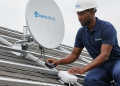
Starlink, the ambitious satellite internet constellation developed by SpaceX, has emerged as a transformative force in global connectivity. Spearheaded by Elon Musk’s vision, this innovative service aims to deliver high-speed, low-latency broadband internet to virtually any location on Earth, particularly targeting underserved rural and remote areas where traditional internet infrastructure is either non-existent or inadequate. The core promise of Starlink is simple yet profound: universal access to reliable internet, fundamentally redefining how individuals and businesses connect to the digital world. With a rapidly expanding network of thousands of satellites in low Earth orbit (LEO), Starlink is not just an alternative; it’s a paradigm shift for internet access, continually evolving its service offerings and payment models to meet diverse user needs.
From its initial rollout, Starlink has captured attention for its ability to provide performance levels previously unimaginable from satellite internet. Unlike geostationary satellite systems that suffer from significant latency due to their high orbit, Starlink’s LEO constellation dramatically reduces signal travel time, resulting in a user experience akin to terrestrial fiber. This advancement has opened doors for applications ranging from online gaming and video conferencing to supporting critical remote operations. As of late 2024, the service continues to expand its geographical footprint and refine its operational capabilities, making it a critical player in the ongoing global effort to bridge the digital divide.
Understanding Starlink's Core Service Offerings
At its heart, Starlink provides satellite internet service through a user terminal, often dubbed the "Dishy," which connects to the vast satellite constellation overhead. This setup allows for rapid deployment and activation, offering a robust internet solution where traditional wired or cellular options fall short. The technology bypasses the need for extensive ground infrastructure, making it an ideal choice for challenging terrains, maritime applications, and mobile users.
Residential Service: Bridging the Rural Divide
The flagship Residential service is designed for fixed locations, providing unlimited high-speed internet for homes and businesses. This plan has been a game-changer for countless families and enterprises in rural and remote regions globally, offering access speeds that significantly surpass traditional rural broadband options. While early adopters often experienced peak speeds, Starlink has introduced tiered Residential plans to manage network capacity effectively. Users on specific Residential plans, for instance, may experience download speeds limited to 100 Mbps or 200 Mbps, ensuring more consistent performance across the network as its user base grows. These speed tiers reflect a strategic evolution to optimize service delivery and user experience in different demand zones.
Business Solutions: Empowering Enterprise Connectivity
Beyond individual consumers, Starlink offers robust solutions tailored for enterprise-level demands. Starlink Business plans prioritize network capacity and deliver higher performance, crucial for data-intensive operations, multi-user environments, and mission-critical applications. These plans often come with a larger, more powerful antenna designed to withstand harsher environmental conditions and provide enhanced throughput. Industries such as agriculture, construction, energy, and remote tourism are increasingly leveraging Starlink Business for reliable connectivity in their far-flung operations, driving efficiency and safety in previously unconnected zones.
Flexible Connectivity: Plans and Payment Structures
One of the most compelling aspects of Starlink’s evolving strategy is its push towards greater flexibility in service plans and payment models. Recognizing that not all users require continuous, month-to-month service, particularly for mobile or intermittent use cases, Starlink has begun to introduce options that cater to a more dynamic usage pattern. This move aligns with broader market trends demanding adaptability from connectivity providers, allowing users to tailor their service to their specific journeys and operational needs.
The Rise of Prorated and Short-Term Options
Historically, Starlink’s billing was primarily structured around monthly subscriptions. However, market demand, particularly from users like RVers and seasonal travelers, has spurred the introduction of more granular payment flexibility. As of late 2024, Starlink has indicated it offers prorated service for certain plans, such as the 50GB mobile data option, allowing for weekly or short-term use. While specific billing cycle rules apply, this significant development enables users to pay only for the internet they need, rather than committing to a full month of service when their usage is sporadic. This flexibility is a direct response to customer feedback, acknowledging that "not everyone is using their Starlink for 1-month vacations."
Understanding Billing Cycles and Activation
It’s crucial for new users to understand Starlink’s billing initiation process. While the equipment purchase is a one-time cost, service charges typically commence shortly after the Starlink kit is dispatched or within a specified period of ordering, regardless of whether the user has actively "activated" the dish. For instance, some users have reported being billed for service soon after receiving their equipment, even before setup. This emphasizes the importance of planning activation and understanding the billing cycle from the point of order placement to avoid unexpected charges. This policy ensures that the network capacity is reserved and ready for immediate use upon equipment delivery.
Starlink for Mobility: Roam, RV, and Portable Solutions
Starlink’s "Roam" service, formerly known as "RV," represents a pivotal offering for users requiring internet on the go. This service is engineered for portability and allows the Starlink dish to be used in various locations, making it ideal for recreational vehicles, remote work sites, and maritime adventures. The flexibility of Roam has significantly broadened Starlink’s appeal beyond fixed residential installations.
Roam Service: Internet Anywhere You Travel
The Roam plan delivers high-speed internet to users who need connectivity across multiple service addresses or while in transit. It’s designed to provide reliable connectivity for approximately one week of typical use with a 100GB data allocation, offering speeds up to 300+ Mbps. This makes it an excellent option for digital nomads, campers, and anyone whose lifestyle or work takes them off-grid. The ability to pause and unpause service on a monthly basis adds another layer of financial flexibility, allowing users to pay only when they are actively utilizing the service, further enhancing Starlink’s evolving connectivity and flexible plans.
The Starlink Mini: Ultra-Portable Connectivity
Building on the success of the Roam service, the introduction of the Starlink Mini takes portability to an unprecedented level. This compact version of the Starlink dish is significantly smaller and lighter, making it even easier to transport and set up. The Starlink Mini is particularly attractive for adventurers, emergency responders, and anyone prioritizing ultra-portability without compromising on internet speed. Rental options for the Starlink Mini are also emerging, with providers offering weekly or monthly rental periods alongside flexible Regional or Global airtime options. This "rent-a-Mini" model lowers the barrier to entry for short-term users or those who wish to test the service before committing to a purchase, showcasing Starlink's adaptable connectivity solutions.
The Technology Behind the Network
Starlink's groundbreaking performance stems from its sophisticated technological architecture. Unlike traditional geostationary satellites orbiting at 36,000 km, Starlink satellites operate in Low Earth Orbit (LEO) at altitudes of about 550 km. This proximity drastically reduces latency, a critical factor for real-time applications, and allows for much smaller, more efficient user terminals. The constellation itself is a marvel of engineering, comprising thousands of interconnected satellites forming a mesh network in space.
A Constellation of Innovation: Satellites and Ground Stations
Each Starlink satellite is equipped with powerful phased-array antennas that can dynamically steer beams to ground terminals, optimizing signal strength and minimizing interference. The satellites communicate not only with ground stations but also with each other using inter-satellite laser links. These laser links create a robust space-based network, allowing data to be routed between satellites at light speed without needing to touch down at ground stations as frequently. This is particularly beneficial for global coverage, enabling seamless internet across oceans and remote landmasses where ground infrastructure is sparse. The sheer number of satellites ensures continuous coverage and capacity, even as individual satellites move in and out of view.
The User Terminal: Dishy and Its Evolution
The Starlink user terminal, colloquially "Dishy," is a testament to user-friendly design. It’s a self-aligning antenna that automatically finds and tracks the optimal satellites overhead, simplifying installation for the end-user. The hardware package typically includes the dish, a Wi-Fi router, and necessary cables. The evolution of this hardware, from the original circular dish to the rectangular version and now the ultra-portable Mini, reflects an ongoing commitment to enhancing user experience, reducing form factor, and improving cost-effectiveness. These innovations in hardware are as crucial as the satellite technology itself in making Starlink accessible and practical for a global audience.
Deployment, Manufacturing, and Global Expansion
The rapid deployment and continuous expansion of the Starlink constellation are critical to its mission. SpaceX’s vertically integrated approach, from satellite design and manufacturing to launch and operation, gives it a unique advantage in scaling this ambitious project. The pace of launches, predominantly using SpaceX’s Falcon 9 rockets, has been unprecedented in the history of spaceflight, enabling the constellation to grow swiftly and expand its service footprint across continents.
Accelerated Manufacturing in Bastrop, Texas
The ability to mass-produce satellites efficiently is central to Starlink's success. The company operates a state-of-the-art manufacturing facility in Bastrop, Texas, where a significant portion of the Starlink satellites are built. This facility exemplifies American innovation and industrial capability, enabling the rapid assembly and testing of satellites before their journey to orbit. For instance, looking ahead to July 2026, figures like Olivia Trusty visiting the Starlink manufacturing facility in Bastrop underscore the ongoing focus on scaling production and refining the manufacturing processes to meet global demand and maintain the pace of constellation growth. This dedicated production line ensures a steady supply of satellites, critical for both constellation expansion and replacing older units.
Navigating Leadership and Market Dynamics
As Starlink matures, so too does its organizational structure and market strategy. Leadership changes, such as Jason Fritch's departure from his role running Worldwide Enterprise Sales for Starlink in July 2026 after nearly three years, indicate an ongoing evolution within the company's commercial division. Such shifts are common in rapidly growing tech enterprises and often reflect strategic realignments to optimize for future growth phases and market penetration. These changes highlight Starlink’s dynamic environment as it continues to refine its business models and expand its reach into various global markets.
The Future Horizon of Starlink
Starlink is not a static project; it is a continually evolving ecosystem designed for future scalability and enhanced capabilities. The roadmap includes further expansion of the satellite constellation, introduction of next-generation satellites, and development of advanced services. These future developments aim to boost network capacity, increase speeds, and reduce latency even further, while also exploring new applications for satellite internet.
Next-Generation Satellites and Service Enhancements
SpaceX is already developing and deploying Starlink "Gen2" or "V2 Mini" satellites, which are significantly larger and more capable than their predecessors. These new satellites feature more powerful antennas and can connect directly to cellular phones in certain regions, potentially eliminating cellular dead zones. This "Direct to Cell" capability represents a monumental leap, effectively turning Starlink into a space-based cellular tower. Such advancements promise to solidify Starlink’s role not just as an internet provider, but as a foundational layer for global connectivity across multiple communication mediums. Continued innovation in satellite design and ground infrastructure will be key to maintaining Starlink's competitive edge and delivering on its promise of universal internet access, shaping the future outlook for Starlink's global reach.
Expanding Global Footprint and Partnerships
The company continues to aggressively pursue regulatory approvals and establish ground stations in new countries, expanding its service availability across the globe. Partnerships with governments, telecommunication companies, and various industries are becoming increasingly important for integrating Starlink into existing infrastructure and addressing specific regional needs. This collaborative approach is vital for overcoming local challenges and ensuring that Starlink’s transformative technology can reach its full potential in a diverse world.
Navigating Starlink: Practical Considerations for Users
For potential and current users, understanding the practical aspects of Starlink service is key to a smooth experience. This includes managing expectations around speeds, understanding data policies, and being aware of billing nuances, especially with the introduction of more flexible plans.
Speed Expectations and Network Management
While Starlink promises "high-speed" internet, actual speeds can vary based on network congestion, geographic location, and specific service plan. Residential plans, for instance, now have defined speed limits such as 100 Mbps or 200 Mbps. Users should consult their specific plan details for expected performance. Starlink actively manages its network to ensure fair access and optimal performance for all users, which might involve deprioritizing certain data types during peak congestion or applying data caps on specific plans, particularly for mobile offerings like Roam. Staying informed about these policies through the Starlink app or user portal is highly recommended.
Customer Support and Troubleshooting
As a rapidly scaling technology company, Starlink's customer support model primarily relies on its online portal and community forums. Users often find comprehensive guides and FAQs within the Starlink app, which also allows for managing service, viewing usage, and initiating support requests. For troubleshooting, the self-aligning nature of the dish and intuitive app diagnostics often help resolve common issues. However, for more complex problems, direct support interactions might require patience due to the high volume of users globally. Proactive engagement with the Starlink community can also yield valuable insights and solutions from experienced users.
Conclusion
Starlink stands as a testament to the power of innovation in addressing one of the world’s most pressing challenges: universal internet access. By deploying an advanced constellation of LEO satellites and continuously refining its service offerings, Starlink has effectively brought high-speed, low-latency internet to millions, bridging geographical divides that once seemed insurmountable. The evolution of its flexible plans, including prorated options for mobile users and the advent of ultra-portable solutions like the Starlink Mini, demonstrates a clear commitment to adaptability and user-centric design.
As Starlink moves further into the mid-2020s, with enhanced satellite capabilities, strategic leadership adjustments, and an ever-expanding global footprint, its impact will only continue to grow. From empowering remote businesses to enabling seamless travel connectivity and even offering direct-to-cell phone service, Starlink is not just providing internet; it’s laying a crucial foundation for the future of global communication. Its journey from ambitious concept to a foundational global utility underscores its pivotal role in redefining the landscape of modern connectivity, making the digital world accessible to all, irrespective of their location.