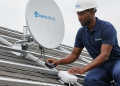
Starlink’s Pioneering Role in Next-Generation Global Connectivity
In the rapidly accelerating landscape of digital communication, Starlink, SpaceX’s ambitious satellite internet service, stands as a pivotal innovation, fundamentally reshaping how individuals and communities access high-speed internet. From remote homesteads to maritime vessels and nomadic travelers, Starlink is progressively dismantling geographical barriers that have historically rendered reliable connectivity a distant dream for billions. Recent advancements, particularly in flexible service plans and the introduction of more portable hardware, signal a new era of adaptable internet access, underscoring Starlink’s commitment to ubiquitous, high-performance connectivity.
As of mid-2026, the ongoing deployment of its extensive low-Earth orbit (LEO) constellation continues unabated, with SpaceX regularly launching batches of Starlink satellites, as evidenced by missions scheduled for August 10 and 11, 2026, from Florida and California respectively. This continuous expansion is not merely about increasing capacity; it’s about refining the service to meet diverse user needs, an imperative that has driven the evolution of its payment models and hardware offerings.
The Vision Behind the Constellation
At its core, Starlink represents a bold reimagining of global internet infrastructure. Unlike traditional geostationary satellites, which orbit at much higher altitudes, Starlink’s LEO satellites orbit significantly closer to Earth. This proximity dramatically reduces latency, making satellite internet viable for activities like online gaming, video conferencing, and other real-time applications that demand quick response times. The vision articulated by SpaceX and its CEO, Elon Musk, is to blanket the globe with reliable, high-speed internet, targeting regions where terrestrial infrastructure is either non-existent, unreliable, or prohibitively expensive.
The scale of this undertaking is staggering, involving thousands of satellites working in concert, communicating with user terminals (commonly known as "Dishy") and ground stations across the planet. This intricate network is designed for resilience and continuous improvement, with new satellites regularly introduced to enhance coverage, speed, and overall service quality. This relentless innovation positions Starlink not just as a service provider, but as a critical enabler of digital inclusion on a global scale.
Addressing the Digital Divide
Perhaps Starlink’s most profound impact lies in its capacity to bridge the notorious digital divide. Millions worldwide, particularly in rural and underserved areas, have long been marginalized by a lack of access to broadband internet. Starlink offers a lifeline, providing an alternative to often slow, expensive, or entirely unavailable traditional internet options. This connectivity is more than just convenience; it’s a gateway to education, economic opportunity, healthcare, and vital information, empowering communities previously left behind.
Moreover, Starlink has demonstrated its critical utility in emergency situations and disaster relief efforts, providing rapid deployment of internet services when conventional infrastructure fails. Its portability and ease of setup make it an invaluable tool for first responders, humanitarian organizations, and individuals requiring immediate communication capabilities in challenging environments. As explored in "Starlink: Bridging Digital Divides with Flexible Connectivity", its role extends beyond mere access, fostering resilience and connectivity in the face of adversity.
Unpacking Starlink’s Flexible Service Plans: Tailored Access for Every User
The demand for flexible internet solutions has never been higher, and Starlink has been actively responding to this need with evolving service plans designed to cater to a broader spectrum of users, from stationary households to those living life on the move. Recent discussions across various online platforms, including Reddit and Facebook, highlight a clear user desire for more adaptable payment structures, particularly for short-term or intermittent use. Starlink’s strategic response to this feedback underscores its commitment to user-centric service delivery.
Understanding Residential and Roam Services
Starlink primarily offers two main categories of service: Residential and Roam (now often referred to as Mobile or Mobile Priority, depending on region and specific features). Residential service is tailored for fixed locations, delivering high-speed, low-latency internet directly to homes or businesses. Users can typically select from different speed tiers, such as Residential 100 Mbps and Residential 200 Mbps, which cap download speeds accordingly. This plan is designed for consistent, dedicated internet access at a static address, providing a robust alternative to traditional broadband where available.
The Roam service, on the other hand, revolutionizes portable internet access. Designed for users who need connectivity on the go, such as RV enthusiasts, digital nomads, or those with seasonal properties, Roam provides "high-speed internet on the go." This service is billed on a monthly basis but allows users to pause and reactivate service as needed, providing a degree of flexibility. For instance, the Starlink website advertises the Roam "100GB" option as providing "Up to 300+ Mbps for approximately 1 week of typical use," indicating a robust data allowance for mobile scenarios.
Short-Term and Flexible Payment Options
Addressing the growing user base seeking even greater flexibility, Starlink has made strides in offering more granular payment and usage options. While weekly or daily payment plans, as some users inquired about on Reddit as of June 2023, are not universally available for all service types, the landscape is evolving. Insights from platforms like Facebook in November 2024 indicated that certain plans, particularly those designed for mobile use, might offer "prorated service for the 50gb plan, allowing for weekly or short-term use, but with specific billing cycle rules." This reflects an ongoing effort by Starlink to accommodate diverse usage patterns beyond the standard monthly subscription.
It’s important to note that the initial Starlink setup typically involves a one-time hardware purchase, followed by monthly service fees. As observed in a November 2021 Reddit post, the initial payment often covers the equipment and the first month of service, regardless of immediate activation. However, the introduction of prorated options for specific mobile plans marks a significant shift, offering a more tailored approach for users who don’t require continuous monthly service. This evolution in payment flexibility is a key aspect of "Starlink’s Evolving Orbit: Flexible Plans, Global Reach & Future", making the service more accessible and convenient.
The Starlink Mini: A New Frontier for Portability
Further enhancing Starlink’s commitment to flexibility is the emergence of the Starlink Mini. This compact, ultra-portable version of the user terminal is designed for maximum convenience and ease of travel. While specific details on its full rollout and pricing are continually emerging, the Mini is poised to be a game-changer for users needing internet access in even more remote or constrained environments. Retailers like SatPhoneStore are already offering Starlink Mini rentals, featuring plans like "50GB+ Starlink mini" for various durations, including one week, with options for local and global overages. This demonstrates a clear move towards making Starlink not just available, but truly accessible for short-term, highly mobile needs, showcasing a strategic pivot towards diversified hardware and rental models to complement its service offerings.
The Technological Backbone: Engineering Starlink’s High-Performance Network
The operational success and user experience of Starlink are inextricably linked to the groundbreaking technological advancements underpinning its entire infrastructure. From the individual satellites orbiting Earth to the ground stations and the user terminals, every component is engineered for optimal performance, reliability, and scalability. This meticulous design ensures that the promise of high-speed, low-latency internet is delivered consistently to users worldwide.
The LEO Advantage: Low Latency, High Speed
Starlink’s revolutionary approach centers on its vast constellation of satellites in Low-Earth Orbit. Unlike traditional geostationary satellites positioned at altitudes of around 35,000 kilometers, Starlink’s satellites orbit at approximately 550 kilometers. This significantly shorter distance dramatically reduces the "ping" or latency – the time it takes for data to travel from your device to the satellite and back. For users, this translates into a responsive internet experience, crucial for modern applications like video calls, online gaming, and cloud computing.
Beyond low latency, the LEO architecture also enables impressive download and upload speeds. While Residential plans offer capped speeds of 100 Mbps or 200 Mbps, Roam services can achieve "Up to 300+ Mbps", demonstrating the network’s substantial bandwidth capabilities. This combination of speed and responsiveness positions Starlink as a formidable competitor to traditional wired and wireless broadband services, especially in areas where fiber or cable infrastructure is impractical.
Manufacturing and Deployment Scale
Building and maintaining a constellation of thousands of satellites requires an unprecedented level of manufacturing and deployment efficiency. SpaceX’s vertically integrated model, which encompasses satellite design, production, and launch, is central to Starlink’s rapid expansion. The sheer scale of operations is evident in facilities like the Starlink manufacturing plant in Bastrop, Texas. Olivia Trusty, an observer, shared her insights from a visit to this facility in July 2026, noting "how American innovation is" driving the production. This localized, high-volume manufacturing capability allows SpaceX to churn out satellites at an incredible pace, ensuring continuous replenishment and expansion of the constellation, which is critical for global coverage and capacity.
The consistent launch cadence, often utilizing SpaceX’s reusable Falcon 9 rockets, is another testament to this operational excellence. Each launch deploys dozens of satellites, systematically building out the network and enhancing its capabilities. This iterative deployment model allows for continuous technological improvements to be integrated into the constellation, ensuring Starlink remains at the forefront of satellite internet technology.
Ground Infrastructure and User Terminals
Completing the Starlink ecosystem are its ground-based components: the gateways and user terminals. Ground stations, strategically located around the world, serve as the crucial link between the Starlink satellite network and the terrestrial internet backbone. These stations transmit data up to the satellites and receive data down from them, routing traffic efficiently. The user terminal, or "Dishy," is the customer-facing hardware designed for straightforward self-installation. Its phased array antenna automatically orientates itself to connect with the optimal satellite overhead, ensuring a stable and powerful connection without complex setup procedures. The recent introduction of the compact Starlink Mini further exemplifies this focus on user-friendly, efficient hardware, making the technology accessible to an even broader user base.
Starlink’s Economic and Societal Impact: Reshaping the Digital Landscape
Starlink’s presence in the global telecommunications arena extends far beyond mere technological novelty; it represents a significant economic and societal force, catalyzing change and challenging long-established norms. Its ability to deliver high-speed internet to virtually any location on Earth is having a profound effect on markets, communities, and individual lives, redefining expectations for digital access.
Disrupting Traditional ISPs
By offering a viable, high-performance alternative, Starlink is injecting much-needed competition into the internet service provider (ISP) market. In many rural and underserved regions, residents have historically been limited to a single, often expensive and slow, internet option, or no option at all. Starlink provides a genuine choice, pushing incumbent providers to innovate, improve services, and re-evaluate their pricing structures to remain competitive. This disruptive influence is particularly potent in areas where the cost of laying fiber or deploying other terrestrial infrastructure is prohibitive, effectively circumventing the "last mile" problem that has plagued internet expansion for decades.
While Starlink’s initial hardware costs can be a barrier for some, its monthly service fees are often comparable to, or even more competitive than, traditional broadband options in remote areas, especially when factoring in the speed and reliability it offers. This market pressure benefits consumers, fostering a more dynamic and responsive telecommunications environment globally.
Future Outlook and Expansion
The trajectory for Starlink points towards continued expansion and refinement. With ongoing satellite launches and the rollout of new hardware like the Starlink Mini, the service footprint is steadily growing, aiming for near-global coverage. Future developments may include new service tiers, enhanced mobile capabilities for maritime and aviation sectors, and integration with other technologies to create an even more seamless connectivity experience. The strategic objective remains to evolve the service to meet an ever-growing array of user demands, from emergency communications to providing essential infrastructure for remote businesses and communities.
The company’s commitment to innovation means that features and capabilities are in constant flux, adapting to market feedback and technological advancements. This dynamic approach positions Starlink not just as a current solution but as a foundational element of future global connectivity, ensuring its relevance and continued growth in a rapidly evolving digital world. Its evolving strategies and technological prowess are key drivers of its success, as further examined in "Starlink’s Connectivity Evolution: Flexible Plans & Global Reach".
Addressing the Horizon: Challenges and Future Trajectories for Starlink
Despite its remarkable achievements and transformative potential, Starlink, like any ambitious technological endeavor, faces a unique set of challenges and ongoing scrutiny. Navigating these obstacles will be crucial for its sustained growth and widespread acceptance, shaping its future trajectory and ultimate impact on global connectivity.
Orbital Debris and Astronomical Concerns
One of the most significant criticisms leveled against Starlink relates to the sheer volume of satellites it plans to deploy. Astronomers and environmentalists have voiced concerns about the proliferation of LEO satellites contributing to orbital debris, potentially increasing the risk of collisions and making space increasingly cluttered. Additionally, the brightness of Starlink satellites, particularly during deployment phases, has raised concerns about light pollution interfering with ground-based astronomical observations. SpaceX has actively responded by implementing measures such as darkening satellites and developing collision avoidance systems, but these remain areas of ongoing dialogue and technological refinement.
Initial Hardware Costs and Service Availability
While Starlink offers unparalleled access in many regions, the initial hardware cost for the user terminal can still be a significant investment for potential customers, particularly in developing economies. While rentals for specialized units like the Starlink Mini offer a short-term solution, the upfront capital expenditure remains a consideration for long-term users. Furthermore, service availability, while rapidly expanding, is not yet truly global for all service types, with certain regions still awaiting full coverage or experiencing waitlists, impacting immediate access for some.
Ensuring Fair Access and Network Management
As Starlink’s user base expands, the challenge of network management and ensuring fair access for all users will become increasingly complex. Issues such as potential network congestion during peak hours in high-density areas, data caps, and fair usage policies will require careful consideration and transparent communication. Balancing the demand for unlimited high-speed data with the finite capacity of the satellite constellation is an ongoing operational challenge that Starlink must continuously address through technological advancements and thoughtful service plan design.
Conclusion: Charting the Course for Ubiquitous Connectivity
Starlink has unequivocally emerged as a formidable force in the quest for ubiquitous global connectivity. Its innovative LEO satellite constellation has not only delivered high-speed, low-latency internet to previously unserved and underserved populations but has also revolutionized the very concept of portable and flexible internet access. From adapting payment structures for short-term use to introducing ultra-portable hardware like the Starlink Mini, the service continues to evolve, demonstrating a keen responsiveness to diverse user needs and a proactive approach to market demands.
As Starlink navigates the complexities of exponential growth, addressing concerns related to space sustainability and network management, its foundational commitment to bridging digital divides remains clear. The ongoing launches, manufacturing advancements, and continuous refinement of its service offerings indicate a future where reliable, high-performance internet is no longer a luxury dictated by geography but an accessible utility for all. Starlink is not merely providing internet; it is empowering individuals, fostering economic development, and building a more interconnected world, one satellite at a time.