In a significant leap towards ubiquitous global connectivity, Starlink, SpaceX’s ambitious satellite internet constellation, continues to redefine access to high-speed broadband. From remote homesteads to maritime vessels and nomadic travelers, Starlink is increasingly becoming a vital link for millions, offering an alternative where traditional infrastructure falters. This advanced network, comprising thousands of low Earth orbit (LEO) satellites, represents a paradigm shift, promising to erase digital divides and foster unprecedented levels of communication worldwide. As of late 2024, Starlink’s operational footprint has expanded dramatically, influencing how individuals and businesses consider their internet service options, particularly regarding flexibility and deployment speed. The evolving landscape of its service plans, coupled with ongoing technological advancements, marks Starlink as a focal point in the global conversation about future connectivity.
The Vision Behind Starlink: Bridging the Digital Divide
At its core, Starlink was conceived to tackle one of the most persistent challenges of the 21st century: the disparity in internet access. Traditional broadband infrastructure often struggles to reach sparsely populated or geographically challenging regions, leaving vast communities underserved or entirely disconnected. SpaceX’s solution involves a massive constellation of LEO satellites, orbiting much closer to Earth than geostationary satellites. This proximity dramatically reduces latency, making Starlink’s service feel more responsive and comparable to terrestrial fiber connections, a critical factor for applications like online gaming, video conferencing, and cloud computing. The overarching goal remains clear: to provide reliable, high-speed, low-latency internet to every corner of the planet, fostering economic growth, educational opportunities, and social inclusion where conventional solutions fall short.
The Constellation and Ground Infrastructure
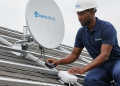
The Starlink network isn’t just about satellites; it’s a sophisticated ecosystem encompassing ground stations, user terminals (dishes), and advanced networking software. Each satellite in the constellation acts as a node, communicating with other satellites and designated ground stations that connect to the broader internet. The user terminal, often referred to as a "Dishy," is designed for simple, self-installation, automatically orienting itself to communicate with the nearest available satellites. This intricate dance of orbital mechanics and terrestrial infrastructure ensures a seamless handover as satellites pass overhead, maintaining a consistent connection for the end-user. As the constellation grows, so does its capacity and resilience, continually enhancing service quality and availability across its operational zones.
Global Reach and Accessibility Challenges
While Starlink’s ambition is global, its rollout is meticulously managed, navigating a complex web of regulatory approvals and logistical considerations in each country. The service is currently available in dozens of countries across continents, from North America and Europe to parts of South America, Africa, and Australia. However, market entry often involves direct negotiations with national governments and telecommunications authorities. Even within approved regions, service availability can fluctuate based on satellite density and local ground station capacity. Despite these hurdles, Starlink continues to aggressively expand its reach, transforming the digital landscape for remote communities, agricultural operations, and maritime industries that previously had limited to no reliable internet options.
Starlink’s Evolving Service Models: Focus on Flexibility
One of the most compelling developments in Starlink’s offering, particularly as of late 2024, is its increasing emphasis on flexible service plans. Initially known for its straightforward monthly subscription, the company has recognized the diverse needs of its user base, ranging from full-time residents to nomadic users, RV travelers, and temporary deployments. This evolution reflects a responsive approach to customer feedback, acknowledging that a one-size-fits-all model doesn’t cater to every scenario. The introduction of more adaptable billing cycles and specialized plans underscores Starlink’s commitment to making high-speed satellite internet accessible and practical for a broader spectrum of users. For those interested in the nuances of these adaptable offerings, a deeper dive into Starlink’s Evolving Flexibility: Short-Term Plans & Global Reach can provide further insights.
Navigating Payment Structures: Beyond Monthly Commitments
Historically, Starlink’s Residential plan operated on a standard monthly billing cycle. However, discussions among users, as seen on platforms like Reddit as early as June 2023, highlighted a demand for more granular payment options, particularly from individuals using Starlink for shorter durations, such as month-long vacations or seasonal work. The core question revolved around whether Starlink would introduce weekly payments or similar short-term arrangements to better accommodate non-continuous usage patterns. This feedback has clearly influenced Starlink’s strategy, leading to more accommodating billing practices for certain plan types.
Understanding Prorated Billing and Short-Term Use
As of November 2024, Starlink has indeed introduced more flexibility, particularly with specific plans like the 50GB plan, which allows for prorated service. This means users can potentially activate service for shorter periods, such as a week or a few days, and only pay for the time used within a billing cycle. Derek Berry, an observer of Starlink’s evolving service, noted this development, emphasizing that while weekly use is feasible, it operates within specific billing cycle rules. For instance, a user activating a 50GB plan mid-month might be billed for the full month but then receive a prorated refund or credit for the unused portion if service is paused early in the subsequent cycle. This mechanism is especially beneficial for those who require connectivity for finite projects or intermittent travel, moving beyond the traditional expectation of a fixed, full-month commitment. This marks a significant shift from earlier customer experiences, where users might have been billed for a full month even if their dish wasn’t activated immediately after purchase, as one Reddit user noted in November 2021 regarding their $99 first-month charge.
The Emergence of Starlink Mini and Rental Options
Further enhancing flexibility is the strategic introduction of specialized hardware, such as the Starlink Mini, and the growing market for rental options. The Starlink Mini, a more compact and portable version of the standard Dishy, is designed with mobility in mind, catering explicitly to travelers, adventurers, and those needing temporary setups. Complementing this, third-party providers, like SatPhoneStore, have begun offering Starlink Mini rentals, providing options for one week, two weeks, or even up to three months. These rental services typically include data packages, such as 50GB+, with clear policies on local and global overage charges. This burgeoning rental market offers an excellent solution for users who need Starlink connectivity for a short period without the upfront cost of purchasing the hardware, aligning perfectly with the demand for short-term, on-demand internet access. For a more comprehensive look at these adaptable offerings, consider exploring Starlink’s Adaptable Connectivity: Plans, Rentals & Future.
Acquiring Starlink: From Order to Activation
The journey to getting online with Starlink involves several key steps, from placing an order to receiving the hardware and finally activating the service. While the process is designed to be user-friendly, understanding the potential timelines and financial commitments upfront can significantly enhance the customer experience. The demand for Starlink continues to be exceptionally high globally, a testament to its unique value proposition, but this popularity also influences various aspects of the acquisition process, particularly concerning delivery and initial billing.
Managing Expectations: Shipping Times and Inventory Dynamics
Upon ordering Starlink, one of the most frequently asked questions revolves around shipping times. While some fortunate customers might receive their Starlink kit in as little as 3-5 days, experiences shared on platforms like Facebook in April 2024 reveal a wide variability, with some individuals waiting months. Yolanda De La, a commenter on these discussions, highlighted that these disparities are primarily due to high demand and dynamic inventory levels. Starlink is continually ramping up production and refining its logistics, but the sheer volume of orders, combined with global supply chain complexities, means that delivery estimates can fluctuate. Prospective customers are advised to check current shipping estimates at the time of order and remain prepared for potential delays, especially in rapidly expanding service regions.
The Initial Setup: Hardware and Activation Process
Once the Starlink kit arrives, the physical setup is remarkably straightforward, typically requiring no professional installation. The kit includes the Dishy (Starlink’s phased-array antenna), a Wi-Fi router, cables, and a base. Users simply find a clear view of the sky, connect the components, and power on the system. The Dishy automatically finds the optimal satellite signal. Activation, however, is a separate step that links the hardware to a chosen service plan. Early experiences, such as the Reddit post from November 2021, indicate that customers might receive their hardware and be billed for service even before they’ve had a chance to activate it. It’s crucial for new users to understand that their subscription typically begins upon shipment or a specific activation date tied to their order, not necessarily the moment they plug in the dish. Users should review their account details on Starlink.com for precise billing cycle information.
Innovations and Future Trajectories: The Road Ahead
Starlink’s journey is far from over; it is a continuously evolving project driven by relentless innovation and ambitious expansion goals. The sustained investment in both manufacturing capabilities and launch cadence indicates a strategic vision for not just maintaining but significantly growing its global footprint and service capacity. These efforts are critical to meet the surging worldwide demand for reliable satellite internet and to introduce next-generation capabilities.
Manufacturing Prowess: The Bastrop Facility’s Role
Central to Starlink’s scalability is its impressive manufacturing infrastructure. The Starlink facility in Bastrop, Texas, is a hub of American innovation and production. As observed by Olivia Trusty during her visit in July 2026, the facility showcases a highly advanced and automated production line capable of rapidly churning out thousands of Starlink satellites. This high-volume manufacturing capability is essential for replenishing the constellation, deploying new generations of satellites with enhanced features, and supporting the continuous expansion of Starlink’s service areas. The ability to produce hardware at scale is a critical differentiator, allowing Starlink to maintain its lead in the LEO satellite internet race.
Accelerated Deployment: Continuous Launch Cadence
SpaceX’s remarkable launch schedule is undeniably the engine behind Starlink’s rapid deployment. According to SpaceX’s own launch manifest, Starlink missions are frequent occurrences, with multiple Falcon 9 launches dedicated to deploying batches of satellites. For instance, planned missions in August 2026 include multiple Starlink deployments from both California and Florida launch sites, utilizing droneships for booster recovery. This aggressive launch cadence ensures that the constellation consistently grows in size and density, improving coverage, increasing bandwidth capacity, and reducing latency for users worldwide. The sheer frequency of these missions is a clear indicator of Starlink’s commitment to building out a robust and highly redundant network.
Addressing Growing Demand and Service Expansion
The combined efforts in manufacturing and launches are directly aimed at addressing the ever-growing demand for Starlink services. As more users sign up, and as Starlink expands into new territories, the network’s capacity must keep pace. Future innovations are expected to include more advanced satellite technology, potentially featuring inter-satellite laser links for even faster data routing and enhanced ground infrastructure. Furthermore, Starlink is actively exploring partnerships and specialized service offerings for enterprise, government, and aviation sectors, further diversifying its market presence. For a broader perspective on the technological underpinnings and accessibility of this next-gen service, refer to Starlink: Unpacking Next-Gen Satellite Internet & Flexible Access.
Expert Analysis: Starlink’s Impact on the Connectivity Landscape
The advent of Starlink has not merely added another option to the internet service market; it has fundamentally reshaped the global connectivity landscape. Experts in telecommunications and global development increasingly view Starlink not just as a consumer product but as a critical infrastructure component with far-reaching societal and economic implications. Its unique attributes — global reach, relative ease of deployment, and improving flexibility — position it as a disruptive force across multiple sectors.
Transforming Remote Work and Education
For countless individuals and families in rural or underserved areas, Starlink has been a game-changer for remote work and education. Previously, limited internet speeds or unreliable connections made telecommuting, online learning, and access to digital resources either impossible or highly frustrating. With Starlink, professionals can participate in video conferences with minimal lag, students can access online curricula without interruption, and entire communities can engage with the global digital economy. This transformation has profound implications for regional development, allowing talent to thrive irrespective of geographical location and providing educational equity that was once unattainable.
Empowering Emergency Services and Disaster Relief
One of Starlink’s most impactful applications has been in humanitarian and emergency contexts. In areas hit by natural disasters, where terrestrial communication infrastructure is often destroyed or overwhelmed, Starlink terminals can be deployed rapidly to re-establish vital communication links. This capability is crucial for coordinating rescue efforts, facilitating aid distribution, and allowing affected populations to connect with loved ones. Its portability and resilience make it an invaluable tool for first responders, NGOs, and government agencies operating in crisis zones, providing a lifeline when traditional networks fail.
Competitive Landscape and Future Disruptions
Starlink operates in an increasingly competitive satellite internet market, with rival constellations like OneWeb and Amazon’s Project Kuiper also vying for market share. However, Starlink’s head start in deployment, its aggressive launch schedule, and its evolving service models give it a significant advantage. Its continued innovation, including next-generation satellites and more refined ground infrastructure, suggests it will remain a formidable player. The long-term disruption Starlink poses extends beyond satellite internet, influencing traditional ISPs by pushing for greater coverage and improved service, effectively raising the bar for global connectivity standards.
Conclusion
Starlink, a venture born from audacious engineering and a clear vision, is undeniably transforming the global internet landscape. From its ambitious goal of bridging the digital divide to its recent evolution in flexible service plans and the deployment of innovative hardware like Starlink Mini, the platform demonstrates a remarkable responsiveness to user needs and market dynamics. The relentless pace of satellite manufacturing in facilities like Bastrop, Texas, coupled with SpaceX’s unparalleled launch cadence, ensures that Starlink’s capacity and reach will only continue to expand. As of late 2024, Starlink is not merely an internet provider; it is an enabler of remote work, a lifeline in emergencies, and a catalyst for digital inclusion across continents. Its journey underscores a pivotal moment in connectivity, proving that high-speed, low-latency internet can indeed be a universal utility, accessible to virtually anyone, anywhere on Earth.