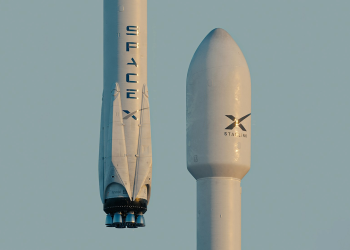
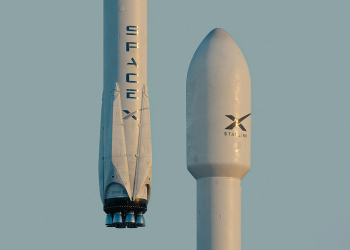
SpaceX is targeting Sunday, 28 September for the 14th flight of its Starship rocket — the vehicle’s first attempt at a full orbit of Earth — and the mission is set to carry Starlink V3 satellites, the newest generation of hardware behind its satellite internet service, according to CoinCentral, a crypto and markets news site.
Separately, shares in the company slipped about 4% in early trading on Thursday, 24 September 2026, changing hands near $148 on Nasdaq under the ticker SPCX, the same report says. The drop came a day after JPMorgan analyst Arun Jain named SpaceX one of the most talked-about stocks on social media, CoinCentral reports.
For Starlink customers, the headline number to note is not the share price. Neither CoinCentral nor a separate account from Crypto Briefing reports any change to Starlink pricing, hardware costs or availability tied to the stock move.
Key facts
- SpaceX is targeting 28 September for Starship’s 14th flight, its first attempt at a full orbit of Earth, CoinCentral reports.
- The flight is set to carry Starlink V3 satellites, which CoinCentral says are meant to boost the speed of the connectivity network.
- SpaceX says two completed Starship V3 test flights in August put it on track for full reusability, per CoinCentral.
- SPCX fell about 4% on Thursday to near $148, and ranked fourth on JPMorgan’s social-buzz list behind Lithium Americas, Boyd Gaming and Advanced Micro Devices, the same outlet says.
- Neither source reports any change to Starlink subscription prices, waitlists or regional availability.
- The two outlets give different accounts of where the stock now sits against its $135 offering price.
What the 28 September flight is meant to do
Starship’s 14th flight is the first the company has framed as a full orbital attempt, CoinCentral reports. Previous test flights have flown shorter profiles; as we reported, the previous Starship flight carried 20 Starlink V3 satellites on a suborbital path, meaning the payload was not left in an operating orbit.
CoinCentral says SpaceX credits two Starship V3 test flights completed in August with putting the programme on track for full reusability — the point at which both the booster and the upper stage can be flown again rather than expended. That matters to Starlink specifically because Starship is the vehicle sized to carry the V3 satellites, which are larger than the versions launched on Falcon 9.
Neither outlet gives a launch window, a backup date, or the number of satellites manifested on the 28 September flight. Dates of this kind routinely slip, and neither report treats 28 September as confirmed.
What this means for Starlink price and availability
The practical question for anyone already paying for Starlink, or waiting for it to open in their country, is whether any of this changes the service. On the evidence of these two reports, it does not — at least not yet, and not in any way either outlet has documented.
CoinCentral’s only user-facing claim about the V3 satellites is that they are meant to boost the speed of the connectivity network. The outlet does not quantify that gain, does not say when subscribers would see it, and does not tie it to a Starlink price change or a new tier. Neither report mentions Starlink availability opening in new markets, changes to hardware pricing, movement on order backlogs or waitlists, or any regulatory or licensing development in Zimbabwe, elsewhere in Africa, or any other region.
For readers tracking the rollout rather than the ticker, our earlier explainer covers what Starlink V3 is meant to change for speed, price and availability, including the timeline the company has given so far.
Why the share price is part of the Starlink story at all
Both outlets draw the same structural link: Starlink is not a standalone business. Crypto Briefing notes SpaceX operates Starlink’s satellite internet constellation alongside its launch business, placing the company at the intersection of aerospace and digital infrastructure. CoinCentral describes three business lines — rockets, Starlink connectivity, and an AI unit building data centres in orbit — and says all three lean on each other and all three cost money.
What neither outlet does is draw a line from quarterly results to what a subscriber pays. Both stop at the company’s balance sheet. Readers should treat the connection between SpaceX’s public finances and Starlink’s consumer pricing as untested by these reports rather than established by them.
What JPMorgan actually found
CoinCentral reports that Jain’s top 10 also included Insight Digital Partners II, Rocket Lab, Meta Platforms, Kodiak AI, Atlas Energy Solutions and Micron Technology. Market values on the list ran from roughly $200 million up to SpaceX’s $2 trillion valuation, the outlet says, spanning energy services to chipmaking.
The 10 names rose about 6% on average over the past month against a sub-1% gain for the S&P 500, CoinCentral reports, but the spread was wide: AMD climbed 34% while Kodiak fell 21%. The outlet’s read is blunt: “heavy social chatter tends to bring more price swings, not a clear direction.” Jain’s data also found no real link between social buzz and short interest, per the same report.
The spending behind the share price
The AI division alone spent $15 billion in capital expenditure last quarter, CoinCentral says — more than double the $7 billion of the prior quarter and far above roughly $700 million in the same period a year earlier.
Revenue has not kept pace, according to the same report. The AI unit brought in $2 billion last quarter while the whole company posted $7.8 billion, and the heavier spending widened SpaceX’s losses. That is the backdrop against which Starlink sits inside a $7.8bn quarter for the company.
One figure needs reconciling, because the two outlets are not measuring the same thing. Crypto Briefing reports revenues of $18.67 billion in the fiscal year leading up to the June IPO, which it says were significantly bolstered by Starlink’s subscription-based revenue model. CoinCentral’s $7.8 billion covers a single recent quarter. The two are different periods, not competing totals, and neither outlet publishes a full-year 2026 figure that would allow a direct comparison.
How the IPO was priced, and who cashed out
Crypto Briefing reports SpaceX priced 555.6 million shares at $135 each on 11 June, initially raising $75 billion. Goldman Sachs and Morgan Stanley, named by the outlet as underwriters, fully exercised an overallotment option that added 83.3 million shares, lifting gross proceeds to roughly $85.7 billion against a debut valuation of about $1.77 trillion.
That made it the largest IPO on record. Crypto Briefing says Saudi Aramco’s 2019 listing, the previous record holder, raised about $25.6 billion — roughly a third of SpaceX’s total. The same report says early backers including Sequoia Capital and Andreessen Horowitz finally got a liquidity event after years of private funding rounds.
The stock opened at $150 on 12 June and closed its first session near $161, a pop of roughly 19-20%, according to Crypto Briefing. That surge pushed the market capitalisation above $2.1 trillion and briefly made Elon Musk the world’s first trillionaire, the outlet reports.
Where the sources disagree
The two reports do not line up on the current position against the offering price. Crypto Briefing says shares had dropped below the $135 IPO price by mid-July 2026, calling that a decline of more than 14% from the $161 first-day close, and attributes the pullback to profit-taking plus a broader market reassessment of AI infrastructure spending.
CoinCentral, reporting Thursday’s price near $148, says that is about 3% below the $150 open and “14% under its original IPO price of $135” — a figure that does not follow from the prices it cites, since $148 is above $135. Neither outlet resolves the gap, and this report does not attempt to.
Market backdrop
Coming into Thursday, S&P 500 futures were down 0.5% and Dow futures down 0.3%, CoinCentral reports, describing a quiet broader market backdrop for the SPCX move.
Both outlets carry promotional trading content alongside their reporting, and nothing here is investment advice. We will update this report if either source, or SpaceX, publishes anything on Starlink pricing, availability or the confirmed 28 September launch window.
Frequently Asked Questions
Does the SPCX share drop change Starlink prices or availability?
Neither of the two reports behind this article says so. CoinCentral and Crypto Briefing both cover the share move as a markets story, and neither reports any change to Starlink subscription tiers, hardware costs, waitlists, order backlogs or country-by-country licensing as a result of it. Nothing in either report points to a price or availability change in Zimbabwe, elsewhere in Africa, or any other market.
When is the next Starship launch and what is it carrying?
CoinCentral reports SpaceX is targeting 28 September 2026 for Starship’s 14th flight, which would be the vehicle’s first attempt at a full orbit of Earth. The same report says the mission will carry Starlink V3 satellites. Launch dates of this kind routinely move, and neither outlet reports a confirmed launch window or backup date.
What is Starlink V3 supposed to do for users?
CoinCentral says the V3 satellites are meant to boost the speed of the Starlink connectivity network. That is the only user-facing benefit either source names — neither outlet quantifies the speed gain, gives a date for when subscribers would see it, or ties it to a pricing tier.
Is the $18.67 billion revenue figure the same as the $7.8 billion quarter?
No — they cover different periods. Crypto Briefing reports revenues of $18.67 billion for the fiscal year leading up to the June IPO, which it says were significantly bolstered by Starlink’s subscription-based revenue model. CoinCentral’s $7.8 billion is company-wide revenue for a single recent quarter. Neither outlet publishes a full-year 2026 total, so the two figures cannot be read as a like-for-like comparison.
How does SpaceX’s IPO compare with the previous record holder?
Crypto Briefing reports that Saudi Aramco’s 2019 listing, the previous largest IPO on record, raised about $25.6 billion. SpaceX’s roughly $85.7 billion raise more than tripled that in a single transaction, according to the outlet.
Does social media buzz around SPCX mean investors are betting against it?
No. CoinCentral says JPMorgan analyst Arun Jain’s data found no real link between social media chatter and short interest, the share of a stock’s tradable float borrowed and sold by investors betting on a decline. On his list, Insight Digital had almost no short interest while Atlas Energy had more than 30% of its float sold short.
Follow Starlink News on Google. Make us a preferred source to see more of our reporting in Google search results.