Globe, the Philippine mobile operator, has switched on Starlink roaming in Japan, letting its subscribers connect their phones directly to Starlink satellites when ordinary mobile coverage drops out. The launch was reported on 30 September 2026 by Philippine outlet insiderph, which says Globe is delivering the service through the Japanese carrier KDDI and that support is limited to Android handsets for now.
No hardware is involved. insiderph reports the connection works without a satellite terminal or any extra device, with prices starting at P400 (Philippine pesos) for a seven-day bundle.
Nor is this satellite internet in the sense most people use the term. The same report says satellite access is confined to select apps, which places the service closer to messaging-and-essentials connectivity than to the unrestricted satellite internet a fixed Starlink dish delivers at home.
Key facts
- Who: Globe, in partnership with Japan’s KDDI, according to insiderph.
- What: Starlink roaming that links phones straight to Starlink satellites when regular mobile coverage drops.
- Where: Japan, for Globe customers travelling there. No other destination is mentioned in the report.
- When: Reported by insiderph on 30 September 2026.
- Price: Plans start at P400 for seven days, bundling 2GB of regular roaming data, 1GB of satellite data and 50 satellite texts.
- Devices: Android only for now, per insiderph.
- Scope: Select apps only — not open satellite internet, the outlet says.
- Both directions: KDDI customers can tap Globe’s satellite service while travelling in the Philippines, the outlet says, though it publishes no terms for that leg.
What the P400 bundle includes
Globe’s entry-level offer is priced at P400 for seven days, insiderph reports, and mixes conventional and satellite allowances in a single package:
- 2GB of ordinary roaming data
- 1GB of satellite data
- 50 satellite texts
The split signals how the service is meant to be used. A traveller leans on Japan’s terrestrial networks most of the time, with the small satellite allowance held back for the places where normal signal disappears.
insiderph is explicit that the offer is positioned as a backup in remote areas rather than a substitute for conventional mobile or Wi-Fi service.
Conditions before the satellite leg engages
- Mobile data switched on
- Data roaming switched on
- A clear view of the sky
The outlet does not say how long a handset takes to acquire a satellite, what happens to an unused satellite allowance when a bundle expires, or whether the higher-priced tiers carry larger satellite buckets.
The KDDI arrangement
The Japanese side of the deal is handled by KDDI, which insiderph says is the channel through which Globe is delivering satellite coverage in Japan. The outlet describes the Japan offer as an extension of Globe’s existing domestic Starlink Mobile rollout into international roaming, rather than a standalone product.
Globe, quoted in that report, framed the launch as a continuation of work it had already started at home. “Globe has always been at the forefront of connectivity innovation, and extending our Starlink journey into international access is the next step in that evolution,” Eric Tanbauco, head of Globe’s Consumer Mobile Business, said in a statement quoted by insiderph.
Tanbauco added that the KDDI partnership is a way of exploring how satellite-enabled connectivity can help overcome network boundaries and create a more seamless travel experience for customers.
The return leg, and what is not known about it
The arrangement runs in both directions: insiderph reports that KDDI subscribers can use Globe’s satellite service when they travel to the Philippines. On the outlet’s own description of the Japan offer as an extension of Globe’s domestic Starlink Mobile product, that would mean inbound Japanese visitors riding the service Globe already operates at home.
That is as far as the sourcing goes. The report leaves five things unstated:
- Price: no tariff is attached to the KDDI-to-Philippines leg.
- Start date: no launch date is given for the inbound service.
- Allowances: no satellite data or text quota is specified.
- KDDI’s own account: no KDDI statement appears alongside Tanbauco’s.
- Commercial terms: nothing on whether the operators settle satellite capacity at a wholesale rate or swap it reciprocally.
Starlink News has not obtained those details from either carrier.
Sourcing and verification
Every figure above — the P400 price, the seven-day term, the 2GB/1GB/50-text split, the Android-only limitation and the reciprocal arrangement — rests on insiderph’s 30 September report and the Globe statement quoted inside it.
Starlink News has seen no matching announcement in Globe’s corporate newsroom or KDDI’s English-language news release index, the two places an official confirmation would normally surface. Until one does, treat the terms as single-sourced.
Open questions
- When, if ever, iPhone support arrives.
- Which satellites and spectrum arrangements underpin the Japanese leg.
- Whether Globe plans similar roaming deals elsewhere, and what Starlink availability for its roamers would look like in those markets.
insiderph addresses none of the three, and Starlink News has no second source on them.
Opinion: a roaming deal, not a domestic switch-on
An observation from Starlink News, not sourced to insiderph or either operator: the direct-to-cell launches this outlet has covered so far have been domestic in shape — a carrier turning on satellite texting or light data for its own subscribers, inside its own country. Globe’s Japan offer is sold instead as a travel add-on that works on another operator’s home network, which is the shape of a conventional roaming agreement. Whether other carriers copy that structure is not something the current reporting addresses.
Background: Starlink availability country by country
The Globe launch lands in a period of rapid direct-to-cell activity, with Starlink availability on handsets widening market by market. Starlink News has reported that Starlink’s direct service is now free on Japan’s big three carriers, and that the Starlink Mobile launch in Kazakhstan, which was also Android-only at the start, came with a promotional free period. The Android-first pattern in the Philippine launch therefore echoes what has happened in other markets, though the reasons given, if any, differ from launch to launch.
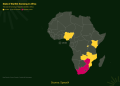
Readers in Africa tracking the same technology have a reference point closer to home: Starlink News has reported that Airtel launched Starlink Mobile in Uganda with texting and no dish. insiderph makes no reference to African markets, and nothing in its report indicates that Globe’s roaming deal covers any country other than Japan.
One distinction is worth holding on to as this spreads: in each of those launches, as in the Philippines, what is being sold is restricted satellite messaging and light data over a phone — not the full satellite internet service that comes with a dish and a subscription at a fixed address.
Starlink News will update this story if Globe or KDDI publishes further detail on device support, the terms of the return leg, or the markets covered.
Frequently Asked Questions
What does a phone need before the satellite part of Globe’s Japan roaming works?
According to insiderph, satellite access requires mobile data and data roaming to be switched on, plus a clear view of the sky. Without those three conditions, the satellite leg does not come into play. The report does not say how long a handset takes to acquire a satellite once they are met.
Is this the same as Starlink satellite internet at home?
No. insiderph reports that satellite access on the Globe roaming bundle is limited to select apps, which makes it a narrow messaging-and-essentials service rather than the open satellite internet a fixed Starlink dish delivers. The outlet does not publish the list of permitted apps, and Starlink News has not seen one from Globe or KDDI.
Which countries does Globe’s Starlink roaming cover?
Japan only, on the available reporting. insiderph describes the launch as covering Globe subscribers travelling in Japan and says nothing about Starlink availability for Globe roamers in any other destination. Neither Globe nor KDDI has published, in the reporting Starlink News has seen, a list of further markets or a timetable for adding them.
Does the deal work in the other direction, for KDDI customers visiting the Philippines?
insiderph reports that it does: KDDI subscribers can use Globe’s satellite service when they travel to the Philippines. The report does not give a price, a start date or a data and text allowance for that return leg, carries no KDDI statement, and Starlink News has not obtained those terms from either operator.
Are iPhones supported?
Not at launch. insiderph says support is limited to Android handsets for now, and the report gives no timeline for iPhone support. Globe’s quoted statement in that report does not address device roadmaps.
How much does it cost?
Plans start at P400 (Philippine pesos) for seven days, insiderph reports, bundling 2GB of ordinary roaming data, 1GB of satellite data and 50 satellite texts. The outlet does not set out what the higher-priced tiers contain or whether their satellite allowances are larger.
Follow Starlink News on Google. Make us a preferred source to see more of our reporting in Google search results.