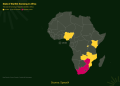
NuRAN Wireless Inc., a Québec-based company that finances, builds and operates rural mobile network sites across Africa, said on 30 September 2026 that it is putting licensed Starlink satellite backhaul to work in Nigeria in an attempt to earn more revenue from towers it has already built. The statement sets out the commercial case behind a previously announced pilot with Infratel Africa Limited.
Two caveats belong at the top of this story. First, the announcement puts no number on its central claim: NuRAN does not disclose a current revenue-per-site figure, a target uplift, a percentage or even a rough range. The headline promise of “higher revenue per rural site” is, so far, a direction of travel rather than a quantified forecast. Second, this is a single-source story. The release was issued through ACCESS Newswire and republished by Yahoo Finance and FinanzNachrichten.de — but both are wire pickups of the same company text, not independent verification. Neither outlet adds reporting, analyst comment, operator confirmation or a sceptical view, and every claim below is NuRAN’s own unless stated otherwise.
Key facts
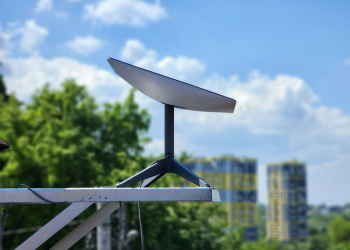
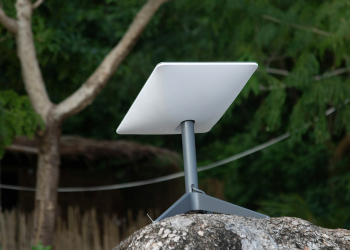
- NuRAN Wireless (Nasdaq:NUR, FSE:1RN) is testing licensed Starlink low Earth orbit satellite backhaul at selected NuRAN technology sites in Nigeria, according to the company.
- The pilot partner is Infratel Africa Limited; the Starlink service is obtained through an unnamed third-party provider, and NuRAN says it has no direct relationship with Starlink or SpaceX.
- NuRAN says it will measure throughput, uptime, integration with its own equipment, and cost per unit of capacity.
- The company says it has more than 5,000 sites under contract, of which only a portion have been built and are operating. It does not break out how many.
- If the test works, NuRAN says it intends to evaluate sites in the Democratic Republic of the Congo, Côte d’Ivoire and Benin, plus Cameroon if licensing becomes available.
- No revenue-per-site figure, no cost-per-gigabyte figure and no date for pilot results are given.
The money claim, and what is missing from it
The release is built on a straightforward commercial logic. NuRAN already carries the fixed costs of a rural site — the tower, the power system, the field team, the site lease — whether that site carries a little traffic or a lot. If a better backhaul link lets the same site carry more mobile data for its operator customers, the extra revenue arrives on top of costs the company is already paying. That is the “higher revenue per rural site” in the headline of its own announcement.
What the release does not provide is any arithmetic. There is no stated average revenue per built site today, no target figure after the upgrade, no percentage uplift, no payback period, and no disclosure of what the Starlink service costs NuRAN per site per month — the number that determines whether extra traffic converts into extra margin at all. Satellite capacity is typically priced well above fibre or microwave per gigabyte, so cost per unit of capacity is the variable that decides the business case, and it is precisely the one the company says it is still measuring. Readers should treat the revenue claim as an untested hypothesis the pilot exists to examine, not a disclosed forecast.
Why it matters
The release ties the test directly to Africa’s coverage gap. NuRAN cites the GSMA, the global mobile industry association, as counting 122 million Africans living beyond mobile broadband coverage. It also cites the International Telecommunication Union, the UN’s telecoms agency, which estimated that 4G networks reached only 49% of rural residents in its Africa region in 2024. NuRAN separately points to $60.5 billion in 2025 revenue for Africa’s mobile operators, and a GSMA projection of $90.3 billion by 2030, as the market it is selling coverage into.
NuRAN’s argument, as stated in the announcement, is that backhaul — the link that connects a tower back to the wider network — is the constraint on how much traffic a rural site can carry. In practice, a remote site far from fibre is usually fed by a chain of microwave hops or nothing at all, which caps capacity regardless of how capable the radio equipment on the tower is. A LEO satellite link, NuRAN says, lets a site carry more traffic and support a wider range of services without duplicating its tower and operating footprint. The same LEO technology sold to households as consumer satellite internet is here being pointed at the operator side of the network, where the customer is a mobile network rather than a family.
What the pilot is meant to prove
NuRAN lists four goals. The first is to establish whether satellite backhaul gives a rural site the throughput and reliability to carry more mobile data for its operator customers. The second is to raise the value of sites already built, by earning more from the towers, power systems and field operations the company has in place.
The third goal is longer term: NuRAN says it is developing plans for local content caching, modular edge compute and energy-related offerings at suitable sites, while acknowledging those initiatives require additional equipment, demand and validation, and that they are not a current revenue stream. The fourth is to produce performance and cost data that shows where satellite links can complement terrestrial ones as more contracted sites are built — notably complement, not replace, which suggests the company expects satellite to serve the hardest sites rather than the whole estate.
“Backhaul is the key that unlocks NuRAN’s next phase of growth,” chief executive Francis Létourneau said in the company’s 22 September 2026 announcement, quoted again in the latest release. No new executive comment accompanies the 30 September statement, and no Infratel Africa executive is quoted in it at all — the partner’s view of the test is absent from the record.
Licensing decides where it can spread
NuRAN’s expansion list tracks regulatory approval rather than demand. The company states that Starlink service is recently licensed in the Democratic Republic of the Congo, Côte d’Ivoire and Benin, and that Cameroon is in process. Those are the four markets it names as candidates for a repeatable version of the Nigeria model — and the sequence follows where a national regulator has already said yes, not where the coverage gap is widest.
That dependency is explicit in the announcement: further deployment will depend on pilot results, third-party service arrangements, financing and customer demand. For readers tracking where consumer and enterprise rural satellite connections become available in Africa, the licence status NuRAN describes is the gating factor for operator-grade backhaul as much as it is for households and farms buying a terminal of their own.
The relationship with SpaceX
NuRAN is careful about how it describes its link to Starlink. The licensed service reaches the pilot through an unnamed third-party provider; NuRAN says it has no direct contractual or commercial relationship with Starlink or SpaceX in connection with the test, and that SpaceX has not endorsed, sponsored or approved the pilot or the news release. That matters commercially as well as legally: NuRAN’s access to capacity, and the price it pays for it, sit with a reseller it does not name, which is one more undisclosed variable in a business case that turns on cost per gigabyte.
Background and caveats
NuRAN describes itself as a rural telecommunications infrastructure company connecting remote and underserved communities across Africa, using low-power equipment, local operations and, at many sites, off-grid energy systems. It says this lets it serve communities where conventional rollouts can be uneconomic. The company also says it is developing plans to add modular edge compute nodes at select built sites, bringing local computing and future AI-driven services closer to those communities, while stating those services are not yet a current revenue stream.
What this story cannot tell you: no date was given for pilot results. The release names what will be measured but no reporting window, milestone or next-update commitment, which means there is no scheduled moment at which the revenue claim can be checked against data. Nor does the release say how many sites are in the pilot, which operators are involved, what the satellite capacity costs, or how many of the 5,000-plus contracted sites are live today. We approached this as a single-source company announcement and have not been able to verify any of its operational claims independently.
The announcement is a forward-looking statement under US and Canadian securities law. NuRAN lists among its uncertainties the availability and commercial terms of third-party service-provider arrangements, the technical compatibility and performance of satellite backhaul, access to financing and working capital, customer demand, regulatory approvals and counterparty performance. The company says the statements reflect management’s beliefs as of the release date and that actual results could differ materially.
Frequently Asked Questions
Has NuRAN said how much extra revenue per site Starlink backhaul would generate?
No. Despite framing the announcement around "higher revenue per rural site," NuRAN gives no dollar figure, no percentage uplift and no target range in the release. It also gives no baseline for what a built site earns today, so there is no published number to measure the claim against.
How much money do Africa’s mobile operators make, according to the figures NuRAN cited?
The NuRAN release says Africa’s mobile operators generated $60.5 billion in revenue in 2025. It adds that the GSMA, the global mobile operators’ association, projects that figure will reach $90.3 billion by 2030. Both numbers come from the company’s own press release, not from independent reporting.
What is NuRAN’s Network-as-a-Service model?
Under the model described in the release, NuRAN finances, builds, owns, operates and maintains 2G, 3G and 4G mobile network infrastructure on behalf of mobile network operators that want coverage outside urban markets. The company says it combines telecoms engineering, low-power wireless equipment, renewable-energy-enabled infrastructure, site selection and field operations.
Who is Infratel Africa Limited?
NuRAN describes Infratel Africa Limited as a leading provider of integrated telecom and power infrastructure, and as a long-time partner. The company is NuRAN’s counterparty for the Nigeria satellite backhaul test, according to the release.
Has SpaceX endorsed the NuRAN pilot?
No. The release states that Starlink is a trademark of Space Exploration Technologies Corp. and that SpaceX "is not a party to, and has not endorsed, sponsored or approved, the pilot or this news release." NuRAN says it reaches the licensed Starlink service through an unnamed third-party provider and has no direct contractual relationship with Starlink or SpaceX.
When will the pilot results be published?
No date has been given. The release sets out what NuRAN intends to measure — throughput, uptime, integration and cost per unit of capacity — but names no reporting window, milestone or next-update date, so there is no scheduled point at which the company’s claims can be checked.
Follow Starlink News on Google. Make us a preferred source to see more of our reporting in Google search results.