SpaceX used its first quarterly earnings call since its June 2026 initial public offering to describe, for the first time in public, how it intends to enter the US wireless market: small cellular base stations mounted on the same hardware that already holds Starlink broadband dishes, TechTimes reported on 7 August. A month later, on 8 September, Chosun Biz reported, citing Bloomberg and Reuters, that Europe’s four largest mobile operators were in early-stage talks to form a consortium and bid jointly for EU satellite spectrum to answer Starlink’s push into phones.
Key facts
- SpaceX President and COO Gwynne Shotwell said a cellular base station could sit on the gear that holds a Starlink broadband dish, using licensed mobile spectrum the company bought from EchoStar, the previous holder of those licences, per TechTimes.
- Shotwell put combined US wireless revenue at AT&T, T-Mobile and Verizon at roughly $600 billion a year and said she expects SpaceX to take “quite a few of their customers,” TechTimes reported.
- SpaceX declined to give any capital expenditure estimate for the plan, according to TechTimes.
- Counterpoint Research senior analyst Subhadip Roy noted SpaceX’s 65 MHz is “only a fraction” of the spectrum held by the incumbents, per TechTimes.
- Deutsche Telekom (Germany), Orange (France), Vodafone Group (UK) and Telefónica (Spain) are weighing a joint bid for 2 GHz satellite spectrum set aside for operators majority-owned inside the bloc, Chosun Biz reported.
Why it matters
SpaceX is proposing to build mobile coverage out of hardware it has already shipped. Starlink has roughly 12 million Starlink subscribers worldwide and dishes on millions of US rooftops, TechTimes reported, so if each installation could double as a low-power cell site the company could add coverage without buying a single tower. The same report notes SpaceX gave no cost figure for that build.
What SpaceX said it would build
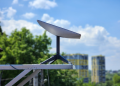
“You could put a cellular base station on the gear that holds a Starlink broadband dish,” Shotwell said on the call, per TechTimes. CEO Elon Musk said the company feels “reasonably confident” it can deploy a large number of small stations rather than the expensive, hard-to-site macro base stations carriers use, describing them as Starlink dishes that also carry mobile-band connectivity, the outlet reported.
TechTimes explains that a femtocell is a miniature base station built for homes and small offices, covering a radius of about 30 metres (100 feet) against the 1 to 8 kilometres of a conventional macro tower. The hardware is cheap — typically under $10,000 a unit versus roughly $200,000 for a macro tower installation — but the small footprint means a nationwide network would need an enormous number of units.
Where analysts push back
ABI Research senior research director Dimitris Mavrakis was blunt. As reported by RCR Wireless and relayed by TechTimes, he wrote that Musk “is nuts” if he believes 5G small cells with Starlink backhaul can beat the three incumbents on price and quality, and argued the industry has already concluded femtocells are not a viable primary deployment model even for mobile operators.
Mavrakis identified power and placement as the core obstacles, per TechTimes: getting electricity to each unit, siting it for coverage rather than wherever a customer wants a dish, and making the economics work across a very large number of low-coverage cells. TechTimes adds that carriers deployed femtocells widely in the late 2000s and early 2010s for indoor coverage, then deemphasised them as Wi-Fi calling and carrier-controlled small cells proved more practical outdoors.
Roy, by contrast, read the move as a bet that a hybrid satellite-terrestrial architecture built on existing infrastructure can add coverage faster and more cheaply than macro networks, TechTimes reported — a logic not unlike Starlink tested as backhaul for rural towers in Nigeria, as Starlink News has reported.
The MVNO door is shut
Every major US carrier has refused SpaceX a mobile virtual network operator deal, with AT&T’s and T-Mobile’s chief executives saying so on the record during their Q1 2026 earnings calls, according to TechTimes. Such an arrangement — the structure Charter’s Spectrum Mobile and Comcast’s Xfinity Mobile use with Verizon — would have let SpaceX lease national terrestrial capacity while building its own network. Craig Moffett of MoffettNathanson called launching a rival consumer service within five years “extraordinarily challenging” without one, the outlet reported. Bloomberg reported in June 2026 that SpaceX held executive-level talks with Charter Communications about routing some phone traffic over Charter’s terrestrial infrastructure, including its millions of Wi-Fi access points, per TechTimes.
Europe organises a counter-bid
Chosun Biz reports the European Commission views the 2 GHz band as suitable for direct-to-device services, which let satellites exchange signals with ordinary handsets in mountainous or maritime areas and when terrestrial networks fail in disasters. Of the frequencies tied to the EU’s IRIS² programme, two-thirds are earmarked for commercial use and split evenly between EU and non-EU operators; the four carriers would bid for the EU share.
IRIS² itself is a plan for 290 satellites in low and medium Earth orbit serving European governments and companies, with a 12-year build-and-operate contract awarded to the SpaceRISE consortium of satellite operators SES, Eutelsat and HispaSat, Chosun Biz reported. The outlet frames the spectrum contest as a question of technology sovereignty, consistent with other European efforts to build sovereign satellite capacity. Nothing is settled: Vodafone, Orange and Telefónica declined to answer questions and Deutsche Telekom offered no clear position, per the report.
What the sources do not support
The wire headline circulating with this story cites a $25 billion threat to US carriers. None of the material reviewed for this article contains that figure, and a third item attributed to Wells Fargo analysts could not be verified — the Wells Fargo link resolved to a consumer banking page, not research. No source gives a launch date, price or subscriber target for Starlink Mobile.
Frequently Asked Questions
Which mobile carriers already work with Starlink’s direct-to-cell service?
According to Chosun Biz, citing Bloomberg and Reuters, SpaceX has teamed up with T-Mobile in the United States, KDDI in Japan, Rogers in Canada, and Optus and Telstra in Australia. The same report says SpaceX put the service at 7.4 million devices served monthly in about 30 countries as of the end of March.
How would SpaceX’s femtocell backhaul differ from an ordinary femtocell?
TechTimes reports that a standard femtocell sends its traffic back to the carrier’s core network over the customer’s own DSL, cable or fibre line. In SpaceX’s hybrid design the traffic would instead travel through the Starlink dish to a satellite at roughly 550 km altitude, then down to a ground station, producing a round-trip latency of about 25 to 40 milliseconds against under 5 milliseconds for fibre-backhauled towers.
When does Europe’s 2 GHz satellite spectrum authorisation expire?
Chosun Biz reports that the current authorisation to use the 2 GHz satellite band expires in May 2027, after which the EU plans to select new operators to provide satellite mobile services across the bloc. Selecting operators at EU level is also intended to cut the regulatory burden of seeking separate approvals in each member state.
Does any of this affect Starlink availability in Zimbabwe or elsewhere in Africa?
No. The source reports describe a planned entry into the US wireless market and a spectrum contest inside the European Union, and neither names an African market, price or licence. Nothing in these reports changes Starlink availability or pricing in Zimbabwe.
Follow Starlink News on Google. Make us a preferred source to see more of our reporting in Google search results.





![Starlink Australia: NBN Alternative for Rural Areas [2026]](https://starlink-news.com/wp-content/uploads/2026/09/starlink-australia-nbn-alternative-for-rural-areas-9f7790a6-120x86.png)





Comments 1