Starlink, SpaceX’s low-Earth-orbit satellite network, holds an early lead over rival AST SpaceMobile in direct-to-device (D2D) satellite connectivity, according to an Ookla study reported by TelecomLead on October 2, 2026. The assessment landed a day after AT&T, T-Mobile and Verizon, the three largest US mobile operators, announced a joint venture on October 1 aimed at expanding satellite-enabled mobile coverage in underserved areas.
Key facts
- Ookla, the company behind the Speedtest measurement service, counted 59 mobile-operator partnerships for Starlink against 28 for AST SpaceMobile, TelecomLead reported.
- Global D2D connections rose 24.5% between July 2025 and March 2026, per the same Ookla data.
- Only 0.46% of Ookla Speedtest users in the US registered a D2D satellite connection in March 2026. Chile recorded the highest penetration among measured markets, at 1.26%.
- The new US joint venture will pool limited spectrum resources while leaving the operators’ existing satellite partnerships in place, according to TelecomLead.
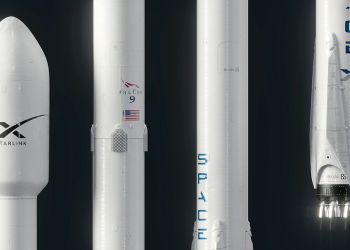
- Starlink says it has more than 650 satellite-to-mobile satellites in orbit, with service reachable through operator partnerships across six continents and potentially reaching more than 1.7 billion people.
- AST SpaceMobile had 13 satellites in orbit as of its second-quarter earnings call, five of them first-generation BlueBirds, Light Reading reported.
Why it matters
TelecomLead reports that operators are now treating satellite links as an extension of their mobile networks rather than a separate satellite service, and are preparing for phones that move automatically between terrestrial 4G/5G and satellites. On the Ookla numbers, though, D2D is still a complement that fills coverage gaps rather than a replacement for ground networks. The question TelecomLead says is becoming critical for carriers is which satellite platform to back.
What the measurements show
Ookla’s RootMetrics unit tested T-Mobile’s Starlink-powered service in rural New York. Of 238 text-message attempts, 143 got through, a success rate of about 60%, TelecomLead reported. Successful exchanges averaged 1 minute 17 seconds and ranged from one second to five minutes.
Light Reading notes that Starlink’s head start of 650 D2D satellites supports a limited, narrowband service, while AST SpaceMobile claims to be the only provider of broadband D2D. AST’s latest next-generation BlueBirds can deliver up to 200 Mbit/s to smartphones, according to the same report.
Two different pitches to carriers
Starlink’s architecture effectively turns satellites into mobile towers in space: existing LTE handsets talk to the satellites using spectrum supplied by the mobile operator, and Starlink integrates with the carrier much like a roaming partner, TelecomLead reported. SpaceX says its next-generation Starlink Mobile V2 system will offer around 20 times the throughput of the first generation and eventually support full 5G.
AST SpaceMobile, a Texas-based satellite startup, is pitching itself as infrastructure sitting behind the operator. Chief executive Abel Avellan told the company’s second-quarter earnings call that its network was designed alongside existing mobile network operators, not as a replacement, Light Reading reported. “We are building the D2D network of the future today in partnership with, not in competition with, MNOs,” Avellan said, according to the outlet.
That positioning followed SpaceX’s inaugural earnings call, at which the company revealed plans to build its own terrestrial small cells and compete directly with US carriers using spectrum it is acquiring from EchoStar, the US satellite and spectrum group, alongside the V2 mobile constellation.
Operator counts do not agree
The two sets of figures in circulation differ. Ookla’s count gives AST 28 mobile-operator partnerships, while TelecomLead separately reports that AST’s partnership network now covers nearly 60 operators representing more than 3 billion subscribers, naming AT&T, Verizon, Vodafone, Telefónica, Orange, Rakuten, stc and Vodafone Idea. Light Reading adds American Tower, Bell, Google and Telus to AST’s partner list. Starlink’s roster, per TelecomLead, includes T-Mobile, Optus, Telstra, Rogers, One NZ, KDDI, Globe, Salt, Entel, Kyivstar, Virgin Media O2, Airtel Africa, MasOrange, Deutsche Telekom, MTN, NTT Docomo and SoftBank. Starlink’s operator-channel service is already offered at no extra cost by Japan’s three largest carriers.
Spectrum and the US joint venture
The US Supplemental Coverage from Space framework lets satellite providers use spectrum held by partner mobile operators to extend connectivity beyond terrestrial coverage, meaning spectrum once sent from towers can be transmitted from orbit, TelecomLead explained. AST received authorisation in 2026 to provide supplemental satellite coverage using low-band spectrum associated with AT&T, Verizon and FirstNet, the US public-safety network.
T-Mobile, which has an exclusive relationship with Starlink for narrowband D2D, told its recent investor call that most future agreements would be sourced through the joint venture, Light Reading reported. AST management said on its earnings call that the venture could expand its US carrier base from two to three or four. Deutsche Telekom, T-Mobile’s parent and itself a Starlink V2 partner, signalled it would use several satellite suppliers, citing Amazon Leo and AST as well as SpaceX.
AST’s schedule and spending
AST confirmed a delayed timeline targeting roughly 45 BlueBird satellites in orbit by early 2027, and said 45 to 60 satellites would support continuous service in the US, Europe, Japan and other markets, according to Light Reading. Its next three satellites were described as ready to ship shortly, with no launch date set.
The company reported a net loss of $231 million on revenue of $31.5 million in the second quarter, up from $1.1 million a year earlier on commercial gateway deployments and US government milestones. Adjusted operating expenses were $119.1 million. It is not yet earning revenue from commercial D2D services with operators, but kept full-year guidance of $150 million to $200 million.
Zacks commentary published by The Globe and Mail in July said AST’s technology is backed by more than 3,800 patents and patent-pending claims and uses phased-array antennas of about 2,400 square feet, while flagging competition from Starlink and Globalstar and the effect of satellite material price swings on capital costs.
Where Africa fits
For African readers, the operator lists are the concrete part of this story: TelecomLead names Airtel Africa and MTN among Starlink’s satellite-to-mobile partners. None of the sources give adoption figures, prices or launch dates for D2D service in African markets, and Ookla’s measured penetration data covers the US and Chile. Starlink’s wider rollout on the continent has turned on regulators rather than telcos holding the key. In India, TelecomLead reports AST has a strategic arrangement with Vodafone Idea whose spectrum spans all 22 licensed service areas, subject to Indian regulation.
TelecomLead also notes that new entrants such as Elveo Mobile mean D2D will not settle into a two-company market, and that the contest may ultimately be decided on commercial terms: capacity pricing, revenue sharing, spectrum use, service quality and how much control the mobile operator keeps.
Frequently Asked Questions
When could AST SpaceMobile start a beta service with mobile operators?
AST SpaceMobile has previously said 25 satellites would be needed for a beta service, according to Light Reading. President and Chief Strategy Officer Scott Wisniewski said 25 BlueBirds would cover about half the day in the United States and that trials could start with fewer satellites. The company said it was preparing beta services with key customers and aimed to have the capability ready later in 2026, but declined to say when operator trials would begin.
How large is Starlink’s overall satellite network and subscriber base?
SpaceX operated a fleet of about 9,600 satellites in low-Earth orbit as of March 31, 2026, serving roughly 10.3 million Starlink subscribers across 164 countries and other markets, according to Zacks commentary published by The Globe and Mail. The same report put SpaceX’s median residential download speed at 225 Mbps during peak hours. Those figures cover the whole Starlink broadband service, not just the satellite-to-mobile fleet.
Which operator is closest to selling AST SpaceMobile service commercially?
Japan’s Rakuten plans to start offering commercial services in the fourth quarter of 2026, a spokesperson told Light Reading. Rakuten and AST SpaceMobile were also selected to operate the national Japan LEO (J-LEO) communications network.
How fast can AST SpaceMobile build satellites?
AST SpaceMobile is adding 400,000 square feet to its existing 500,000 square feet of manufacturing space and aims to produce six BlueBird satellites a month, Light Reading reported. Its capital spending rose to $610 million in the second quarter from $257 million in the first, which the company attributed to launch contracts, materials, labour, equipment and facilities.
Follow Starlink News on Google. Make us a preferred source to see more of our reporting in Google search results.