A Ukrainian drone regiment fighting on the southern front is using American-made Hornet strike drones fitted with Starlink terminals to hunt Russian military traffic on the main highway running into occupied Crimea, according to a report published by Yahoo on 23 September 2026. The report carries the Kyiv Independent‘s reporting from southern Ukraine, and describes the 422nd Unmanned Systems Regiment launching heavy drones at night and flying them over Russian-held territory through satellite internet links.
Every factual claim below comes from that single piece of reporting unless stated otherwise. Starlink-news has not independently verified the regiment’s account, and SpaceX, which operates Starlink, is not quoted in it.
Key facts
- The Hornet is built by Perennial Autonomy, the company of former Google chief executive Eric Schmidt, the report says.
- It is sold at a price point of around $5,000 and is equipped with a Starlink terminal, according to the report.
- Ukraine’s Hornets have swarmed Russian logistics routes en masse, hitting fuel transporters, supply trucks and other military vehicles on a daily basis, the report says.
- Russian logistics in the area rely on a single main highway, the E58, according to the report.
- The regiment also flies the Zozulia, a heavy suicide drone made by the Ukrainian company Warbirds, piloted via satellite internet.
- The report does not name the Starlink plan in use, say who supplied or pays for the terminals, or include any comment from SpaceX.
Why it matters
Regiment commander Mykola Kolesnyk, call-sign Tyson, told the Kyiv Independent that the Hornet “showed itself particularly well in terms of its value for money,” and described it as the main weapon for controlling the highway from Russia to Crimea. That is the reported claim: a roughly $5,000 airframe, sold with a satellite internet terminal on board, presented by the unit using it as the tool that decides whether a supply column gets through.
Starlink-news analysis: for readers tracking where satellite broadband ends up, the value of this account is that it puts a consumer-grade terminal at the centre of one of the cheapest strike weapons described on the southern front — a low-orbit link treated as flight infrastructure rather than home internet. That framing is our own reading of the reporting, not a claim made by the Kyiv Independent, by the 422nd, or by SpaceX. It also has an obvious limit: not every operator picks the same network. Earlier this month, Boeing’s Insitu chose OneWeb rather than Starlink for a drone link.
The $5,000 drone on the Crimea road
The report describes the vast open steppes of Russian-occupied southern Ukraine as a fruitful hunting ground for the regiment’s drones, with few forests or urban areas in which to hide high-value targets. Combined with Russia’s reliance on the E58, that has left columns exposed on a route that had once felt safe, according to the report.
The Kyiv Independent reports that videos of Ukrainian drones patrolling the highways and cities of Russian-occupied Ukraine flooded social media over spring and summer 2026, as elite drone units expanded their strikes in scope and scale, backed by refined technology and a surge of state procurement.
What ‘middle strike’ means
The report says the term did not exist before Russia’s war against Ukraine. It now describes a band starting where first-person view (FPV) drone range ends, at about 35 kilometres behind the zero line, and running to the beginning of so-called deep strike range at about 300 kilometres.
That gap is where a satellite link changes the arithmetic, in the report’s telling: radio-controlled FPV drones run out of signal, while the drones described here keep their connection because they are flown over a network rather than a line-of-sight radio. A crew member with the call-sign Honey Badger told the Kyiv Independent that the newer drones carry larger bombs and do not lose signal.
Together with a stabilised front line and an escalating deep strike campaign against Russian oil and gas infrastructure, the middle strike campaign was a key pillar of Kyiv’s push to force a quick end to the fighting this year, according to the report.
The Zozulia: catapult launch, satellite control
The Zozulia is assembled in minutes by headlamp, the report says, with a rudimentary petrol engine started by turning a wooden propeller. Each drone is about the size of a small car and is flung into the sky from a custom-designed catapult while the crew shelters in a nearby dugout.
From there, the report says, it is piloted via satellite internet by operators who could be anywhere in Ukraine — a detail that matters as much as the warhead, since it decouples the pilot’s location from the drone’s. The Kyiv Independent reports the Zozulia carries a 50-kilogram warhead 300 kilometres and beyond, and is designed to damage large static targets such as substations, depots and command points. Crew commander Vakhabit said the results of the first strikes convinced him the drone would be dominant for a while.
Russian countermeasures
In the weeks after the middle strike campaign scaled up in the south, Russian forces responded by changing logistics routes and deploying new countermeasures, the report says, with military columns carrying high-value targets now often accompanied by mobile fire teams. Despite those efforts to adapt, the mid-range drones of units like the 422nd continue to chip away at Russian forces in the occupied south, according to the report.
The report also notes that Moscow has doubled down on its war effort, with jet-powered drones striking the Ukrainian rear, a brutal winter approaching and the possible mobilisation of hundreds of thousands more troops. It says Kyiv’s middle-strike advantage has faded from the news cycle even as the strikes continue, and that maintaining the upper hand depends on a constant technological arms race.
What Starlink pricing and availability actually cover
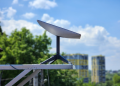
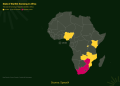
The report prices the drone, not the link that flies it. On its public site, SpaceX sells Starlink as internet access: residential, roam, business and maritime plans, with country-by-country pricing and an availability map showing where service can be ordered — a map that lists Ukraine among served countries. Work for defence and intelligence customers is marketed separately, under the Starshield brand that SpaceX describes as built for national security users.
Nothing in the Yahoo-published report bridges those two things. It does not say which plan the 422nd’s terminals run on, what the subscription costs per drone, who procured the hardware, or whether the terminals are consumer units bought at retail price. Readers looking for Starlink pricing or availability answers will not find them in this story, and should treat the $5,000 figure as the reported cost of a Hornet that ships with a terminal rather than as the cost of the satellite service itself.
What we could not confirm
This account rests on one piece of original reporting. The Yahoo item is a syndicated version of the Kyiv Independent’s story, so the two are one source rather than two, and the operational claims — strike ranges, daily hit rates, the effect on Russian supply runs — come from the unit’s own officers speaking to that outlet. Starlink-news located no second newsroom with independent reporting on the 422nd’s use of Starlink terminals aboard Hornet drones at the time of writing.
Nor is there a company voice in the story. SpaceX is not quoted, and Starlink-news found no public SpaceX statement addressing consumer Starlink terminals flown on one-way attack drones in Ukraine. This article will be updated if SpaceX comments or if a second outlet verifies the account independently.
Background on Starlink in the war
Satellite terminals have become a recurring subject in Ukrainian security reporting, and Ukrainian authorities have been pursuing a case in Lviv over Starlink terminals. On the other side of the front, Russia’s own low-orbit constellation, Rassvet, has run into difficulties — one reason a commercially available Western network keeps turning up in accounts of hardware on both sides of the line.
Frequently Asked Questions
What other drones does the 422nd Regiment fly besides the Hornet and the Zozulia?
The report published by Yahoo says the regiment operates three classes of middle-strike drones, including two Ukrainian X-wing loitering munitions, the Ram-2X and the Bulava. Each is paired with a fixed-wing reconnaissance drone — the Shark and the Leleka respectively — that acts as a spotter and radio repeater. Part of the regiment also supports front-line brigades with tactical FPV and heavy bomber teams.
Who commands the 422nd Unmanned Systems Regiment?
According to the report, the 422nd is unusual among elite Ukrainian drone units of its size because it sits in the Ground Forces rather than under Ukraine’s Unmanned Systems Forces. It fights directly under the command of the 17th Army Corps, which holds a sector of the southern front line. Its commander is Mykola Kolesnyk, call-sign Tyson.
How far behind the front line does the unit say it can strike?
Tyson told the Kyiv Independent the regiment has practical fire control up to 50 kilometres behind the front line, in the report published by Yahoo. He said any serious movement in that zone has practically been stopped and that supplying the front line has become much harder. The report notes Russian lines have not collapsed.
Why do the crews prefer working at a distance?
A 31-year-old crew member with the call-sign Honey Badger, who previously flew smaller drones much closer to the front line, told the Kyiv Independent that logistics and the work itself are much better at a distance. He said the newer drones carry larger bombs and do not lose signal. He added that the unit has to be creative because it lacks resources.
Does the report say what the Starlink service on these drones costs, or which plan it uses?
No. The report gives a price point of around $5,000 for a Hornet equipped with a Starlink terminal, but it does not break out what the satellite internet subscription costs, which plan the terminals run on, or who pays for the service. SpaceX publishes consumer Starlink pricing and an availability map on its own site, and markets national-security work separately under the Starshield brand, but neither the pricing pages nor the report connect those products to the 422nd’s drones.
Has SpaceX commented on Starlink terminals being flown on strike drones?
Not in this report. SpaceX is not quoted in the Yahoo-published article, and Starlink-news found no public SpaceX statement addressing the use of consumer Starlink terminals aboard one-way attack drones in Ukraine at the time of writing. Starlink’s publicly advertised service is sold as internet access rather than as a drone control link, and this story will be updated if the company comments.
Follow Starlink News on Google. Make us a preferred source to see more of our reporting in Google search results.