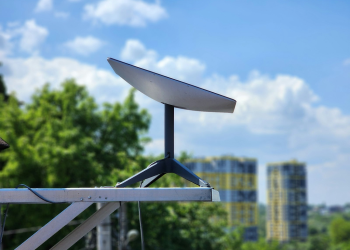
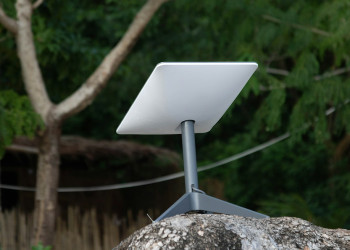
Canadian Prime Minister Mark Carney said his government will move away from Starlink, SpaceX’s low Earth orbit satellite internet service, in an interview with The New York Times published on Wednesday, 23 September 2026. The plan rests on Telesat Lightspeed, a Canadian low Earth orbit network that, according to iPhone in Canada, is contracted to reach orbit on SpaceX rockets and is part-owned by a US investment firm.
“Starlink, we will diversify away from, no question,” Carney told the paper, as quoted by iPhone in Canada, which framed the remark as part of a wider push to cut Canada’s economic and strategic dependence on the United States.
Key facts
- SpaceX is contracted to carry out the 14 Falcon 9 launches required to deploy the Lightspeed constellation, iPhone in Canada reports.
- US investor MHR Fund Management owns 35.5% of Telesat, according to the same outlet.
- The two reports give different federal commitments: iPhone in Canada says Ottawa has committed $1.44 billion in loans and equity, while Drive Tesla reports a $2.14-billion loan.
- A $2.3 billion defence contract signed in August added 69 more satellites, bringing the planned network to 225, per iPhone in Canada.
- Starlink currently has more than 500,000 Canadian users, iPhone in Canada reports.
Why it matters
Drive Tesla reports that Carney acknowledged other satellite networks do not yet match Starlink’s capabilities and resilience, and that the move is part of a broader effort to give Canada more control over the technology it depends on, particularly for national security.
The outlet also stresses what the announcement is not: Canadians are not being asked to give up the service. Anyone can still sign up for Starlink directly, Drive Tesla says, and the comments are aimed at decisions governments make when they buy satellite service for their own operations or spend public money connecting remote communities.
The alternative still rides on SpaceX rockets
The awkward part of the plan, as iPhone in Canada sets it out, is that the network meant to replace Starlink depends on Starlink’s owner to get off the ground. The 14 contracted Falcon 9 flights are the same workhorse rocket SpaceX uses for Falcon 9’s Starlink launch cadence, and the US fund holding 35.5% of Telesat ties the Canadian champion to American capital as well as American launch capacity.
iPhone in Canada reports that the first Lightspeed launches are not expected until 2026, with global service targeted for early 2028, and that it remains unclear what service would replace Starlink for Canadian customers in the meantime. Drive Tesla puts it less precisely, saying Lightspeed is expected to begin serving remote communities in the coming years while Ottawa explores other options with international partners.
Provinces have gone both ways
Provincial governments have not moved in step. Drive Tesla reports that Quebec signed an agreement with SpaceX to bring Starlink to hard-to-reach households, while Ontario cancelled a planned Starlink partnership before it launched amid a tariff dispute earlier this year. Other provinces subsidise satellite equipment rather than pick a supplier outright.
iPhone in Canada adds a further wrinkle at the provincial level, noting that the Ontario Teachers’ Pension Plan’s roughly $300 million SpaceX investment from 2019 was worth US$8.7 billion at 30 June. We covered Carney’s comments and the Ontario Teachers’ Pension Plan’s SpaceX windfall separately.
What to watch next
Drive Tesla says what happens next depends on whether Canada can turn its plans into a reliable alternative, and that until those networks are ready, governments will still have to decide where Starlink remains the most practical way to keep people and essential services connected.
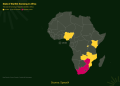
Neither report says anything about Starlink’s pricing or availability outside Canada, and neither mentions African markets. For readers in Zimbabwe and elsewhere on the continent watching for a second LEO option, the nearest comparable development we have reported is that Amazon Leo has set a 2027 South Africa launch; nothing in the Canadian sources extends to that market.
The immediate test will be whether the funding figure is clarified — the two reports disagree on both the amount and whether it is a loan or a mix of loans and equity — and whether Lightspeed’s first launches slip further. Until Telesat’s satellites are flying, according to both outlets, Ottawa’s stated exit from Starlink remains a policy direction rather than a switch anyone can flip.
Frequently Asked Questions
Which international partners is Canada considering for satellite capacity?
Carney suggested Canada could work with European and potentially South Korean partners to build enough scale to cut its dependence on SpaceX, according to both iPhone in Canada and Drive Tesla. Drive Tesla reports the partnership idea is aimed particularly at defence communications.
What happened to Ontario’s Starlink program?
Drive Tesla reports Ontario had planned a $100 million Starlink program for up to 15,000 underserved homes and businesses but cancelled it before launch during a tariff dispute involving Premier Doug Ford, US President Donald Trump and SpaceX CEO Elon Musk. iPhone in Canada reports the province later reached a confidential settlement with a “kill fee” it said was significantly less than the contract value.
Will rural Canadian internet providers get access to Telesat Lightspeed?
Yes, according to Drive Tesla, which reports the federal government has secured capacity on Lightspeed for internet providers serving rural and remote areas. In Nunavut, Northwestel plans to use that capacity to connect communities across the territory.
Do Canadian provinces still help pay for Starlink equipment?
Drive Tesla reports Quebec signed an agreement with SpaceX covering equipment costs and part of the monthly bill for eligible hard-to-reach households. It adds that Alberta offers eligible rural households a rebate toward satellite equipment, and Nova Scotia has offered up to $1,000 toward setup costs through qualified satellite providers.
Follow Starlink News on Google. Make us a preferred source to see more of our reporting in Google search results.