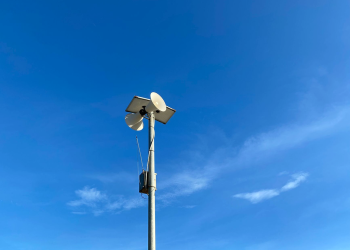
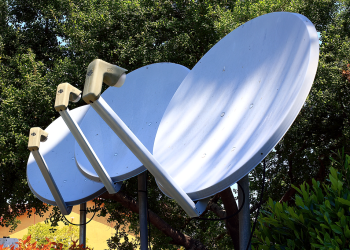
US federal contracting records show the Pentagon committed almost $1.2 million to SpaceX for Starlink work supporting the White House Communications Agency between March 2025 and June 2026 — even though White House officials had described the satellite internet service at the complex as a donation. The contracts were brought into focus by a Washington Post investigation published on 6 November 2026, and reported on by Coingape, Hoodline and The Pricer.
Key facts
- The Pricer puts the total at $1,188,554.15 across four awards to Space Exploration Technologies Corp., the formal name of Elon Musk’s SpaceX.
- The awards were issued through the Department of Defense for the White House Communications Agency (WHCA), the military unit that sets up secure communications for the president, vice president and other senior officials.
- Three of the awards, totalling about $503,000 according to The Pricer and about $502,000 according to Coingape, had already been flagged by the Democracy Defenders Fund, an anti-corruption group. The Washington Post identified a fourth worth roughly $686,000.
- Per The Pricer, the largest award is $685,581.75 and carries a 30 June 2027 completion date.
- All four were issued under SpaceX’s federal supply schedule arrangement.
Why it matters
The dispute is not about the size of the sum but about what was given away and what was bought. If a company supplies a service free and the same government then pays it under contract, the line between a gift and a procurement becomes hard to audit — and, as Hoodline notes, House Oversight Democrats have already raised ethics questions about whether the arrangement hands Musk financial benefit or special access.
There is also a lock-in question. Jessica Tillipman, associate dean for government procurement law studies at George Washington University Law School, told reporters in comments carried by Coingape that agencies can struggle to switch suppliers once a company’s technology is embedded, asking whether accepting free services leaves only “one responsible source” because unwinding it becomes too painful. That echoes pressure in Europe to reduce dependence on Starlink.
What the four contracts say
According to The Pricer, which cites federal award records reproduced by the GovTribe SpaceX contract database, the March 2025 award (FA254125FB010) identifies Starlink Mobile Priority service for WHCA — not the fixed-location consumer plan households buy. Two 2026 awards (FA254126FB049 and FA254126FB055) identify Starlink Local Priority service, each valued at $130,579.40 with an approximately one-year performance period.
The June 2026 award (FA254126FB078) is described more broadly as a WHCA Starlink order placed through the General Services Administration purchasing framework. The Pricer calculates that it accounts for about 57.7% of the four-award total, and that the three 2026 awards together make up about 79.7% — meaning most of the identified commitment came after the original 2025 installation was announced.
The outlet also divides each $130,579.40 award across 12 months to give roughly $10,881.62 a month, while cautioning that this is an arithmetic equivalent and not a published subscription or per-terminal charge. It bears no relation to Starlink’s advertised residential plans.
What is still unknown
The Pricer is explicit that the award descriptions do not provide a public bill of materials — no terminal counts, bandwidth allocations, installation labour, software or support staff. The actual cost of installing the original equipment has never been publicly itemised. Whether the paid contracts covered the donated service, extra connectivity, separate equipment or different operational requirements is unresolved.
The Washington Post reported that the White House and the Defense Department declined to clarify the relationship between the donation and the payments, and that Starlink did not respond to its request for comment.
Background: the 2025 installation
Starlink first drew attention at the White House in early 2025, when Musk was serving as an adviser to President Donald Trump. The Guardian reported in March 2025, as summarised by The Pricer, that officials characterised the service as a donation reviewed by the White House Counsel’s Office, intended to improve internet availability across a complex where some areas had weak cellular signal and overloaded Wi-Fi. Hoodline says officials gave the New York Times a similar account.
Coingape, citing earlier Washington Post reporting, says White House staff responsible for communications infrastructure were not told in advance that DOGE would enter the Eisenhower Executive Office Building in February 2025 to set up a Starlink terminal, and that a Wi-Fi network named “Starlink Guest” appeared on nearby phones before being removed. House Oversight Committee members formally requested the terms of the reported donation in April 2025; Hoodline reports that Rep. Shontel Brown asked how the GSA would ensure the use was secure and did not breach federal ethics rules, per FedScoop and a release from the committee’s Democrats.
The wider federal relationship
Hoodline cites a separate Washington Post analysis finding that Musk and his businesses have been promised at least $38 billion in government contracts, loans, subsidies and tax credits over more than two decades, with nearly two-thirds of that committed in the past five years and at least $6.3 billion in 2024 alone. The same analysis identified 52 ongoing contracts across seven agencies that could pay a further $11.8 billion, mostly SpaceX work for NASA and the Defense Department.
Bloomberg Law, also cited by Hoodline, reports the Pentagon accounted for nearly 43% of SpaceX’s contracting dollars from fiscal 2023 through 2025, and that federal sales of Starlink and the Starshield military satellite line rose sharply in fiscal 2026. Virginia Canter, chief counsel and director of anti-corruption and ethics at the Democracy Defenders Fund, told Coingape: “We worry about pay-to-play access and these kinds of transactional arrangements.”
Frequently Asked Questions
Where was the Starlink equipment for the White House actually placed?
March 2025 reporting summarised by the Benton Institute for Broadband & Society, and cited by The Pricer, described Starlink terminals sitting at a government data centre miles from the White House complex, with the connectivity carried to the complex over existing fibre cables. The Pricer also notes reports of an earlier visit to the roof of the Eisenhower Executive Office Building to explore equipment placement. WIRED, in an examination cited by the same outlet, questioned whether adding a satellite link to a site already served by established terrestrial infrastructure offered a practical benefit.
Has SpaceX offered free Starlink service to other US federal agencies?
Yes. According to The Hill, cited by Hoodline, SpaceX confirmed it was leasing Starlink kits and service to the Federal Aviation Administration at no cost while working with the agency and contractor L3Harris to test the technology as part of broader infrastructure upgrades. SpaceX told The Hill there was no effort or intent for Starlink to take over any existing contract there.
Does the $1.19 million figure mean that money has already been paid to SpaceX?
No. The Pricer stresses that these are contract obligations — money committed to a contractual arrangement — and not proof of completed cash payments. It says actual invoices, disbursements, completed services and later modifications would all require separate examination, and that the total should not be described as the confirmed price of installing a Starlink dish at the White House.
Were the two identical $130,579.40 awards a duplicate charge?
The records reviewed do not show that. The Pricer reports that the two Local Priority awards carry similar public descriptions but that the available documents do not establish whether they covered the same users, separate locations, additional capacity or different operational requirements.