Starlink, the satellite internet service SpaceX began launching in 2019, now operates the largest constellation in orbit. An explainer published on November 7 by the technology site shiftdelete.net puts it at more than 11,000 satellites, most of them second-generation V2 models, and says SpaceX disclosed 13.6 million consumer subscribers as of September 30, 2026, plus hundreds of thousands of business customers, in its third-quarter earnings release.
Key facts
- Starlink satellites orbit at roughly 550 km, against 35,786 km for traditional geostationary satellites, shiftdelete.net reports.
- Starlink’s own technology page, cited in that explainer, puts latency at about 25 milliseconds, against 600 ms or more for geostationary services.
- Each satellite carries three laser links to its neighbours, forming a mesh network in space, shiftdelete.net says.
- The headline count moves with the calendar and with the source: BreakingNews.ie described the constellation as more than 10,000 satellites in March 2026, around a thousand fewer than the November figure.
What happens when you load a page
shiftdelete.net describes a Starlink connection as four parts — dish, satellite, ground gateway, server — with data moving through them in both directions. Open a video and the request goes up to a satellite, down to a gateway, out to the video server, and the response returns along the same kind of path, all in a fraction of a second, the outlet says.
The altitude is the argument both outlets make. BreakingNews.ie reports that SpaceX itself says the high round-trip time of geostationary satellites makes streaming, gaming and video calls nearly impossible; shiftdelete.net says the shorter trip to a low-orbit satellite is what turned satellite internet from a last resort into a link that can carry video calls and online gaming.
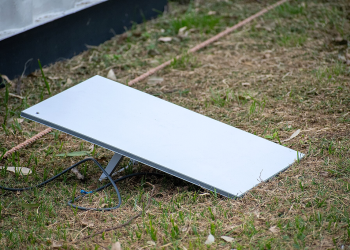
The low orbit costs coverage. Because the satellites cross the sky quickly, thousands are needed to keep a single dish connected at all times, according to the explainer, which adds that SpaceX is lowering many satellites further still to shorten the trip. Yahoo News describes the user end: a Wi-Fi-enabled satellite terminal that must constantly hand off from one satellite to the next as they pass overhead, much like a mobile phone moving between base stations.
The lasers
The three laser links on each satellite let data hop from satellite to satellite before coming down, which shiftdelete.net says matters over oceans, polar regions and conflict zones where there is no nearby gateway. The outlet notes this gives Starlink a route that does not depend on undersea cables, although most of the world’s traffic still runs through them.
What speeds users actually see
Speeds depend on the plan, the location and how many people share the same satellite beams, shiftdelete.net says. It reports residential download speeds often around 100 Mbps or more, with Starlink and independent testers generally putting latency in the 25 to 60 ms range — the top of that measured range is roughly double the 25 ms figure on Starlink’s own technology page. Capacity should grow with the V3 satellites now joining the network.
Starlink price and availability
Neither explainer publishes a price list. shiftdelete.net sets out the tiering instead: separate plans for homes, RVs, boats, aircraft and business or remote work sites, and it says what a customer pays turns on which of those plans they take and where they are. The Starlink price for a household therefore cannot be read off the technical specifications.
Starlink availability is a licensing question rather than an orbital one — that framing is this article’s reading of the two reports, not a line either carries. The satellites pass over almost everywhere, but Yahoo News notes Starlink holds no licence in Iran, where thousands of terminals have been smuggled in since 2022, after then-President Joe Biden authorised US tech firms to bypass sanctions and sell Iranians communication tools. Where a national regulator has not granted a licence, the hardware works and the service is still formally unavailable.
Musk claims, unverified: 100 times the bandwidth
Elon Musk said in November that V3 satellites launched on Starship should give Starlink about 100 times more bandwidth within two to three years, shiftdelete.net reports. That is a forward-looking projection from a named executive rather than a measured figure, it depends on Starship’s launch cadence, and neither outlet tests it.
Where it is being used
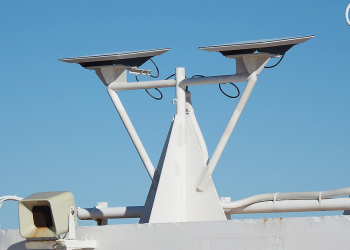
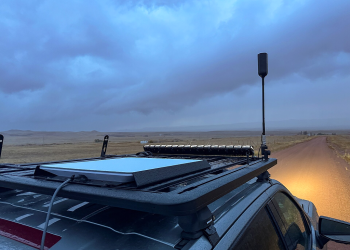
Beyond homes, shiftdelete.net lists RVs, boats, airlines and remote sites. Aviation is the use case the reporting documents in most detail: BreakingNews.ie reported in March that Aer Lingus, the Irish flag carrier, had begun installing Starlink across its long-haul fleet, calling the technology a “gamechanger”. Its first fitted aircraft, an Airbus A330 registered EI-EIN, carried passengers from Dublin to New York JFK after what the airline described as extensive testing, and the carrier said the full long-haul fleet should be covered by the first quarter of 2027, starting with North American routes. Even so, airlines remain split on satellite Wi-Fi.
Limits of the design
The hand-off that keeps a dish connected carries a security cost, the Yahoo News report says: because a Starlink terminal is built to accept signals from a wider angle, it is more vulnerable to jamming. Iran has tried to jam Starlink signals and seize terminals, according to Amir Rashidi of the nonprofit Miaan Group, while Iranians turned to smuggled terminals and proxy tools when the government cut off most internet access during antigovernment protests, the report says, citing Al Jazeera. Mahmood Amiry-Moghaddam, director of Iran Human Rights, told Al Jazeera that access was pivotal: “It has been extremely important because the alternative would have been no information.”
Independence from local infrastructure also leaves control with SpaceX rather than the user. Yahoo News notes Musk reportedly ordered a shutdown over several Ukrainian regions in September 2022, and that the company said in October it had disabled thousands of terminals used by scam centres in Myanmar.
Frequently Asked Questions
Can I use Starlink on an ordinary phone without a dish?
Only in a limited way, according to shiftdelete.net. Starlink’s direct-to-cell satellites act like cell towers in space, letting standard LTE handsets send texts and use some data where mobile carriers have partnered with SpaceX, but full-speed broadband still requires the dish. The outlet says SpaceX is also working on faster phone service, including a dedicated chip.
Does bad weather interrupt Starlink?
It can. shiftdelete.net says heavy rain or snow can cause short drops in the connection, because the signal has to pass through the weather between the dish and the satellite.
Is Starlink worth it if I already have fibre or fast 5G?
shiftdelete.net says Starlink makes the most sense where fibre, cable or fast 5G home internet is not available, such as rural areas, boats and remote work sites. In cities with good wired options, the outlet says, it is usually more expensive and not faster.
Has Starlink given away free service before?
Yes. SpaceX said it was offering free broadband to Venezuela through February 3, and the company has also given a month of free service to users hit by natural disasters including Hurricane Melissa and the 2025 Canadian wildfires, according to the Yahoo News report. A person familiar with Starlink services told Bloomberg the company was also offering free service in Iran, though neither Starlink nor Musk confirmed it publicly.