Cuban police and local officials are preparing a “block-by-block survey of who has Starlink,” according to a warning relayed at a Committees for the Defense of the Revolution meeting and reported on 17 November 2026 by Havana Times, which drew on reporting by the independent Cuban outlet 14ymedio. Owners of the satellite dishes in Havana and other parts of the island fear intensified searches, identification of users and new sanctions, and some have already taken their equipment down.
Key facts
- A 21-year-old resident of Los Sitios, one of Havana’s most densely populated neighbourhoods, told 14ymedio that a relative involved with the Committees for the Defense of the Revolution passed on the survey warning after a meeting with municipal or provincial officials.
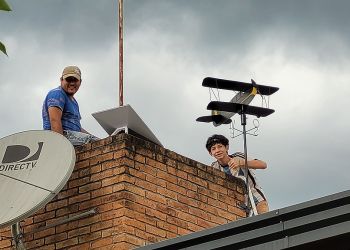
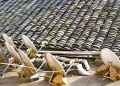
- Starlink antennas now share Los Sitios rooftops with pigeon lofts, water tanks and solar panels, some in plain sight and others behind makeshift coverings.
- On 9 November, a communication from Cuba’s Ministry of Foreign Affairs, obtained by 14ymedio, reminded accredited embassies and international organisations that the importation and use of Starlink devices are prohibited for them as well.
- One owner interviewed by 14ymedio was summoned to a police station, then removed her terminal and cancelled the subscription.
Why it matters
Satellite internet is spreading in Cuba as an alternative to the deficiencies of Etecsa, the state telecommunications monopoly, Havana Times reports, and independence from Etecsa’s access infrastructure is one of Starlink’s main attractions for users on the island. SpaceX does not sell the service there: Cuba appears on Starlink’s own availability map as a market without service, and Havana Times reports that the terminals in use on the island have reached it outside official channels. For readers tracking where the service is permitted, Cuba stands at the opposite end of the spectrum from markets such as India, where regulators are finalising satcom spectrum rules, while SpaceX has said the network has reached 13.6 million subscriptions worldwide.
What a Havana dish costs
Price keeps the terminals scarce and, once installed, conspicuous. A 66-year-old Havana buyer said her son, who had emigrated to Miami, sent her $1,500 in May to cover a kit from informal sellers, delivered and installed at her home. Starlink’s US store lists a standard kit at $349, with residential plans advertised from about $80 a month — so the Havana transaction carried a premium of roughly $1,150 over the company’s hardware list price, before any subscription. That gap reflects Cuba’s absence from the coverage map: across most of the Caribbean and Latin America the map shows the service available, where customers buy from SpaceX at its listed hardware and monthly plan prices instead of from a courier. The billing relationship also sits abroad: she told 14ymedio her son pays the subscription from the United States, and the box indicated the terminal had come from Mexico.
Rooftops under watch
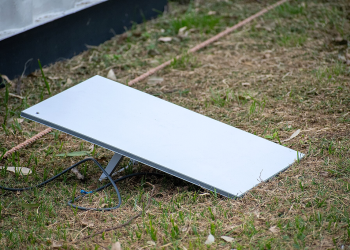
The young man in Los Sitios said he once saw only water tanks and bird cages from his pigeon loft, and now sees solar panels and Starlink antennas too. After hearing the warning he hurried to alert several acquaintances: some have already removed their equipment, while others plan to do so “until the storm passes.” Concealment is complicated by the distinctive shape of the terminals and by how the system works.
A campaign that predates the survey
The Cuban government’s battle against Starlink is not new. Authorities have announced restrictions and confiscations involving the equipment since April 2025, and that month Customs reported confiscating 20 satellite internet kits along with other telecommunications devices. The 9 November foreign ministry communication refers back to a diplomatic note from January 2025, which 14ymedio says confirms the latest warning is part of an earlier restrictive policy.
The sovereignty argument
The case the state is making publicly was set out on 14 November 2026 by the government-aligned Cienfuegos newspaper 5 de Septiembre, in an article by Pablo Morales Concepción, territorial director of the Ministry of Communications Regulatory Control Office in the province. He listed the transmission of information without state supervision, the creation of parallel communications networks and the circulation of unregulated content, and argued that the devices’ encryption systems and their reliance on foreign infrastructure leave traffic that Cuban authorities cannot audit. As Havana Times notes, the stated concern goes beyond radio interference or missing permits: the article identifies communications beyond state supervision as a national security risk in itself.
Independent assessments of Cuban connectivity describe those same controls differently. Freedom House’s Freedom on the Net project rates Cuba’s internet “not free,” citing the state’s monopoly over access, the blocking of independent news sites and prosecutions over online speech — a framing in which restrictions on unsupervised connections are treated as limits on expression rather than as a security measure. 14ymedio, whose reporting underpins the survey warning, is itself among the outlets Cuban users have long needed workarounds to read.
One owner’s summons
The Havana woman who received the $1,500, and whose name 14ymedio changed to protect her identity, said she bought the terminal so she could speak to her son and because she cares for his father, who has ALS. She installed it on a balcony that could not be seen from the street, and for the first weeks it worked without difficulty, including video calls and websites she had previously been unable to open.
Then a police officer arrived with a summons. At the station, she was told her name appeared in a WhatsApp chat belonging to informal sellers under investigation for marketing Starlink equipment, an activity officers linked to “National Security.” She said she had contacted the merchants about an electric coffee maker she never bought, had not mentioned Starlink in writing, and left without a penalty. Others at the station that day received fines, she said, and she heard that several patrol cars had gone out to search a house belonging to people who sold the kits. Officers talked about Starlink “as if someone were preparing a bomb in their house,” she told 14ymedio, and she got rid of her equipment on returning home.
How antennas could be traced
Havana Times lists the technological options available to authorities hunting terminals — radio-frequency spectrum analysers and radio direction-finding equipment, which can detect emissions and estimate where they originate; drones to observe rooftops and terraces; and the examination of aerial images for the antennas’ distinctive outline — while presenting them as capabilities rather than confirmed deployments.
Neither outlet reports an official announcement of when or how the survey will be carried out; the warning reached residents secondhand, through a relative who attended the Committees for the Defense of the Revolution meeting.
Frequently Asked Questions
What do Cuba’s current rules say about importing satellite internet equipment?
The Official Gazette published two resolutions from Cuba’s Ministry of Communications in May 2026 that updated the procedures for technical authorization, equipment certification and imports, according to Havana Times. The report says those regulations establish controls over data-transmission and satellite communications devices, though their application depends on the characteristics of each device and the corresponding authorizations.
How do informal sellers deliver and install Starlink kits in Cuba?
One Havana buyer described contacting informal sellers on Facebook who offered home delivery: a young couple arrived on an electric motorcycle, checked that the equipment worked and set up the connection before leaving, per the account published by 14ymedio and summarised by Havana Times. Those sellers’ chat groups are themselves a target for police, who told the same buyer her name had appeared in a vendor WhatsApp group under investigation.
Does covering a Starlink antenna actually hide it?
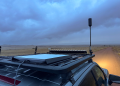
An old plastic tank, a curtain or a mesh covering can be used to conceal a satellite terminal, because some nonmetallic materials allow radio waves to pass through, Havana Times reports. The outlet adds that such coverings can weaken the signal, especially when they become wet, and quotes a Havana resident who says that even when people cover the antennas, it is easy to tell what they are.