Lenders backing SpaceX’s latest $43 billion debt financing pushed for safeguards that would stop Elon Musk from launching the advanced Nvidia artificial-intelligence chips securing the deal into space, the Financial Times reported. The report was relayed on 20 November by Yahoo Finance, carrying Investing.com, and by BigGo Finance, both citing the FT and people familiar with the matter.
SpaceX, Musk’s rocket company and the operator of the Starlink satellite internet network, said the chips in the debt deal would be used in data centres on Earth, according to both reports. Neither outlet could say whether the proposed restriction ended up in the final loan documents.
What it means for Starlink customers
Nothing in the sources points to any change in Starlink service, hardware or pricing: the covenant fight is about where a pile of chips may legally be parked, not about the broadband network. But the two sit on the same launch manifest and the same balance sheet, and that is the connection satellite internet subscribers should watch.
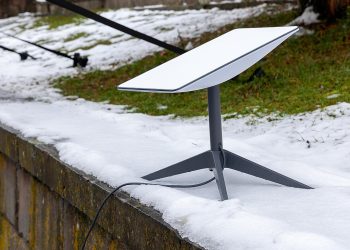
Orbital data centres, as BigGo Finance describes the ambition, would mean loading large numbers of advanced chips onto satellites — payloads competing for the same Starship capacity SpaceX uses to deploy its broadband constellation. SpaceX has already shown Starlink V3 satellites deploying from Starship in orbit, the vehicle on which faster speeds and wider availability now depend. The sources do not say what launch arrangements any orbital computing hardware would use, or whether it would compete with Starlink launches for flights.
The financing side matters to subscribers for a second reason: Starlink revenue is what the group’s credit story is built on, as set out in our report on Starlink’s profits and Starship’s research costs. A $43 billion chip programme is a claim on the same cash flows that fund constellation replacement and ground infrastructure.
Key facts
- Lenders sought restrictive covenants barring the collateral chips from being deployed to orbit, the FT reported.
- Their core concern, per BigGo Finance, was disposal: chips sitting in orbital data centres would be hard to recover and monetise if SpaceX defaulted.
- SpaceX sold more than $30 billion of debt to large institutional investors on Thursday, BigGo Finance reported.
- The largest portion is a $25 billion investment-grade bond serviced by the chip lease payments SpaceX will make to Nvidia over the next five years.
- The debt was priced at about 8.3% and rated A3 by Moody’s and A-minus by KBRA, Bloomberg reported, as cited by Investing.com.
What Project Saturn is
The financing is named Project Saturn, and its defining feature is who is not borrowing. The bonds were issued by a special purpose vehicle — a separate legal entity — rather than by SpaceX itself, BigGo Finance said, which keeps the debt off SpaceX’s balance sheet and protects its investment-grade credit rating. Repayment runs through the lease payments SpaceX makes to Nvidia for the chips, so bondholders are buying a rental stream rather than a claim on the rocket company’s general finances. BigGo Finance describes the structure as highly unusual.
The dispute over collateral in orbit
Nvidia, the US designer of the graphics processors used to train AI models, is the supplier of the semiconductors pledged against the debt. The lenders’ objection, as reported by the FT and summarised by both outlets, is practical: hardware in an orbital data centre is not hardware a creditor can repossess and sell. Musk has previously floated using the vacuum of space to cool data centres and so supply computing power for AI models, BigGo Finance notes — the scenario the covenant would foreclose.
Why it matters
For bondholders, the covenant is a recovery question. Because the deal is designed around off-balance-sheet treatment and chip lease cash flows to preserve the investment-grade rating, BigGo Finance reports, whether the collateral can be effectively controlled directly affects what investors expect to get back. The same outlet frames space-based computing as an emerging asset class with little financing precedent, which is why a clause about orbit became a sticking point at all.
For Nvidia, a chip-lease-based financing arrangement opens a new financialised use for its products, BigGo Finance adds — chips as a leasable, rateable income stream rather than a one-off sale. Bloomberg, via the Straits Times, reported that technology companies and AI model developers are investing and borrowing hundreds of billions of dollars to build and lease data centres full of chips, and that the worldwide expansion of computing capacity has pushed up the cost of land, chips and power-generation equipment, setting off a series of massive financing deals. Project Saturn is one of them.
And for the orbital ambition itself: if the restrictive covenant ultimately takes effect, BigGo Finance reports, the pace at which Musk sends chips into orbit could be constrained on legal grounds, with the commercialisation path for space-based data centres adjusting accordingly.
How the package grew
The earlier version of the plan was smaller. In early October, the Financial Times reported that SpaceX was in talks with banks and investors to raise about $40 billion of debt to buy Nvidia chips, split between roughly $10 billion in bank loans and $30 billion in investment-grade debt, according to the Straits Times carrying Bloomberg. Those discussions were described at the time as early-stage and capable of ending without a deal.
This week’s reports instead describe a $43 billion package, with more than $30 billion sold to large institutional investors on Thursday, per BigGo Finance. The sources do not explain how the total moved, but they do describe the demand side that early-stage talks were testing: a market in which, on Bloomberg’s account, hundreds of billions of dollars are being raised for chips and data centres. The investment-grade ratings from Moody’s and KBRA that Investing.com reported also widen the pool of institutions permitted to buy. SPCX, the listed vehicle through which investors in these reports track SpaceX exposure, closed at $169.79 after the October report, Bloomberg said via the Straits Times; our report on how Citi doubled its SpaceX price target covers how analysts have since revalued it.
What is still unknown
Three things remain open on the sources’ own account: whether the orbital restriction is in the signed documents; what SpaceX will do if it is; and where the chips physically end up, beyond the company’s statement that they are for data centres on Earth. Investing.com and BigGo Finance both flag the first point explicitly. No loan agreement or regulatory filing has been published, so every figure here rests on the FT’s reporting and the outlets carrying it, and none of it has been confirmed by SpaceX, Nvidia or the lenders on the record.
Frequently Asked Questions
Who is arranging the SpaceX chip financing, and when was it meant to close?
When the plan first surfaced, the Financial Times reported that Apollo Global Management was leading the financing and that the deal was expected to close in 2027, according to the account published by the Straits Times via Bloomberg. Pacific Investment Management was named as one of the investment managers looking at the deal. Nvidia, SpaceX and Apollo did not immediately respond to requests for comment on that report.
How did SpaceX’s listed stock react when the chip-buying plan was first reported?
SPCX erased gains in post-market trading after the Financial Times report in early October, falling 1.2% to $169.79, Bloomberg reported via the Straits Times. Nvidia’s stock rose fractionally on the same report.
How many Nvidia chips does Musk’s AI business already operate on the ground?
In September, Musk said on X that Colossus 2, the AI computing cluster built by his xAI business in the Memphis area, had 110,000 Nvidia GB200 chips and 440,000 GB300s, Bloomberg reported via the Straits Times. He said a further 220,000 GB300s were due to be operational the following week, another 220,000 in November, and an additional 220,000 possibly in late December “if we get lucky”.
Is there any precedent for lending against computers in space?
BigGo Finance reports that space-based computing is seen as an emerging asset class with little precedent for financing. It says the dispute over the debt covenants underscores the legal and structural challenges investors face in the field.