Amazon has spelled out how it intends to sell Amazon Leo, its low Earth orbit satellite broadband network, saying on 11 October 2026 that it plans to bundle the service with Amazon Prime subscriptions and its wider consumer ecosystem, according to Satnews. That came after a 2 July 2026 launch that Fox News reported took Amazon’s deployed fleet to 396 satellites, enough for what the company called an initial service rollout later in the year. What Amazon has still not published is the number that decides whether Leo undercuts Starlink in 2027: a price.
Key facts
- Amazon Leo is the new name for Project Kuiper, Amazon’s low-Earth-orbit broadband network, according to Fox News. The name comes from low Earth orbit.
- Under its initial FCC licence Amazon had to deploy 1,618 satellites — half of its Gen1 network — by 30 July 2026, and is seeking regulatory relief after earlier extension filings citing launch vehicle constraints, Satnews reported.
- Coverage and pricing are still to come, Fox News reported.
- The US Federal Communications Commission approved Amazon’s $11.5 billion purchase of Globalstar, a satellite operator whose network already supports Apple’s satellite features, according to Yahoo Finance.
Timeline: confirmed now, promised later
- 2019 — Amazon begins developing the network as Project Kuiper, shiftdelete.net reported.
- September 2025 — JetBlue becomes Amazon’s first airline customer, shiftdelete.net reported.
- 2 July 2026 — 29 satellites take the deployed fleet to 396 on Amazon’s 14th Leo launch, the last of its Atlas V campaign with United Launch Alliance, Fox News reported.
- 2027 — JetBlue’s free Fly-Fi service switches to Amazon’s satellite technology, and the Globalstar purchase is expected to close, per Fox News and Yahoo Finance.
- 2028 — Delta begins a rollout across hundreds of aircraft, starting with 500 planes, and Amazon’s next-generation direct-to-device system starts deploying, Fox News reported.
What Starlink charges today
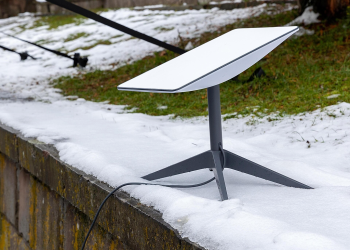
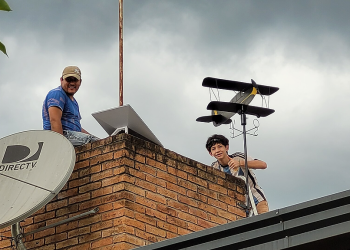
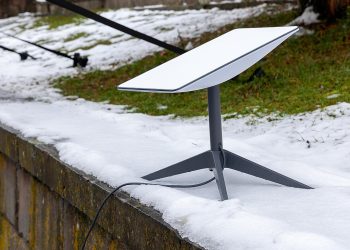
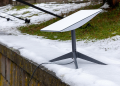
Amazon is inviting comparison with a service that already publishes its numbers. Starlink’s US order page lists residential service in two tiers — Residential Lite at $80 a month and standard Residential at $120 — with the standard kit at $349, and SpaceX has repeatedly discounted hardware in markets where it is chasing subscribers. Starlink’s published specifications advertise typical download speeds of roughly 25–100 Mbps on the Lite tier and 100–200 Mbps on Residential. Prices and tiers vary by country.
Availability is the other half of the comparison. Starlink’s availability map shows service in more than 150 countries, territories and markets; Amazon has published no country list at all. One place that order may invert is South Africa, where Starlink is still waiting for a licence and Telkom plans to resell Amazon Leo. None of the four source reports names an African launch date, price or licence for Leo either.
Why it matters
On what has actually been published, Starlink remains the realistic choice for anyone who needs satellite internet now — not because Amazon’s hardware looks weak, but because a buyer can see Starlink’s kit price, monthly tiers, advertised speeds and coverage map today, and can see none of those for Leo. Fox News said the clearest near-term benefit for ordinary customers is competition, with Starlink, cable companies and 5G home internet providers potentially having to work harder if Amazon becomes a serious broadband rival.
Where the constellation stands
Future ULA flights move to the heavier Vulcan rocket, which can carry larger Leo payloads, Fox News reported. Melissa Wuerl, Amazon Leo’s director of launch systems, said the company has hundreds of flight-ready satellites waiting at Cape Canaveral. Satnews reported that the satellites are software-defined and built at a high-volume production facility in Kirkland, Washington.
Planes before rooftops
Aviation is where the service appears first. Fox News reported that Amazon has introduced a commercial aviation antenna it says can deliver up to 1 Gbps down and 400 Mbps up, with a single antenna serving a full aircraft for entertainment, work and crew operations. SpaceX got there earlier: it had already signed airlines including United, Hawaiian and Air France by the time the JetBlue deal was announced, shiftdelete.net reported.
Phones: the Globalstar deal
Amazon’s push to connect handsets directly to satellites rests on Globalstar. Yahoo Finance reported that the approved deal would give Amazon 25 megahertz of internationally harmonised mobile-satellite spectrum plus infrastructure, that Amazon has a pending application for up to 5,105 direct-to-device satellites, and that it has agreed to keep supporting Apple’s satellite services. The FCC said the deal could expand coverage and strengthen emergency communications with no likely material public-interest harms.
Fox News advised treating satellite phone connectivity as backup coverage rather than a replacement for a carrier — a timeframe worth comparing with SpaceX’s own direct-to-cell timeline.
What analysts expect next
Beyond Amazon’s own statements there is one widely circulated piece of speculation. Satellite consultant Tim Farrar wrote in a note titled “Prepare for the Musk vs Bezos cage fight” that people he spoke to after the Satellite Innovation conference in California expect Amazon to announce an acquisition of Viasat, mainly for its international spectrum holdings, Yahoo Finance reported. Farrar said such a deal would strengthen Amazon in government and aviation markets, would remove the biggest commercial customer of Telesat, which is building its Lightspeed network, and would still leave Amazon needing to coordinate L-band spectrum access with Space42 across Europe, the Middle East and Africa — the region where Leo’s availability is least defined. He also said AST SpaceMobile has tried to assemble a rival bid. None of it is confirmed: no deal value was disclosed and neither Amazon nor Viasat is quoted confirming talks.
Frequently Asked Questions
How many satellites does Amazon Leo have compared with Starlink?
Amazon’s published total is in the hundreds; Starlink’s is in the thousands. shiftdelete.net reported in September 2025 that the network then known as Kuiper had passed 100 satellites while Starlink had more than 8,000.
Which rockets are launching Amazon Leo satellites?
Satnews reported that Amazon holds launch contracts with United Launch Alliance (Atlas V and Vulcan Centaur), Arianespace’s Ariane 6, Blue Origin’s New Glenn and SpaceX’s Falcon 9. Fox News reported that Atlas V carried 224 Leo satellites across eight missions with what Amazon called a 100% success rate.
Has Amazon signed deals with aircraft makers as well as airlines?
Yes. shiftdelete.net reported that in April 2025 Amazon signed an agreement with Airbus to integrate the Kuiper system into its aircraft.
How big is the satellite internet market Amazon is entering?
Fox News cited Grand View Research estimates that the global satellite internet market will grow from $13.3 billion in 2026 to $35.7 billion by 2033. Fox said that growth is why Amazon wants in, pointing to rural homes, farms, ships, planes and businesses needing backup connectivity.