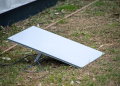
Reliance Industries, the Indian conglomerate led by Mukesh Ambani, is hunting for manufacturing partners to build a 1,600-satellite broadband network intended as an Indian-controlled alternative to Starlink, SpaceX’s satellite internet service, according to a Bloomberg report carried by Indian outlets on 18 November 2026. Completion has slipped from an earlier goal of 2030 to 2035 because of manufacturing and launch constraints.
The gap is arithmetic. India currently produces fewer than 15 satellites a year; the constellation would need roughly 200 a year, more than 13 times today’s output. Those figures, the revised timeline and the import plan all rest on people familiar with the matter who spoke to Bloomberg and asked not to be identified — none of it is independently verified, and Reliance has not commented publicly.
Key facts
- Test mission: September 2027.
- Wider deployment: from early 2028.
- Partner search: Indian manufacturers, startups and larger industrial groups, with Reliance offering to fund the infrastructure they would need, The Hindu BusinessLine reports.
- Imports: at least 400 satellites from the United States.
- Excluded: China, as a supply source.
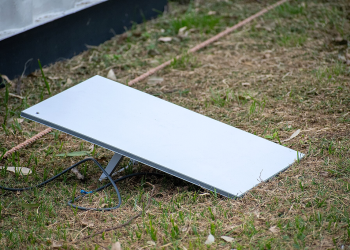
- Starlink today: more than 10,000 satellites in orbit worldwide.
- Reliance: no reply to an email seeking comment.
Why it matters for satellite internet in India
Neither network is selling broadband in India yet. Outlook Business, citing Reuters, reported in October that Starlink and Jio’s satellite venture were both awaiting final security clearance before launching services, and that India’s government denied favouring anyone. Separately, India is still finalising its satellite spectrum rules. Starlink availability in India is therefore a licensing question; the Reliance rival is a decade of manufacturing away.
Price is the other gate. Musk wrote on X that “obviously, if Starlink is too expensive in India, no one will buy it, so SpaceX will need to make pricing affordable”, according to Outlook Business, which said he named no figures and gave no launch timeline. The benchmark is punishing: mobile internet in India costs about ₹7.74 ($0.08) per gigabyte, among the lowest rates globally, the same report noted.
The launch gap
Industry executives quoted by The Hindu BusinessLine say launch capacity, not factories, may be the harder constraint. Amal Chandran, chief executive of satellite manufacturer HEX20, said manufacturing at scale is doable but the real challenge is ensuring enough rocket launches happen in India to place the satellites in the desired orbit, if Indian launch vehicles are used. India Today frames it as a question of access — more frequent launches and suitable orbital slots — and reports that a constellation of this size requires capabilities India’s space industry currently lacks.
Reliance’s answer is to buy what it cannot yet build. It is in discussions with two US firms on satellite procurement and is also evaluating European suppliers, the reports say. None of the four sources names the companies involved.
A network built for more than broadband
The stated purpose is commercial: the network is expected to serve Jio Platforms, Reliance’s recently listed digital unit, by carrying connectivity into parts of India where conventional infrastructure may not be sufficient. But the same capability could serve strategic communication needs during conflict or geopolitical tension, the people cited by The Hindu BusinessLine said.
The sources differ slightly on the trigger. english.revoi ties New Delhi’s push on domestic space capability to a 2025 border conflict with Pakistan; The Hindu BusinessLine describes it only as a recent border conflict. Both report rising investment in surveillance satellites and partnerships with private space companies. Concerns over oversight of foreign satellite networks have strengthened the case for domestically controlled alternatives, and India’s defence chief has pointed to Starlink service denial in Ukraine.
Background: the Musk-Ambani row
The constellation plan, which this site covered when the 1,600-satellite plan attributed to Mukesh Ambani first surfaced, follows a public confrontation. Outlook Business reported that Musk accused India’s government and Ambani of stalling Starlink’s entry to favour Jio, addressed Ambani as “Prime Minister Ambani” and asked whether he would consider allowing Starlink to compete.
What remains unknown is substantial: none of the sources gives a cost for the constellation, a spectrum allocation, a launch provider or confirmed partners.
Frequently Asked Questions
How much is Jio Platforms worth ahead of its listing?
Jio Platforms was targeting a valuation of $106 billion in its initial public offering, which Outlook Business, citing Reuters, described as set to be India’s largest-ever IPO.
Which other companies are in India’s satcom approval queue?
Outlook Business reported that India’s government said all three satellite ventures seeking to launch services were awaiting final security clearance, and denied any bias in the approval process. english.revoi names Airtel among the domestically controlled alternatives.
Has Starlink undercut local operators in other markets?
Outlook Business reported that Musk has used a similar affordability strategy in markets such as Kenya to challenge local telecom operators. The sources give no equivalent detail for any other market.