If you want satellite internet on the road, the plan you need is Roam — and the money-saving trick is not a weekly plan, because Starlink does not sell one. It is the pause button. Roam bills month to month with no contract, so a traveller who needs seven days of connectivity buys a month, uses the week, and pauses the service the day the trip ends. Done consistently, that turns a subscription into something very close to pay-per-trip.
That distinction matters, because “Starlink weekly plan” is one of the most searched phrases in satellite internet and one of the most consistently misreported. What follows is how the billing mechanics actually behave, what Roam costs on Starlink’s own storefront as of September 2026, where Roam is genuinely sold, what happens at a border, and what performance to plan around.
Quick answer
- No weekly plan exists. Roam is month-to-month; the pause control is the short-term-rental substitute.
- Roam is deprioritised behind fixed Residential and Priority traffic, so speeds swing from superb to poor depending on the cell and the hour.
- Four two-week trips a year cost four months of service, not twelve — if you pause on the day you get home.
- Prices move, and regional stores diverge. Every figure below reflects Starlink’s published pricing as of September 2026; the only binding price is the one at your own checkout.
- Availability is a licensing question. Check the map for every country on the route, transit countries included.
Jump to: pause and resume · 2026 prices · availability · borders · alternatives · FAQ
How this guide was reported
Accuracy is the entire value of a pricing and availability article, so here is the basis for every claim below — including its limits.
- Prices: taken from Starlink’s own storefront and Roam page as of September 2026. The date is printed beside every figure because prices in this niche move.
- Documentation: allowance mechanics, in-motion permissions and the cross-border continuous-use rule are taken from Starlink’s published plan pages, support articles and terms of service as they read in September 2026.
- Disclosure: no affiliate relationship with SpaceX.
- What we could not verify: pricing in every regional storefront, the exact trigger that resets the cross-border clock, and whether prorated resume billing exists anywhere as documented policy rather than anecdote. Those gaps are flagged in the text rather than papered over.
What Roam is, and where it sits in the priority queue
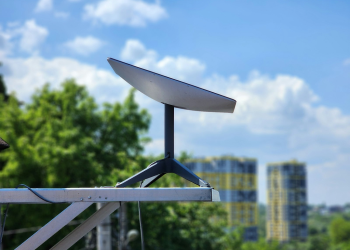
Starlink Roam is SpaceX’s portable plan: month-to-month service that lets a terminal connect from anywhere inside its permitted coverage region instead of from one registered service address. Starlink’s Roam page pitches it at remote workers, international travellers and people connecting from a car, boat or RV, and advertises speeds of up to 300+ Mbps (Starlink Roam page, as of September 2026). The constellation and the dish are the same as fixed service. What changes is the licensing of where you may point it, and what priority your traffic gets when a cell is busy.
The practical consequence rarely makes the marketing: Roam traffic is deprioritised behind fixed Residential and Priority customers during congestion. On an empty cell at dawn that is invisible. In a full campsite on a Saturday evening it is the difference between a video call and a slideshow, on identical hardware.
The pause-and-resume playbook (the canonical version)
This is the section the rest of the article refers back to. Everything travellers want from a “weekly plan” is delivered here, and every rule below follows from Starlink’s published billing and support documentation.
- Pausing stops billing forward; it does not refund. Days already paid for are yours to use, so pause after the current cycle has delivered what you bought, not the moment the trip ends mid-cycle.
- Resuming starts a fresh cycle from that date. Your billing anniversary drifts every time. Check the app rather than assuming it is still the 3rd.
- There is no reactivation fee, which is precisely why the tactic works, and Starlink publishes no cap on the number of cycles.
- Allowances do not roll over across a pause. Unused gigabytes evaporate.
- Do not budget on prorating. Some users report proportional billing when they unpause mid-cycle — which is where much of the “weekly plan” folklore began. It is not a product you can select, and it has never applied uniformly across regions.
- Where the control lives: Starlink app → your subscription settings → the toggle marked Pause service, directly beneath the next-invoice date.
The arithmetic that follows from this. A traveller taking four two-week trips pays for four months of Roam, not twelve. At an entry tier near $50 that is roughly $200 of service in the year, plus hardware. The same traveller who forgets to pause pays about $600 and receives nothing at all for 300 of those days. Pausing is not a tip; it is the entire economic case for Roam.
The clean framing: Starlink sells months, but it lets you choose which months. That is the real flexibility on offer in 2026, and it fits a broader pattern in how Starlink’s connectivity options keep shifting toward shorter commitments.
The 2026 Roam line-up and what it costs
Starlink restructured Roam during 2025 and the tiers have settled into a metered/unmetered split. Read the table as a US baseline, not a global price list — the date sits in the price cell itself.
| Tier | US list price | Typical use case | Data behaviour | In-motion use |
|---|---|---|---|---|
| Roam 100GB | ~$50/month as of September 2026 (renamed from the older 50GB tier in the 2025 restructure) |
Occasional trips, one or two people, email and moderate streaming | Allowance at standard priority, then top-ups or heavy deprioritisation | No — stationary at each stop |
| Higher metered tier (listed as 300GB in the US store) | Between the entry and unlimited tiers as of September 2026 not offered in every market |
Full-time van or boat life, video calls, cloud backups | Larger allowance, identical post-cap mechanics | No — stationary at each stop |
| Unlimited / in-motion Roam | Headlined “from $175/month” as of September 2026 (was widely listed at $165 through much of 2025) |
Vehicles, vessels, teams who cannot ration data | No monthly allowance; still Roam priority | Yes, with supported hardware and a rated permanent mount |
Two caveats to carry away. First, that unlimited headline has already moved once this year, and we cannot confirm it is identical for every US address or that it will hold to Christmas. Second, regional storefronts diverge sharply — Starlink’s African and Latin American stores have repeatedly listed Roam below the US number, under different tier names. The only price that binds is the one at your own checkout. For the wider picture, see our full plan-by-plan price breakdown for 2026.
Check your own price in 60 seconds (do this before you trust any article, including this one)
- Open Starlink’s site and let it resolve to your country store, or switch the store manually.
- Enter the address or region you will activate from — tier availability is set at that level, not nationally.
- Select Roam and read the checkout total, inclusive of tax and any hardware line, rather than the headline on the marketing page.
- Screenshot it with the date visible. That screenshot, not a forum post, is your budget.
Hardware: the cost people forget
Service is only half the bill. A Standard kit or a Starlink Mini is a one-off purchase that appears in regional promotions with some regularity — heavy discounts tend to land where Starlink has spare capacity to sell. Budget for the kit, a DC adapter, a decent mount and a cable run you have actually measured, then add the hardware to year one when you compare Roam against a cellular plan.
Satellite internet availability in 2026: where Roam is actually sold
Coverage is a licensing question, not a physics one. The satellites pass over everywhere; service is switched off over countries where Starlink lacks regulatory approval. That is why the availability map matters more than any speed claim, and why Roam customers hit walls that look inexplicable from orbit.
Status on Starlink’s availability map as of September 2026, grouped rather than exhaustively listed because it changes monthly:
| Region | Typical status (as of September 2026) | What it means for Roam |
|---|---|---|
| North America, most of Europe, Australia, New Zealand | Live and mature; sold immediately in most cells | Roam sells and works; capacity-constrained cells carry waitlists for fixed plans only |
| Latin America (Brazil, Chile, Mexico, Peru, Colombia and neighbours) | Live across most of the continent | Strong cross-border Roam corridors; check the few remaining gaps before an overland route |
| Southern & East Africa (Botswana, Zimbabwe, Zambia, Mozambique, Malawi, Kenya, Rwanda, Eswatini and others) | Live in a growing list of markets, with notable national gaps | Usable for regional travel, but several neighbouring countries remain unlicensed — plan routes country by country |
| Parts of Asia-Pacific (Japan, the Philippines, Malaysia, Indonesia, Mongolia, Fiji, Timor-Leste) | Live, patchy by country | Island and archipelago coverage is strong; land borders are not continuous |
| Several large markets still pending or restricted (and sanctioned territories) | Announced, licensed-but-launching, waitlisted or unavailable | Assume unavailable until the map says otherwise; a terminal will simply not obtain service |
| Open ocean beyond coastal waters | Separate maritime product | Roam covers coastal use in many markets; blue-water passages need a maritime tier |
Two habits will save a ruined trip: check the official map for every country on the route, including transit countries you only intend to drive through, and re-check the week before departure — approvals and suspensions both land without notice. For pricing alongside status, our country-by-country pricing and availability guide tracks the markets we can verify.
Crossing borders: the continuous-use rule
Roam works across most licensed countries, which is exactly what makes it useful to overlanders and cruisers. The constraint people hit is continuous use abroad. Starlink’s Roam terms and support material describe a limit on sustained operation outside your account’s registered country — commonly summarised as around two months — after which you are expected to update your account country or move onto a plan sold for global travel. Exceed it and service can be restricted, not merely slowed.
We are deliberately not giving a precise day count, because Starlink has not published one in a form we could verify. The honest guidance is to treat two months as a planning ceiling and to update the account country proactively if your itinerary is longer. Kit paperwork at the border is a separate question — see the FAQ.
Roam versus the alternatives: what the year actually costs
The “should I skip Roam?” question only becomes answerable with numbers beside it. Assumptions: one traveller, 60 nights away across four trips, moderate data use, first-year costs excluding taxes, US prices as of September 2026 and rounded.
| Option | Year-one cost pattern | Works where cellular does not? | Best for |
|---|---|---|---|
| Roam entry metered, paused between trips | ~4 months of service (~$200 at a $50 tier) + hardware | Yes | Trips into genuinely unserved country a few times a year |
| Roam unlimited / in-motion, paused between trips | ~4 months at the headline tier (~$700 at $175) + hardware + mount | Yes, including while moving | Vans, boats and teams that cannot ration data |
| Roam left running all year | 12 months (~$600 entry, ~$2,100 unlimited) | Yes | Nobody. This is the forgotten-pause tax |
| Local prepaid SIM + phone hotspot | Tens of dollars per country; no hardware cost | No — dies outside the network footprint | Town-to-town travel in well-covered countries |
| Multi-country travel eSIM / roaming data | Convenience premium per GB; no hardware cost | No | Short city trips, light usage, zero setup time |
| Residential + travel add-on | 12 monthly invoices regardless of use | Partly, subject to address binding | Home-based users away a few weekends a year |
| Maritime tier | Substantially higher monthly cost | Yes, offshore | Blue-water passages, where Roam is not the product |
Read across the rows and the decision usually makes itself. A cellular hotspot beats Roam on cost and weight anywhere the towers reach; Roam wins the moment your itinerary includes places they do not — and the pause is what keeps that win affordable.
Timing the activation
Forums fill with this question every holiday season and the answer is unambiguous: activate one to two days before departure, at home, on a connection you trust. The reasoning is mechanical, not cautious. Unpausing is an account action that must propagate to the terminal, and a dish that has skipped several firmware generations will want a long update before it is useful.
- T−48 h: unpause in the app; confirm the subscription reads active and note the new billing date, which will have moved.
- T−48 h: power up at home, let firmware finish, run a speed test, then leave the terminal running for an hour to surface intermittent faults.
- T−24 h: check availability for every country on the route, transit countries included, and screenshot the map.
- Pack day: verify the power path end to end — DC adapter, cable length, inverter if used, and spare fuses of the correct rating.
- Return day: pause before you unpack. Set the calendar reminder now; this single step is where the savings live.
Four mistakes that cost money or time
- The forgotten pause. One overlooked month at the unlimited tier costs more than the entire service bill of a well-managed four-trip year. It is the most expensive mistake in the category and one recurring reminder prevents it.
- Trusting a two-bar hotspot to finish an update. Firmware downloads over a congested mobile network can take an entire evening.
- Accepting a 2% obstruction reading. Two per cent sounds like a rounding error. It can cost a large share of your throughput and produce dropouts that look like network faults. Moving the dish a few metres usually fixes it in under five minutes.
- No spare fuse. Redundancy in the power path is cheaper than redundancy in the connectivity.
Performance: what to plan around
Starlink’s 300+ Mbps headline is a best case on an uncongested cell under clear sky. Plan instead around a wide band: tens of megabits in busy areas at peak evening hours, rising sharply late at night and in remote locations. Three factors dominate, in this order:
- Obstructions. Tree canopy causes most of the dropouts travellers blame on the network. Run the app’s obstruction checker before you settle in, and move the dish rather than tolerating a non-zero figure.
- Cell congestion. Roam yields to fixed customers. A lakeside town in high season is a congested cell; a mountain pass is not.
- Post-cap behaviour. Exhausting a metered allowance does not disconnect you; it drops you to a slow, heavily deprioritised tier that is fine for maps and messaging and miserable for anything else.
Who should skip Roam
Roam is not universally correct. If your travel stays within towns on reliable mobile networks, a local SIM with tethering is cheaper, lighter and faster to deploy. If you need connectivity genuinely under way at sea, you need a maritime tier. If you spend eleven months a year at one address, a fixed plan with a travel add-on will serve you better than a portable plan you are constantly repricing. Roam earns its cost specifically when your route leaves the towers behind — and when you are disciplined enough to pause when it does not.
The bottom line for 2026–2027
As of September 2026, Starlink Roam is a mature, genuinely portable satellite internet product with a metered entry tier, a larger metered tier in some markets, and an unlimited in-motion option headlined at $175 per month on Starlink’s US page. There is no weekly plan and no published sign of one. The flexibility travellers keep asking for already exists as month-to-month billing plus a free, instant pause.
So treat the prices here as a dated snapshot and the mechanics as the durable part. Buy the month you need, activate 48 hours early at home, check the obstruction reading before you settle, verify availability for every country on the route, and pause the day you get back. Do those five things and Roam behaves far more like a rental than a subscription — which is what most people were really asking for when they went looking for a weekly plan.
Update log
- 19 September 2026 — published. US prices, tier names and availability status taken from Starlink’s storefront, Roam page and availability map as of September 2026.
- Next scheduled re-verification: pricing and availability tables are re-checked monthly, and each figure carries its own verification date. If a date above is more than a month old when you read it, confirm at your own checkout before budgeting.
Frequently Asked Questions
Does Starlink sell a weekly plan?
No. Starlink’s consumer storefront lists no seven-day product in any market (as of September 2026). The workaround is Roam’s month-to-month billing plus the pause control in the Starlink app — the full mechanics, including the fact that pausing does not refund unused days and that resume billing is not reliably prorated, are set out in the pause-and-resume section of this article. Plan around whole months you choose to buy, not around days.
Can I run a work VPN or port-forward through Starlink Roam?
VPNs yes, port forwarding no. Starlink places consumer terminals behind carrier-grade NAT (CGNAT), so you do not get a public IPv4 address and inbound connections cannot be forwarded to a device on your Roam network. Outbound corporate VPN clients (WireGuard, OpenVPN, Cisco AnyConnect, Zscaler) work normally, including sustained video calls. If you need inbound access — a camera feed, a home server, RDP into the van — use an overlay network such as Tailscale or a Cloudflare Tunnel rather than trying to open ports. IPv6 is available and is worth enabling if your remote tooling supports it.
How long does a paused dish take to come back online after months in storage?
Longer than most people allow for. The subscription itself flips back to active in the app quickly, but a terminal that has been boxed for months then has to download and apply firmware, often rebooting more than once, before it will produce a stable speed test. Allow for that on a good connection, and assume worse if the dish has skipped several firmware generations. This is the single strongest argument for activating at home rather than at the trailhead.
Do I need to declare a Starlink kit at a border?
Check before you travel, because satellite internet terminals are not ordinary luggage in every jurisdiction. Some countries treat consumer satellite transceivers as controlled telecommunications equipment requiring type approval or an import permit, and others simply want duty paid on a device that is plainly new. Carrying the original purchase receipt, keeping the kit in its retail box, and knowing the device’s declared value is the minimum. Treatment at the border is discretionary, not a rule you can rely on.
What actually happens when you use up a metered Roam allowance?
You are not disconnected. Starlink moves you to a heavily deprioritised tier for the rest of the billing cycle, and you can buy top-up data in blocks from the app at a per-gigabyte price that is quoted at the moment of purchase and differs by region — confirm it in-app rather than trusting a figure from a forum. Two mechanics catch people out: unused gigabytes never roll over, including across a pause, and the allowance resets on your billing anniversary, which drifts every time you resume. Post-cap throughput is workable for maps, messaging and email, and unusable for video calls at peak evening hours.
Can I use Starlink Roam in another country?
Yes, in the countries where Starlink is licensed, but not indefinitely. Starlink’s Roam terms and support documentation describe a continuous-use limit for operation outside your account’s registered country — commonly summarised as about two months — after which you are expected to update your account country or move to a plan sold for global travel. Starlink has not published a precise definition of what resets the clock, so treat two months as a planning ceiling rather than a guaranteed allowance. If your itinerary is longer, update the account country on arrival rather than waiting for a restriction notice.
Is a Residential plan with a travel add-on cheaper than Roam?
Occasionally on paper, rarely for genuine travellers. Residential service is bound to a verified service address, and that binding is what buys you priority at that address; Starlink can and does check that the terminal is used there. For someone away three weekends a year, Residential plus an add-on can be the cheaper line. For anyone away more than they are home, twelve Residential invoices beat four paused Roam invoices every time — the pause is doing the work, not the plan name. The hidden cost of the Residential hack is account risk: if the address binding is enforced, you lose both the priority you paid for and the roaming you did not.
Follow Starlink News on Google. Make us a preferred source to see more of our reporting in Google search results.















Comments 12