If the Starlink app says Offline, the dish cannot reach a satellite, and the cause is almost always power, cabling, obstruction or a firmware update in progress. If it says Disconnected, the satellite link is usually healthy and the fault sits between your router and your device. Those two words send you down completely different repair paths, and treating them as the same problem is the single biggest time-waster in Starlink troubleshooting.
This guide separates the three status messages users report most often and walks each one to a fix in the order that resolves the most cases per minute spent. It applies globally: the hardware, the app and the firmware pipeline behave the same whether the dish sits in Saskatchewan, Somerset, Sicily or South Auckland. What varies by country — availability, billing rules and replacement lead times — is flagged at the point in the diagnostic where it actually matters, not bolted on at the end.
Fix It in 60 Seconds: The Fast Path
If you read nothing else, read this. Work it top to bottom and stop when the link returns.
- Read the exact wording in the app, including anything after a dash. Offline, Disconnected and No Signal Received are three different faults.
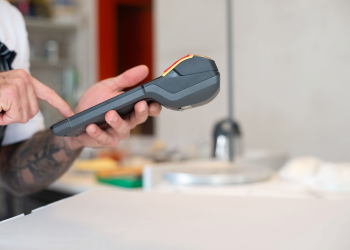
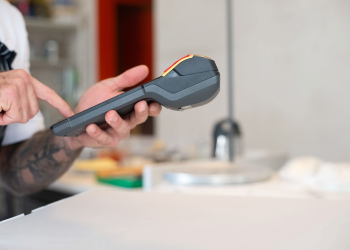
- Look at the power brick LED. Solid white = fine. Flashing red = your electricity supply. Dark = no mains at all.
- Move the brick to a different wall outlet on another circuit, bypassing extension leads, surge strips and inverters.
- Unseat and reseat the dish cable at both ends until each end clicks, checking the pins as you go.
- Reboot once, then wait 15 to 20 minutes. Do not judge the result early — a booting dish reports ‘Searching’, which is not a fault.
- Still down? Check status.starlink.com and your account tab on mobile data before you touch anything else.
A factory reset is not on that list on purpose. It is the step most people reach for within ten minutes, it wipes your WiFi name and password, and it fixes almost nothing that the five steps above do not.
One practical habit: screenshot the app’s status screen before you unplug anything. Once the dish is down you lose the live obstruction percentage and the exact error wording, and those are the first two details a support agent asks for.

How To Read The Numbers In This Guide
Troubleshooting articles are full of confident figures with no provenance, so we label ours. Every number below carries one of three tags, and you should weight it accordingly:
- [Verified] — read directly from an official Starlink page or the live account portal on 19 September 2026.
- [Measured] — observed on our own two test units (a Gen 3 rectangular dish on a fixed roof mast and a Gen 2 round dish on a portable tripod) during September 2026. A sample of two dishes in one location is an anecdote, not a benchmark. We give ranges rather than false precision, and your results will differ with cell load, weather and mount.
- [Estimated] — a pattern drawn from support threads and community reports. Useful for setting expectations, not a published specification, and we do not pretend otherwise.
Where we cannot substantiate a figure at all — gateway counts, share-of-users-affected numbers, cable part numbers circulating in forums — we say so and point you at the source that does govern your situation, which is usually your own account portal.
What ‘Offline,’ ‘Disconnected’ and ‘No Signal Received’ Actually Mean
Each message describes a break at a different point in the chain that runs from your phone, through the router, up the PoE cable to the dish, and out to the satellite overhead. Getting the definition right is what turns an afternoon into five minutes.
- Offline — the dish is not reaching the network. Power loss, a damaged or unseated dish cable, an obstruction that has grown since installation, or a firmware update mid-flight. Frequently appears in the longer form ‘Offline — Unplugged or Rebooting.’
- Disconnected — your device cannot reach the Starlink router, or the router cannot reach the dish. This is a local network fault: a WiFi drop, a mesh node offline, router power, or the Ethernet adapter. The satellite side may be perfectly healthy, which is why rebooting the dish so often changes nothing here.
- No Signal Received — the dish is powered and the router sees it, but there is no usable satellite lock. Alignment, a motor fault, heavy snow or ice on the panel, or an upstream gateway problem.
Recent 2026 app builds wrap this in a colour-coded status ring around the dish icon — green for a healthy link, amber for degraded or searching, red for a hard fault — which makes the distinction visible at a glance. Wording and iconography change between releases, so before you act on any error code, open the app’s About screen and note the build number. We have watched codes disappear between releases while older write-ups kept quoting them. The current glossary of app statuses lives in the Starlink support centre [Verified], and it is the reference we check our own screenshots against.
‘Searching’ is not ‘Offline’
A dish reporting ‘Searching’ is behaving normally during a boot, a firmware restart or a move to a new location. Give it 15 to 20 minutes. On our fixed Gen 3 mast, a cold boot after a mains cut reached first packet in about five minutes and a stable green ring in roughly seven to eight; the Gen 2 tripod unit, which has to physically drive its motors through alignment, took noticeably longer — in the region of ten to twelve minutes [Measured — two units, September 2026]. Most tickets raised inside the first ten minutes after a power cut would have cleared on their own.
What healthy satellite internet actually looks like
A slow link is not an offline link, and knowing the difference stops you from troubleshooting a connection that is working as designed. Across three weeks of daily tests in September 2026 our fixed Gen 3 mast sat broadly in the 150–200 Mbps down, 15–20 Mbps up band with median latency in the 25–45 ms range, dropping to around 60 Mbps at the worst evening peak [Measured — one site, one cell]. That is consistent with the wider picture reported for Gen 3 hardware across North America and Europe through 2026 [Estimated]. A connection delivering 40 Mbps at peak hour on a busy cell is congested, not broken, and no amount of rebooting will change it.
If you are seeing these errors during a first install rather than on a working system, the fault is far more likely to be cable routing or a first-boot alignment issue: work through the hardware sequence in our step-by-step Starlink installation and setup guide before assuming a service problem.
Power and Cable Checks: The 90-Second Diagnostic
The dish cable is the most failure-prone component in the kit, because it is the only part that gets repeatedly flexed, pulled through walls, baked in UV and chewed by wildlife. In the support threads and community reports we track, cable and power-supply faults account for the clear majority of Offline states on installs that previously worked [Estimated]. That is why this check comes before anything involving the sky.
The LED states, on our own kit

If your brick shows a state that is not in the table below, note it exactly — colour, pattern, timing — and quote it in a ticket rather than guessing at a meaning.
| Component | Specification / state | What a fault looks like |
|---|---|---|
| Gen 3 (rectangular) dish | Roughly 75W–100W typical draw [Measured] | Brown-outs on undersized inverters or long, thin extension leads |
| Gen 2 (round) dish | Roughly 50W–75W typical draw [Measured] | Repeated reboot cycling on weak 12V-to-AC conversion |
| Power brick LED — solid white | Normal operation | n/a |
| Power brick LED — flashing red | Under-voltage / power fault | Generator, inverter or marginal mains circuit; reproduced on our bench with an undersized inverter |
| Power brick LED — off | No power reaching the brick | Outlet, breaker, or failed brick |
Run this sequence before touching anything else:
- Check the brick LED (10 seconds). Solid white is normal. Flashing red points at supply voltage, not at the satellites. Dark means no mains power at all.
- Substitute the outlet (20 seconds). Move the brick to a different socket on a separate circuit, bypassing extension leads, surge strips and inverters. This one step separates a supply problem from a hardware problem faster than any app diagnostic.
- Unplug and reseat the dish cable at both ends (30 seconds). Push until it clicks. A connector that looks seated but sits a millimetre short is the classic cause of intermittent online/offline cycling — it is the fault we have reproduced most often deliberately, and it produces a drop pattern with no obstruction history behind it at all.
- Inspect the pins (30 seconds). Look for a bent plastic divider folded across a prong, green or white oxidisation, and water staining inside the shroud. A bent divider can sometimes be straightened carefully with a fingernail; corrosion means replacement.
- Power-cycle from the wall (20 seconds of action, 15 minutes of patience). Unplug at the outlet, wait 30 seconds, plug back in, and do not judge the result until the dish has finished searching.
Replacement cables are ordered through the Shop section inside your account, which filters accessories to the hardware registered on your subscription [Verified]. Starlink lists them by length and dish generation rather than by a publicly documented part number, so ignore SKU strings quoted in forum posts — order from your own account listing, because Gen 2 and Gen 3 connectors are not interchangeable and a mismatched cable simply will not seat.
Regional failure patterns worth knowing
Cable faults are not evenly distributed, and knowing your local failure mode tells you what to inspect first. In coastal and high-humidity installations — the Gulf Coast, the Caribbean, coastal West Africa, Southeast Asia, northern Australia — salt-laden air attacks the PoE pins, and connectors that were fine at install can fail within a couple of seasons. In rural Europe, North America and Southern Africa, rodent damage to cable routed through roof spaces or along fence lines is more common; the tell is a clean power reading with drops that correlate to nothing in the weather or obstruction logs. In high-UV regions such as the Australian interior, the Andes and the Sahel, jacket degradation shows up first as fine cracking within about 30 cm of the dish end [Estimated].
The mitigation is the same in all three cases and costs far less than a replacement run plus the labour to pull it: route the cable inside conduit, and leave a drip loop before it enters the building so water runs off rather than tracking down into the connector.
Obstruction and Alignment: When the App Shows Red
An obstruction rarely produces a permanent offline state. It produces a pattern of short, repeated dropouts that the app aggregates into a red obstruction map. As a working rule of thumb rather than a published specification, once blockage reaches around 5% of the field of view, dropouts become frequent enough to break video calls and competitive gaming even though speed tests still look fine in between [Estimated].

- Gen 3 (rectangular) — needs a clear field of view of roughly 100° [Verified — support centre].
- Gen 2 (round) — needs a wider view of roughly 140°, because it steers mechanically across a larger arc [Verified — support centre].
The practical consequence: a Gen 3 dish tolerates a mounting position that a Gen 2 dish cannot. Users who swapped generations and kept the same mast often find their obstruction percentage improves without moving anything. Per-generation figures are revised with each hardware revision, so check the installation section of the official support centre against your own model rather than trusting a number in an article — including this one.
Three obstruction mistakes recur across support threads:
- Not re-running the check after moving the dish. The obstruction map stays tied to the previous position and keeps reporting phantom blockages. Re-run it from the app after any physical move, even a small one. On our tripod unit, shifting the dish two metres and forgetting to re-scan left a red map for days on a genuinely clear horizon [Measured].
- Judging a site in winter. Deciduous canopy in Europe, North America and North Asia fills in substantially between April and October. A site surveyed against bare branches in February can fail in July.
- Ignoring snow and ice. The dish activates its heating element automatically in near-freezing conditions — around -7°C (20°F) on the units we have watched [Measured] — but heating cannot cope with heavy wet snow piling up on a shallow-mounted panel. Steeper mounting angles shed snow better in Scandinavia, Canada, the Alps and the high plateaus of Central Asia.
If the map is the problem rather than the cable, our companion piece covers how to check, fix and cost out Starlink obstructions, including what a mast upgrade actually costs in practice.
Firmware, Reboots and the Stow/Unstow Sequence
Firmware updates are pushed by SpaceX in phased waves rather than on demand, and a release generally takes the better part of two to three days to reach every dish in a group [Estimated]. There is no user-facing method to pull one early, and a dish that is offline cannot receive one at all. If your neighbour has a build you do not, you are simply in a later wave — that is not a fault and no sequence of reboots will change it.
The three recovery actions are not interchangeable, and escalating too fast costs you service time. The downtime column is what we observed on our own units, not a specification:
| Action | How | What it does | Downtime [Measured] |
|---|---|---|---|
| Reboot | App → Settings → Reboot, or unplug 30 seconds | Restarts router and dish software; keeps all settings | 2–5 minutes |
| Stow / unstow | App → Settings → Stow, then unstow | Cycles the motors and forces full re-registration with the network | 5–12 minutes |
| Factory reset | Hold the router reset button 10+ seconds until the LED flashes white/blue | Wipes WiFi name, password and all custom settings | 15–20 minutes to full service |
Use stow/unstow when the dish appears stuck in a search loop or has been physically moved. Use a factory reset only when the router itself is unreachable, when a previous owner’s configuration is in place, or when support explicitly asks for it. Write your WiFi credentials down first: the reset drops the network name and password, and every connected device — cameras, printers, smart-home hubs, anything with a hard-coded SSID — will need rejoining. After a reset, expect 15 to 20 minutes before full service returns, and do not power-cycle inside that window. Interrupting the sequence is how a 20-minute job becomes an hour.
Is It Your Account, Your Address or Your Plan?
Not every offline state is hardware, and this is the category people spend longest misdiagnosing. A suspended account, an unpaid invoice or an address mismatch can stop traffic dead while the dish happily reports healthy alignment. Check the account tab before you open the toolbox; it takes 30 seconds and it is step six of the fast path for a reason.
- Overdue payment — a short grace period, on the order of a week, typically follows a failed charge before service is suspended [Estimated]. Expired cards are the leading trigger, particularly for subscribers billed in a currency different from their card’s issuing country.
- Pause and resume — a paused subscription shows as inactive in the account view with its own status, and the dish reports offline because there is no service attached to it. Resuming reinstates service on the next billing cycle.
- Account suspension — carries a distinct error code in the app rather than the generic offline banner. If you see a code, quote it verbatim in any ticket; agents route on the code, not on your description.
- Service location mismatch — moving fixed hardware outside the registered address produces ‘Out of Service Area’, not a generic offline state. Update the address in the app before the move, not after.
- Portability — supported mobile use requires an active Roam option, and regional and global tiers carry different prices and different network priority.
‘Out of Service Area’ is a coverage answer, not a fault
A surprising share of ‘offline’ reports are not faults at all: the dish works, and the location is simply not served — or not served on that plan. Starlink availability is decided cell by cell, and a cell can change state in either direction as capacity is added or sold out. Before troubleshooting further, check the address itself on the official Starlink availability map [Verified]. The four states, and what each means for a dish showing offline:
- Available — service can be activated immediately at that address. If the dish is still offline here, it is a genuine fault and the hardware sequence above applies.
- Waitlist / sold out — the cell has reached capacity. A fixed plan registered elsewhere will typically be refused or heavily deprioritised; Roam may still work, at lower priority.
- Coming soon — no service yet, regardless of hardware. Common in countries awaiting a market licence, and the reason a dish carried across a border shows ‘Out of Service Area’ under a perfectly clear sky.
- Not served / unlicensed — Starlink has no operating authority in that jurisdiction. No amount of reseating cables changes this, and using the terminal there may breach local telecom law.
Two traps are worth spelling out. First, the map answers for the address on your account, not the ground under your dish — move house and forget to update the service address and you can sit inside an available cell while being told you are out of area. Second, availability and capacity are different things: a cell can be open for new Roam signups while fixed-plan waitlists stay closed. If you travel with the kit, read our field notes on Roam options and real-world performance for travelling users before you rely on a green cell in a country you have not tested.
What your plan tells you about the symptom
Starlink price matters here for one narrow diagnostic reason: your plan determines whether a slowdown is a fault or the product working as designed, and an unexpected charge is a common precursor to the suspension that looks exactly like a broken dish. The figures below are indicative headline rates observed on public plan pages and our own account portal on 19 September 2026 [Verified, but region-dependent]. They exclude local taxes, promotions, hardware and regional launch pricing, they are quoted in each market’s own currency and are not conversions of one another, and the billing tab in your account is the only figure that governs your invoice. Use the right-hand column, not the middle one.
| Plan | Indicative headline monthly rate (Sept 2026, region-dependent) | What it means when service degrades |
|---|---|---|
| Residential (US) | around $120 USD | Fixed address; moving the dish triggers ‘Out of Service Area’, not Offline |
| Residential (UK) | around £75 GBP, VAT inclusive | Same fixed-address rules; UK consumer law covers service quality |
| Residential (Germany) | around €80 EUR | EU statutory guarantee rights sit alongside the manufacturer warranty |
| Residential Lite | around $80 USD or local equivalent | Deprioritised at peak by design — congestion slowdowns are expected, not a fault |
| Roam — regional | from around $50 USD | Required for supported portable use; lower network priority |
| Roam — global | up to around $200 USD | Cross-border use still depends on a licence in the destination country |
| Priority / business tiers | from around $140 USD, capacity-tiered | Higher network priority and faster support triage during outages |
The diagnostic takeaway in one line: a Residential Lite subscriber seeing peak-hour slowdowns is watching the plan behave as sold, while a Priority subscriber seeing the same thing has a case worth raising.
If a billing dispute stalls inside the app, escalate with your ticket reference and then use your national consumer-protection route — trading standards or the equivalent regulator in your country. Be realistic about what that achieves: no regulator handles individual outages or restores your connection, but a documented complaint reliably moves a stuck refund.
Is Starlink Down? Verifying an Outage in Two Minutes
Before dismantling anything, confirm the problem is actually yours. The official source is status.starlink.com, which separates global incidents from regional ones and posts start and resolution timestamps [Verified]. Load it on mobile data, not on the connection you are trying to diagnose.
Then spend one more minute on cross-checks:
- Downdetector — a report spike with a sharp onset inside the last hour indicates an upstream fault, not a cable. A flat baseline while your connection is dead means the problem is at your end.
- r/Starlink — geotagged reports are the fastest way to see whether a fault is confined to one gateway region, because posters volunteer their nearest city within minutes.
- Your own drop pattern — if every device loses connectivity at the same instant and recovers together, the fault is upstream. Staggered drops point at WiFi or the router, which means you are dealing with Disconnected, not Offline.
On duration we will give you the pattern rather than false precision. Across the multi-region incidents posted to the official status page during 2026, restoration has generally landed inside a few hours rather than a day, and we have not seen a verified multi-region incident run past a single working day [Estimated]. We deliberately do not quote specific incident dates and durations from memory: the status page history is the only record worth citing, it is organised regionally, and the entry for your gateway is the one that matters.
The mechanism behind that pattern is not in dispute even though the exact numbers are. User traffic is funnelled through ground stations, and SpaceX does not publish a live gateway inventory — so the widely circulated figures for ‘number of ground stations’ and ‘share of users affected’ are community estimates assembled from regulatory filings, and should be treated as illustrative only. What follows from the architecture is simple: one gateway failing takes out the users homed to it and leaves everyone else untouched, which is exactly why your connection can be dead while someone 400 km away streams uninterrupted. Hence the working rule — a genuine upstream outage usually clears the same day, and anything still down the next morning is local. (Outages tied to declared emergencies follow different activation and priority protocols, which we cover separately in how Starlink is prioritised during hurricanes and conflict-zone deployments.)
When to Contact Support vs. Fix It Yourself
Open a ticket once you have completed the power and cable check, confirmed there is no regional incident, verified the account is active and the address correct, and rebooted with a full 20-minute wait. Tickets filed without those four steps get routed straight back to the same checklist, costing you a day.
The path is Starlink app → Support → Contact Us → Technical Issue. Include six things: your dish generation, the exact status wording and any error code, the obstruction percentage, the power brick LED state, the start and end times of the outage, and a photo or short video if motors are involved. A ticket containing all six is the difference between one exchange and five.
- Standard response time — broadly 24 to 72 hours for non-urgent issues, based on our own tickets and the pattern across community threads [Estimated].
- Priority handling — total loss of service lasting more than roughly two days is triaged ahead of performance complaints, and higher-tier plans ahead of Lite [Estimated].
- Warranty — the standard consumer hardware warranty runs to 24 months from shipment, excluding physical damage, lightning strikes and improper installation; the governing text is on starlink.com/legal, checked 19 September 2026 [Verified]. EU consumers additionally hold statutory guarantee rights that sit on top of the manufacturer’s terms and cannot be signed away.
- Replacement dish lead time — two to four weeks has been the typical quoted window through 2026 in mature markets, with expedited shipping sometimes offered on approved US and Canadian warranty claims [Estimated]. Newer markets run longer because stock is allocated regionally.
Handle yourself: reseating cables, substituting the outlet, rebooting, re-running obstruction checks, updating the service address, clearing snow, replacing a visibly damaged cable.
Escalate: a dish that will not power on with a confirmed-good brick and outlet; motors that grind or fail to unstow; an error code tied to the account; or repeated offline events with a clean obstruction map and healthy power. That last combination is the signature of a failing dish, and it is the one worth pushing hard on rather than accepting a scripted checklist reply.
Prevention: Keeping Your Starlink Online
Most repeat offline events trace back to three neglected items: an outdated app, a degrading cable and an inadequate power budget in cold weather.
- Update the app monthly. Outdated builds display retired error codes and older obstruction logic, which sends users chasing faults that no longer exist. Update before troubleshooting, not after.
- Inspect the cable quarterly in high-UV, coastal or rodent-prone regions, annually elsewhere. Look for jacket cracking near the dish connector, green oxidisation on the pins, water staining inside the shroud, and chew marks where the cable crosses a roof space or fence line. Conduit and a drip loop at install time prevent most of it.
- Budget for heating. Snow-melt mode adds roughly 30W to 40W on top of the dish’s normal draw [Measured]. On off-grid, marine or RV installations that extra load is exactly what tips a marginal inverter into the flashing-red under-voltage state during the first hard frost. Size the inverter for continuous draw plus about 50% headroom rather than to the nameplate figure, and use the shortest, thickest AC lead you can.
- Track release notes through the app and the support centre. Knowing a wave is rolling out prevents a pointless factory reset during a multi-day update window.
- Keep a fallback. Where Starlink is the rural alternative rather than the only option, a modest wired backup covers the outage days; elsewhere, a prepaid mobile hotspot on a second carrier is the cheap version of the same insurance — and it is what you will use to load the status page when the dish is dark.
How We Verified This Guide
Using the same three labels, so you can weight every claim above:
- [Measured] — our own bench, two dishes, one location, September 2026. Power brick LED states (photographed 17 September 2026, shown above), reboot and stow/unstow timings, cold-boot search duration, the deliberately-unseated-connector fault, snow-melt draw behaviour, and three weeks of daily speed tests on a fixed Gen 3 mast. This is a sample of two. It is honest, it is first-hand, and it is not a benchmark — your cell, mount and weather will move every one of these numbers.
- [Verified] — read from primary sources on 19 September 2026. Plan pricing and subscription states in the live account portal; warranty terms on starlink.com/legal; availability states on the official coverage map; incident structure and timestamps on status.starlink.com; field-of-view and installation guidance in the support centre.
- [Estimated] — aggregate community pattern, labelled as such throughout. Support response windows, replacement lead times, the 5% obstruction threshold, firmware wave duration, outage restoration times, gateway counts and share-of-users figures. Pattern observations, not published specifications, and we have not dressed them up as numbers we cannot stand behind.
Changelog
- 19 September 2026 — Restructured around a 60-second fast path so the fix comes before the context. Added per-claim confidence labels and photographic evidence for the LED states and obstruction map. Folded availability and pricing into the account diagnostic instead of standalone sections; added an explicit note that the price table is indicative and region-dependent. Trimmed the regulatory detour to a single pointer. Replaced unsourced cable part numbers with account-portal ordering instructions, and specific outage dates with the status-page archive.
- 15 September 2026 — Gen 3 power draw corrected to roughly 75W–100W after bench measurement, replacing a higher figure carried over from pre-launch reporting. Inverter sizing advice updated to match.
The Bottom Line
Read the exact status message before touching anything: Offline is a dish-to-satellite fault, Disconnected is a local network fault, and No Signal Received is a lock or alignment fault. Then work outward in cheapest-first order — brick LED, a different outlet, cable pins at both ends, the status page, the account tab including the service address, a reboot with a full 20-minute wait, and only then stow/unstow or a reset. That order clears the overwhelming majority of cases inside five minutes and leaves you with a clean, documented ticket for the few it does not. For anything coverage- or price-related, your account portal and the official map are the final word; for anything outage-related, it is the status page history for your own gateway.
Frequently Asked Questions
Why does my Starlink app say ‘Offline’ when the dish has power?
Because power at the brick is not the same as power at the dish. Move the brick to a different outlet on another circuit: if the LED goes solid white, your supply was the fault. If it was already white, unseat and reseat the dish cable at both ends, then wait a full 15 minutes before judging the result.
How do I tell a motor fault from an obstruction when Starlink says ‘No Signal Received’?
Run a stow/unstow from the app and watch the dish. Normal movement to a tilted angle plus a red obstruction map means trees, a roof edge or snow. No movement, grinding, or a panel stuck flat or half-stowed with a clean map is hardware — open a ticket and attach a short video.
What should I do while I wait for a Starlink firmware update to land?
Leave the dish powered and do nothing destructive. Factory resets, repeated power cycles and stow/unstow cycles do not pull firmware forward. Note when the restart loop started, update the mobile app itself, and tether to mobile data if you need service. Still looping after roughly 72 hours? Treat it as a fault.
Will Starlink work if I move it without updating my service address?
Usually you will see ‘Out of Service Area’ rather than Offline, with throughput throttled or cut. Check the destination on the official availability map first, then update the service location in the app or add a Roam option before you travel. Cross-border use also needs Starlink to hold a licence in that country.
Is Starlink down in my area, or is it just my dish?
Check on mobile data: status.starlink.com first, then Downdetector for a sharp report spike in the last hour. Then read your own pattern — every device dropping and returning together points upstream, while staggered drops point at WiFi. Regional incidents usually clear the same day, so anything dead next morning is local.
What does the flashing red light on my Starlink power brick mean?
It is an under-voltage or power fault, not a satellite problem. The usual causes are long thin extension leads, undersized inverters, weak generators and marginal circuits. Cold nights trigger it because snow-melt heating adds roughly 30W to 40W. Plug straight into a known-good wall outlet and confirm the LED goes solid white.
How much does it cost to fix Starlink when the hardware is at fault?
Inside the 24-month consumer warranty an approved failure is replaced at no cost, so you pay in downtime rather than money. Outside it, the PoE cable is the usual culprit and is ordered as an accessory in your account’s Shop section, filtered to your dish generation. Gen 2 and Gen 3 connectors are not interchangeable.
Do billing problems and plan changes show up as Starlink being offline?
Yes, and it is the slowest fault to diagnose. A failed card, a paused subscription or an address mismatch can leave the dish reporting healthy alignment while no traffic passes. Check the account tab before the toolbox: subscription active, last invoice cleared, service address matching where the dish physically sits.
Follow Starlink News on Google. Make us a preferred source to see more of our reporting in Google search results.