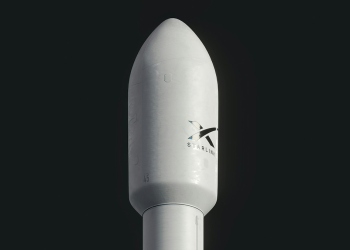
Wells Fargo, the US investment bank, expects Starlink to reach 46.7 million subscribers by 2028, up from 17 million by the end of this year. The projection appears in the bank’s latest forecast for SpaceX, the rocket and satellite operator that owns Starlink, and was reported on 24 September 2026 by trade publication Advanced Television.
Key facts
- Starlink subscriber/user numbers: 17 million by the end of 2026, rising to 46.7 million by 2028, on Wells Fargo’s figures.
- Revenue: $19.1 billion at the end of this year, $30.2 billion at the end of 2027 and $51.455 billion at the end of 2028.
- The numbers come from the bank’s latest SpaceX forecast, as reported by Advanced Television on 24 September 2026.
- Part of the bank’s case rests on possible changes in spectrum access that it says could be advantageous for SpaceX, including low-band spectrum below 1000 MHz.
- Wells Fargo itself lists three complications that could get in the way of the US broadcast spectrum element.
Why it matters
Every figure here is a bank’s projection rather than an operator disclosure. Advanced Television attributes the subscriber and revenue numbers to Wells Fargo’s forecast, not to SpaceX or Starlink, and the outlet does not report any company confirmation of them. The bank also attaches conditions to part of its outlook, and says plainly that one of those conditions could prove complicated.
Advanced Television describes the growth metric as subscriber/user numbers and does not break it down by market, plan type or service tier. So the forecast gives no indication of where the additional users would come from.
The spectrum case
Beyond the headline numbers, the bank sets out what it calls key expectations, mostly concerning spectrum. Alongside low-band holdings, it says it has analysed the TV broadcast industry’s spectrum and estimates there is close to 50 MHz of under- or un-utilised UHF spectrum in the roughly 470 to 600 MHz range, according to Advanced Television’s summary of the report.
On what could be done with that block, the bank is quoted by Advanced Television as saying: “We believe the Edgebeam consortium will reach 80 percent+ POP coverage on this available 50 MHz, implying another 14 billion MHz-POP (and maybe ~$30 billion valuation).” The report as summarised does not describe the Edgebeam consortium’s membership or its relationship to SpaceX.
Readers who want the regulatory mechanics behind claims like this can see our explainer on how spectrum and landing rights are handled through the ITU.
The three complications the bank flags
Wells Fargo’s own caveats, as reported, are specific. First, the broadcast industry would have to want to sell, rather than pursue its current business case monetisation plans. Second, the FCC, the US telecoms regulator, may prefer to run another Incentive Auction instead, which the bank says would take more than five years. Third, the band below 600 MHz may require handsets to use unique antennas with higher power requirements.
That third point is about handsets rather than dishes, and it sits close to the direct-to-cell side of the business — the segment behind approvals such as Banglalink’s recent BTRC clearance for Starlink direct-to-cell in Bangladesh. Advanced Television’s report does not link the spectrum discussion to any particular Starlink product line.
What the forecast does not cover
The material is global in its subscriber and revenue figures and US-specific in its spectrum analysis. It contains no regional split, so it says nothing about African uptake or pricing. Where regulators do publish market-level data, the numbers are orders of magnitude smaller than the global totals: we reported 27,616 Starlink users in Kenya and about 1 per cent market share there.
Nor does the forecast carry any pricing guidance. Advanced Television reports revenue totals only, with no figures for monthly fees, hardware costs or average revenue per user in any market. For current local pricing, Starlink’s published rates remain the reference point, such as $80 a month for residential service in Zimbabwe.
Background
Advanced Television filed the story under articles, broadband, markets, research and satellite. It presents the note as the bank’s latest forecast for SpaceX, indicating earlier iterations exist, but does not compare the new subscriber and revenue projections with any previous version. The outlet does not publish the underlying Wells Fargo report, and no primary document or SpaceX statement is linked from its coverage.
Frequently Asked Questions
Which spectrum holdings did Wells Fargo point to as possible gains for SpaceX?
The bank named holdings from ATEX and NextNav as additional availability of low-band spectrum, meaning frequency bands below 1000 MHz, according to Advanced Television. The report does not say SpaceX has acquired or agreed to acquire any of that spectrum.
What is the euro equivalent of the 2026 revenue figure?
Advanced Television gives the bank’s end-2026 Starlink revenue figure of $19.1 billion as €16.7 billion. No euro conversions are given for the 2027 or 2028 revenue projections in that report.
What does the bank’s 14 billion MHz-POP figure refer to?
Wells Fargo said the Edgebeam consortium reaching more than 80 per cent POP coverage on the roughly 50 MHz of available UHF broadcast spectrum would imply another 14 billion MHz-POP, as quoted by Advanced Television. The bank linked that to a possible valuation of around $30 billion and did not define the measure further in the quoted passage.
Does the forecast say anything about Starlink prices or growth in Africa?
No. The Wells Fargo material reported by Advanced Television is global and its spectrum discussion concerns US assets, the FCC and US broadcast bands. It contains no African subscriber counts, prices or licensing detail.
Follow Starlink News on Google. Make us a preferred source to see more of our reporting in Google search results.