South African President Cyril Ramaphosa used an on-stage interview at a Semafor event in Silicon Valley on November 16 to tell Elon Musk he should contribute to the country that educated him, according to Innovation Village, an African technology and business news site covering the continent’s startup and digital-policy beat. He was speaking to ABC News chief Washington correspondent Jonathan Karl during a California visit aimed at courting US technology companies and investors in artificial intelligence and digital infrastructure, Business Insider Africa reported.
Key facts
- Starlink satellite internet remains unavailable to South African customers five years after SpaceX began taking pre-orders in the country in 2021, with no operating licence granted and no published local price, Business Insider Africa reported.
- In June 2025, Starlink proposed investing R500 million (about $27.9 million) to give free satellite internet to 5,000 mostly rural South African schools, reaching an estimated 2.4 million learners, for as long as it operates in the country, according to Innovation Village.
- The Independent Communications Authority of South Africa (ICASA), the telecoms regulator, issued a formal notice of non-compliance to SpaceX on October 14, 2026, demanding it stop providing Starlink services without approval.
- The licensing dispute turns on a 30% ownership requirement for historically disadvantaged groups under the Electronic Communications Act.
- Business lobby group Sakeliga has asked the Pretoria High Court for a declaratory order on that question, a case still before the court this month.
Why it matters
The schools proposal was never unconditional, Innovation Village says: it was pitched alongside a policy change that had to be approved before Starlink could even apply for the licence it still lacks. Because the offer is tied to the company operating locally, the 2.4 million learners in the 5,000 schools SpaceX named stay on whatever connectivity their provinces already fund for as long as the deadlock holds.
The timing also cuts against the stated purpose of the trip: Ramaphosa was in California courting the same US technology investors who can see a flagship American operator sitting unlicensed in his market. This report’s reading, which neither outlet offers, is that the Sakeliga case is now the fastest available route to satellite internet availability in South Africa — a ruling that forced ICASA to accept equity-equivalent compliance would also reopen the question of whether the rural-schools offer still stands. Neither outlet reports how other African regulators would read such a ruling, but the same ownership-versus-investment trade-off is being weighed elsewhere, including India finalising its satcom spectrum rules.
The R500 million schools offer
The offer arrived with a Communications Ministry proposal to let foreign telecoms satisfy the 30%-local-ownership rule through an Equity Equivalent Investment Programme rather than handing over equity directly. That approval never came through cleanly, in Innovation Village’s account: ICASA pushed back on the minister’s proposed workaround, and the underlying ownership dispute remains unresolved a year and a half later.
Ramaphosa answered Karl’s questions on apartheid at length but was not asked about the schools offer and did not raise it himself.
The ownership clause behind the deadlock
What the Act requires
Under the Electronic Communications Act, telecoms licensees must be at least 30% owned by historically disadvantaged groups — Black South Africans, women, youth and people with disabilities — under the country’s Black Economic Empowerment framework. SpaceX has refused to meet that threshold through direct equity, arguing it conflicts with its global ownership structure, while supporting alternative investment arrangements.
The minister’s directive
Communications Minister Solly Malatsi issued a policy directive this year instructing ICASA to consider Equity Equivalent Investment Programmes, of the kind already used in other regulated industries, as a substitute for direct ownership. The statutory hook he leaned on is a licensing phrase in the Act — “or such other conditions… as may be prescribed” — and that wording is where the directive stalled: ICASA replied that the phrase does not clearly authorise it to make that call on its own, and that the Act itself would have to be amended first, Innovation Village found.
Starlink satellite internet availability and pricing in South Africa
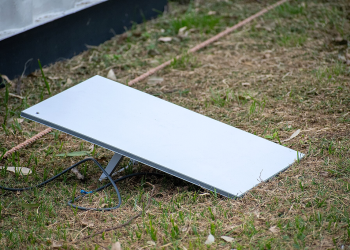
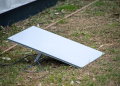
SpaceX sells no South African residential or business plan, so there is no local Starlink price to set against fibre or LTE packages. The only tariffs attached to Starlink hardware in the region belong to neighbouring markets where the service is licensed.
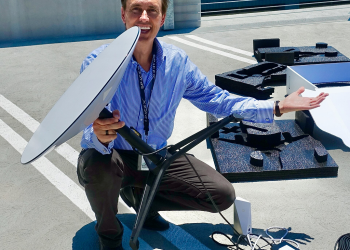
That is where some South Africans, particularly in rural areas with poor connectivity, have gone: both outlets describe users reaching the service through roaming subscriptions on kits bought and registered across the border. SpaceX previously introduced measures to restrict that unauthorised access, Business Insider Africa said, but reports of continued usage prompted further investigation. For customers waiting on a legal option, the alternatives are terrestrial operators and rival constellations, as in Telkom’s plan to resell Amazon Leo while Starlink waits for a licence.
The October 14 enforcement notice
Malatsi confirmed the notice and quoted its operative demand: that SpaceX “cease the unauthorised provision and operation of Starlink services in the Republic.” That clause is the only wording of the notice to have been quoted publicly — ICASA has not released the document — and further regulatory or legal action is possible. Innovation Village treats the cease-and-desist as an enforcement matter separate from the licensing question Ramaphosa was asked about. Unauthorised dishes are drawing official attention elsewhere too, including Cuban police planning a block-by-block hunt for Starlink dishes.
The apartheid exchange
Karl put to Ramaphosa Musk’s accusation that the South African government is building “apartheid 2.0.” Ramaphosa did not repeat the phrase, but said Musk is conservative by nature and, as a white South African, may not have grasped how apartheid policies selected white people for advancement by law and practice.
He then drew the comparison now widely quoted: “When the apartheid government spent 12 rand on his education, it spent one rand on my education.” Musk posted the “apartheid 2.0” claim in May 2025 after Ramaphosa defended Black Economic Empowerment as redress, Innovation Village notes, and argued by December, citing Institute of Race Relations data, that South Africa has more anti-white laws than apartheid had anti-black laws — a claim the Presidency called offensive and historically false.
Business Insider Africa adds that Musk has repeatedly framed the licensing block in racial terms, including an April 12, 2026 post on X saying South Africa will not licence Starlink “simply because I am not Black.”
What Ramaphosa said about Starlink
On the licence itself, Ramaphosa stayed general. There had been discussions revolving around policies, he said, and Musk has had difficulty understanding the policy position; all countries set rules for admitting companies, and firms wanting to operate in South Africa must subscribe to them.
The next things to watch, in Innovation Village’s assessment, are whether Musk responds publicly and how the Sakeliga case is decided.
Frequently Asked Questions
Did Ramaphosa and Musk meet during the Silicon Valley trip?
No. Asked by Jonathan Karl whether the two had met on the trip, Ramaphosa said a meeting had been discussed but that their diaries “had not been well synchronised,” according to Innovation Village.
Is Ramaphosa’s 12-to-1 education spending figure accurate?
Partly accurate: research cited by Innovation Village — including Pam Christie’s The Right to Learn: The Struggle for Education in South Africa — puts per-pupil spending at roughly 16.6 to 1 in the late 1960s, when Ramaphosa was at school, and roughly 4.4 to 1 by 1988, when Musk left Pretoria Boys High. So 12 to 1 points in the right direction but is not a single ratio that covers both men’s schooling.
Did Musk or SpaceX reject the schools offer?
No. Innovation Village notes that one report on Ramaphosa’s remarks framed the schools offer as something Musk had turned down, while the same account describes the opposite: South Africa’s regulatory stalemate, not a decision by Musk or SpaceX, left the offer unused. Musk had not responded publicly to Ramaphosa’s latest comments as of that outlet’s publication, hours after the interview began circulating.
What parts of this account are not independently verified?
The documents themselves. ICASA’s October 14 notice of non-compliance has not been published in full, and neither has Sakeliga’s Pretoria High Court filing, so the only primary wording in the public domain is the clause the communications minister quoted from the notice and the licensing language of the Electronic Communications Act. SpaceX has not issued a public statement on the notice. Everything else here rests on reporting by Innovation Village and Business Insider Africa.