SpaceX won US Federal Communications Commission authorisation on October 6 to deploy a constellation of 15,000 satellites built specifically to connect directly to smartphones, according to the Mobile Internet Resource Center, a US outlet covering connectivity for people living and travelling in RVs, vans and boats. The FCC calls the system the “SpaceX D2D Constellation”, while SpaceX refers to the service as “Starlink Mobile Gen2”; the outlet reports it has no formal consumer brand yet.
Key facts
- The constellation is separate from SpaceX’s existing Starlink broadband satellites and from the first-generation Direct-to-Device system that powers T-Mobile’s T-Satellite service, the Mobile Internet Resource Center reports.
- The satellites will fly in Very-Low-Earth-Orbit at roughly 326–335 km (about 203–208 miles), well below most existing Starlink and other satellites.
- SpaceX told the FCC individual beams will be roughly 12 km across, close to what a single terrestrial cell tower covers.
- SpaceX says each new “V2 Mobile” satellite will carry about 20 times the throughput of a first-generation direct-to-cell satellite.
- The FCC now authorises up to 25 MHz of uplink and 50 MHz of downlink spectrum in most of the US, against the 10 MHz (5 up, 5 down) that T-Satellite uses today.
- SpaceX says it intends to start deploying the constellation next year.
Why it matters
The Mobile Internet Resource Center describes the plan as a system of “cell towers in space” that is far more ambitious than anything currently available. SpaceX says the overall next-generation system should eventually offer more than 100 times the capacity of today’s direct-to-cell service, with performance approaching terrestrial 4G/LTE and even 5G in many situations. The outlet stresses this is a design target: SpaceX will need a substantial portion of the constellation in orbit before the promised capacity reaches consumers.
What the V2 Mobile satellites change
The satellites are new and larger hardware that SpaceX calls V2 Mobile. According to the Mobile Internet Resource Center, the capacity gain comes from large phased-array antennas with thousands of steerable beams, combined with the very low orbit. That orbit, the outlet explains, makes it easier to hold a radio link to a tiny smartphone antenna while also allowing relatively small coverage beams, which increases capacity.
The outlet notes the naming is confusing, because SpaceX now has several satellite generations in development at once with similar names, and V2 Mobile has been added to that list.
Spectrum is the bigger lever
More decisive than the hardware, the Mobile Internet Resource Center reports, is the increase in wireless spectrum the constellation can use. Going from 5 MHz of downlink to 50 MHz is a tenfold increase on its own, and the outlet says the smaller beams, larger antennas and lower orbit will use that spectrum more efficiently. It adds that SpaceX itself will control much of the new spectrum, rather than depending entirely on agreements with terrestrial carrier partners.
SpaceX enlarged its holdings after EchoStar, the US satellite and pay-TV company behind Dish, sold off spectrum assets following what the outlet calls its demise as a fourth major terrestrial carrier. Most of that spectrum is mid-band and not optimised for penetrating buildings. Two days after the authorisation, SpaceX agreed to buy a nationwide slice of 800 MHz spectrum — up to 14 MHz paired, 7 up and 7 down — from Grain Management, a private investment company that bought it from T-Mobile. The outlet says that deal still requires FCC approval, was not part of the satellite authorisation, and is a small amount of low-band spectrum compared with what the three major US carriers hold.
Everything depends on Starship
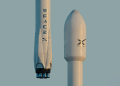
Because V2 Mobile satellites are large, the Mobile Internet Resource Center reports they can only be orbited by Starship, as the Falcon 9 is not big enough. Deployment therefore depends on how well and how often Starship flies. The FCC has also set deployment deadlines; assuming launches begin in 2027, the outlet reports that gives SpaceX about five years to place half the constellation in orbit. Building the full hybrid vision, it adds, will also require a terrestrial network, which SpaceX says it plans to combine with satellite coverage to become a “major mobile carrier” in the US.
How this sits beside the broadband side
In September, Elon Musk used a post on X to claim the next generation of Starlink broadband satellites, now beginning deployment, will eventually push total constellation bandwidth to more than 100 times today’s level, 24/7 Wall St. reported. That outlet cautioned it is a capability claim from the chief executive, not audited performance data. On the SpaceX earnings call, Musk said of the V3 architecture: “Even if our monetization per bit drops by a factor of 10, that would still mean a 10x increase in the revenue of Starlink.”
The same report, also carried by Yahoo Finance and AOL, says SpaceX’s Connectivity segment produced $4.29 billion in second-quarter revenue, up 66% year on year, and that the August 4 earnings release put roughly 9,600 broadband satellites at about 800 terabits per second of downlink capacity serving 12.0 million subscribers across 167 markets. The figures are not fully consistent: the same report also describes roughly 11,000 satellites now in orbit as the base for Musk’s multiplier. It also notes average revenue per user has already fallen from $85 to $66 as the subscriber base broadened, and that management said further geographic expansion could pull blended ARPU lower.
What this does not yet say about other markets
The spectrum limits the FCC approved apply, in the Mobile Internet Resource Center’s words, in most of the US, and the company’s stated carrier ambition is a US one. None of the four source reports say when or whether direct-to-cell service at this capacity would be available outside the United States, or at what price, so readers in Zimbabwe and elsewhere in Africa should note that the only cross-border figure on record here is the 167 broadband markets disclosed in the Q2 release.
Frequently Asked Questions
Will Starlink Mobile need a dish or special terminal?
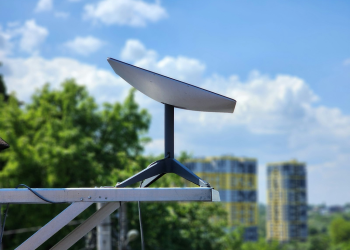
No. The Mobile Internet Resource Center explains that “Direct-to-Device” means satellites link straight to end-user equipment such as smartphones, with no dedicated satellite terminal required. It adds that the new constellation is also designed to potentially serve other cellular devices, including hotspots and cellular routers.
What can satellite-to-phone service actually do today?
According to the Mobile Internet Resource Center, today’s direct-to-cell networks are mainly useful for messaging, voice and relatively light data use in places where terrestrial cellular coverage is unavailable. The current T-Mobile T-Satellite service runs on a small slice of Band 25 spectrum, which the outlet says limits performance.
When is Starlink Mobile commercial service expected to start?
Yahoo Finance and AOL, carrying a 24/7 Wall St. report, list Starlink Mobile as expected to integrate 65 MHz of EchoStar spectrum after FCC approval, with commercial service targeted for the end of next year. That timeline is separate from the 15,000-satellite constellation, which SpaceX says it intends to begin deploying next year.
When will Starlink’s V3 broadband satellites improve the service I pay for?
SpaceX management said a critical mass of roughly 1,000 V3 satellites is needed before customers see substantially better service, expected around the second quarter of next year, according to 24/7 Wall St. Musk targeted Starship flight 14 as the first mission to carry V3 satellites into operational orbit, a target the outlet notes remains subject to regulatory approval and flight test outcomes.
Follow Starlink News on Google. Make us a preferred source to see more of our reporting in Google search results.








![Using Your Own Router with Starlink: Bypass Mode [2026]](https://starlink-news.com/wp-content/uploads/2026/09/using-your-own-router-with-starlink-bypass-mode-20-f6c09f95-120x86.png)